Conservation leaders reflect on Roosevelt’s legacy, share vision for future
Jul 02, 2026 | 6:50 pm ET
Description
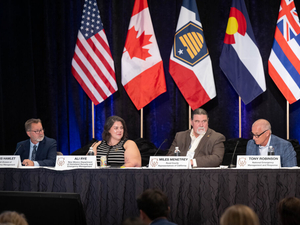
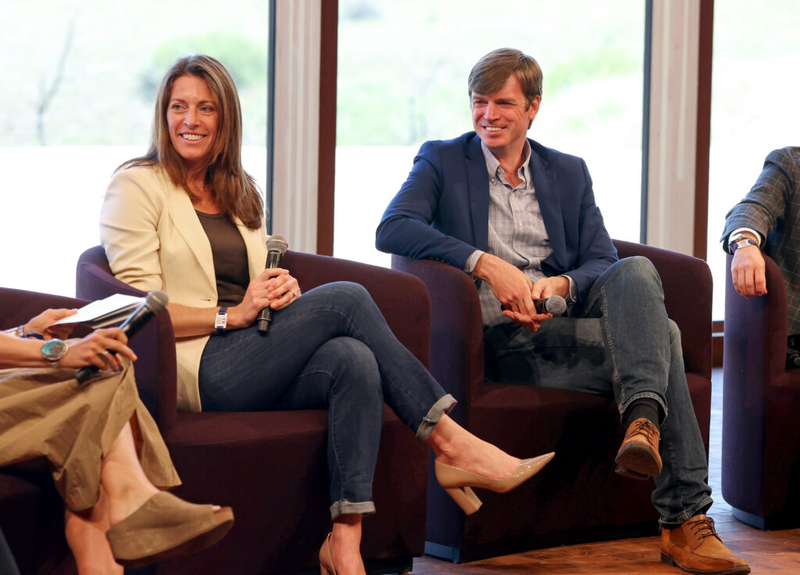
Kate MacGregor, from left, deputy Interior secretary, and Collin O'Mara, CEO of the National Wildlife Federation, speak during a panel discussion on conservation July 2, 2026, at the Theodore Roosevelt Presidential Library in Medora, North Dakota. (Photo by Tasos Katopodis/Getty Images for Theodore Roosevelt Presidential Library)
Theodore Roosevelt’s ranch in the North Dakota Badlands came to be known as the “cradle of conservation” for the role it played in shaping the future president’s views on protecting public lands and wildlife.
Conservation leaders gathered in Medora, about an hour from Roosevelt’s Elkhorn Ranch, on Thursday to reflect on and celebrate the 26th president’s legacy and share their thoughts on the next era of conservation.
Thursday’s panel was part of a series of events around the dedication of the Theodore Roosevelt Presidential Library and the 250th anniversary of the United States declaring independence from Great Britain.
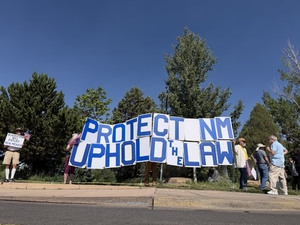
The discussion also came shortly after conservation advocates criticized President Donald Trump and Interior Secretary Doug Burgum, accusing the administration of betraying Roosevelt’s conservation legacy by taking “every step imaginable to hand our public lands over to the industrialists who want to exploit America’s natural resources for private profit.”
While the panel did not directly discuss the pushback from conservation groups, Interior Deputy Secretary Kate MacGregor spoke against what she called “associations and others who want to politicize conservation.”
“When we head in a specific direction and it gets more politicized, then people sort of dig in and put up their firearms against each other, and they’re shooting back and forth, but we’re all trying to get to the same place,” MacGregor said.
Much of the panel’s discussion centered around using collaboration and coalition-building — particularly with private landowners, economic interests, state agencies and future generations — to advance conservation efforts.
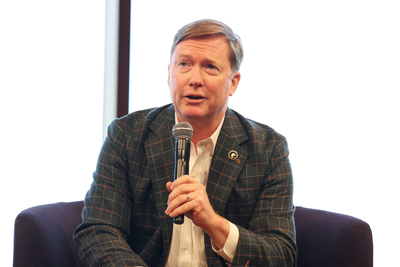
Adam Putnam, CEO of Ducks Unlimited, said that “if the Roosevelt era of conservation was defined by this designation of public lands … the era of conservation that we’re in now is the working-lands era, that requires this mosaic, this connectivity, between public and private lands.”
Most endangered and threatened species live on private or tribal lands, Putnam said, which means private landowners must be part of any “big-picture success in conservation.”
“The ducks coming down from Canada need places to stop over — they don’t have a Michelin guide of whether it’s public or private lands,” Putnam said. “They want habitat, and farmers and ranchers … are providing the bulk of that habitat, and we should continue to invest in voluntary, incentives-based programs that bring everybody in as part of that habitat solution.”
Simon Roosevelt, executive vice president of conservation for the Boone & Crockett Club and the great-great-grandson of Theodore Roosevelt, said his ancestor understood “that America’s public lands and its waters and its wildlife fundamentally support the wealth and prosperity of this country.”
“In national parks and national forests and wildlife refuges and grasslands and waterways, there is hunting and hiking … out there is oil and gas production. Out there is grazing. Out there is solar power and wind power and geothermal power,” Roosevelt said. “All of that has supported, and does support, economies large and small across this country.”
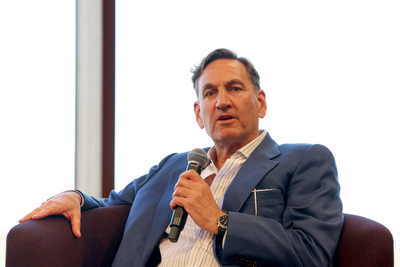
Roosevelt said his great-great-grandfather also understood the importance of balancing and “melding” the interests of public lands’ diverse stakeholders. He said the country has lost that sense of balance, leading to binary decision-making and harming conservation.
However, he also acknowledged that “not every place, not every water ecosystem, needs development.”
“We’ve decided that already with respect to Bristol Bay, with respect to the Everglades. In my opinion, it should be the same with respect to the Boundary Waters,” he said, referencing the controversial congressional decision to overturn a 20-year ban on mining near the Boundary Waters Canoe Area Wilderness in northern Minnesota.
Another crucial but missing piece of the conservation puzzle is greater state involvement, said Collin O’Mara, CEO of the National Wildlife Federation.
“We’ve been trying for years to fund the state agencies, because that’s part of Teddy Roosevelt’s vision,” O’Mara said. “The original vision was that those that are close to the land are the best to conserve (it) and the best to restore species.”
Making tools available to state agencies “so the states can be the lead would be transformative and have the next era be an era of collaboration, not another era of conflict,” he said.
Several speakers also discussed the importance of inspiring future generations of conservationists by helping young people reconnect with nature.
“The rugged, stalwart democracy that Teddy Roosevelt talked about requires you to be connected to the land,” Putnam said, adding that if the next generation is raised to love the land, it will be easier to restore habitat and protect endangered species later.
“If they feel no connection to the land, all of that becomes incredibly difficult, and a tiny portion of the population is all that remains to advocate for those needs,” he added.
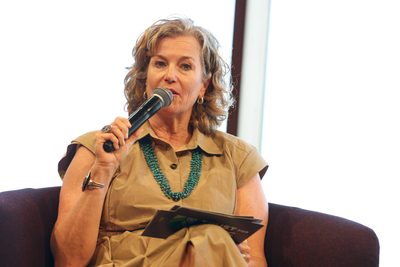
Carrie Besnette Hauser, president and CEO of the Trust for Public Land, echoed the need to reconnect people, particularly young Americans, with nature. She said 100 million Americans, including 28 million children, don’t have easy access to green spaces.
“If we close that gap, we have healthier kids. We have less screen time and more green time. We have stronger neighborhoods and we have a more socially connected society,” she said. “These are all things that T.R. fought for in his lifetime.”
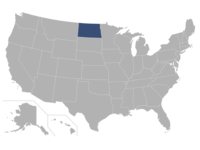
Bismarck, ND