Trump administration proposes new rules for prediction markets
Jun 10, 2026 | 4:57 pm ET
Description
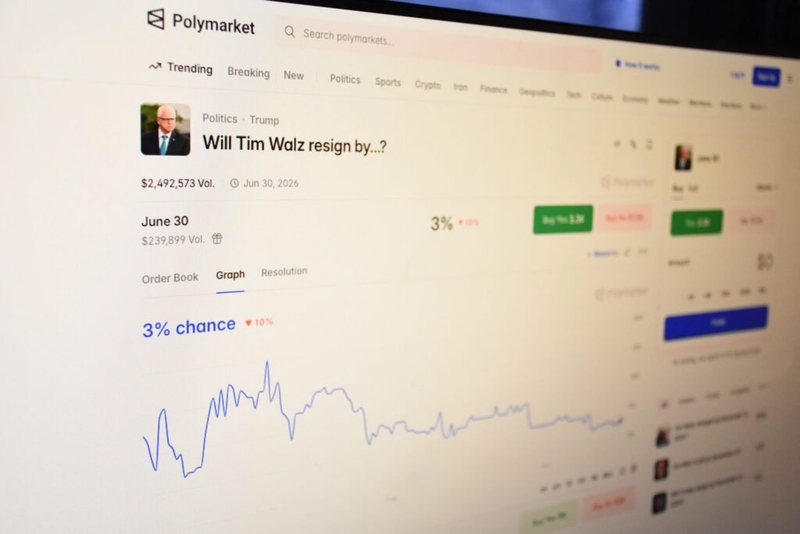
Minnesota was the first state to outlaw prediction markets, where people can bet on events. The Trump administration proposed new rules Wednesday, which some critics say are still too lax. (Photo by Alyssa Chen/Minnesota Reformer)
The Trump administration Wednesday proposed new regulations for online prediction markets that would ban bets on war, assassination and other extreme events, but still allow many sports bets to operate on the growing platforms.
Critics say the proposed rules don’t do enough to rein in an industry that has sparked jurisdictional battles between state and federal governments, particularly when it comes to sports betting.
Under President Donald Trump, the federal government has championed the growth of prediction platforms including Kalshi and Polymarket. Those companies, which offer bets on everything from politics to sports, say they are offering contracts similar to commodity markets that speculate on the future price of corn or oil.
But a growing number of states are rejecting those justifications, arguing the platforms are offering a backdoor to skirt state gambling regulations, particularly on sports.
On Wednesday, the Commodity Futures Trading Commission said its proposed rules would create “a durable, transparent” framework to regulate prediction markets. That five-person commission, which regulates derivatives such as futures contracts on stocks, currently has four vacancies.
“The CFTC will protect the integrity of our regulated markets without standing in the way of responsible innovation,” Chairman Michael Selig said in a news release.
The rules will prohibit trading on war and terror attacks. The agency says it will review each event contract individually but did highlight several sports-related transactions “contrary to the public interest” that also will likely be prohibited. Those included individual prop bets, bets on athlete injuries, refereeing decisions and physical altercations during games, ESPN reported.
But the proposed rules hand prediction markets almost everything they want, said Benjamin Schiffrin, director of securities policy at Better Markets, a nonprofit watchdog group advocating for consumer and investor financial protections.
Kalshi and Polymarket are skirting laws on sports betting, states say
“Today’s action cements the CFTC’s role as the prediction market industry’s biggest cheerleader,” he said in a statement. “…The CFTC continues its transformation from a regulator of legitimate financial instruments to a promoter of products that facilitate gambling.”
The federal agency does propose banning event contracts predicting war, terrorism or assassinations, “but that is no more than federal law already requires,” Schiffrin said. The agency would continue to permit gambling on everything from the winner of the reality television show “Survivor” to the outcomes of individual elections.
The federal agency said it would take public comment on its 267-page proposal over the next 45 days. But the new rules won’t put an end to the ongoing battle between states and the federal government.
The majority of states have legalized sports gambling in recent years, implementing age verification procedures, protections for gambling addiction and new taxes. But online prediction markets have circumvented all those rules, sparking action from state gambling regulators, new legislation and lawsuits from states, the prediction markets and the federal government.
Last month, Minnesota Democratic Gov. Tim Walz signed a first-in-the-nation law to outright ban prediction markets. The state was immediately sued by the Commodity Futures Trading Commission, which aims to block the law from going into effect.
Earlier this year, Kalshi sued Utah and Republican Gov. Spencer Cox in anticipation of enforcement efforts and pending legislation. Utah’s constitution has banned gambling since the state’s founding.
Unless Congress passes new legislation, experts say the courts will ultimately decide what role states can play in regulating prediction markets.
The American Gaming Association says states have lost more than $1 billion in gambling tax revenues to online prediction markets. The trade association, which represents casinos and sports books, said prediction markets should get out of sports betting or be forced to follow the same state and tribal regulations as sportsbooks such as DraftKings and FanDuel.
In a statement on Wednesday, Bill Miller, the association’s president and chief executive, said the federal agency’s rulemaking goes against congressional intent over regulating event contracts and bucks a bipartisan majority of the states and the public who view prediction markets as “backdoor sportsbooks.”
“This is a remarkable attempt to redefine what constitutes sports betting,” Miller’s statement said.
Stateline reporter Kevin Hardy can be reached at [email protected].