Trump Administration Fires Two More New York City Immigration Judges as New Hires Take the Bench
May 23, 2026 | 1:45 pm ET
Description
Photo courtesy of New York Focus
The federal Department of Justice fired two experienced New York City immigration judges on Thursday, the same day it announced hiring five new judges to preside over the city’s immigration courts, New York Focus has learned.
The fired judges, Jem Sponzo and Kyle Dandelet, had granted asylum far more often than the national average in recent years — though their denial rates rose after President Donald Trump’s election. They spent much of their careers before becoming judges practicing immigration law.
Two of the new hires, meanwhile, worked in military courts. Another two had prosecutorial careers; one also spent a decade as a North Carolina state court judge. The fifth spent nearly two decades as counsel and chief of staff to a New Jersey Republican assemblymember. Their appointments come as Trump’s Department of Justice carries out a recruitment campaign urging legal professionals to apply to become “deportation judges.”
The firings add to a growing tally of more than 100 immigration judges terminated since Trump took office last year and began a sweeping effort to remake the country’s immigration courts. While it’s not unprecedented for an administration to fire immigration judges — the Biden administration fired at least six who had been appointed during the first Trump administration — historically no more than a handful have been terminated in any given year, The New York Times reported. Before Thursday, the Trump administration had fired at least 14 New York City immigration judges.
Jeremiah Johnson, who was fired from his position as an immigration judge in San Francisco last November and still serves as executive vice president of the National Association of Immigration Judges, said the historic wave of firings has enabled the administration to install more pliant judges. The Department of Justice hasn’t told judges why they’re being fired, he said, leaving those still on the bench to wonder if they might be next.
“Judges are terrified,” he said. “Judges are looking over their shoulders. Judges are working tremendously long hours, working through lunch, late into the evening, because there’s also no information given while judges are being fired.”
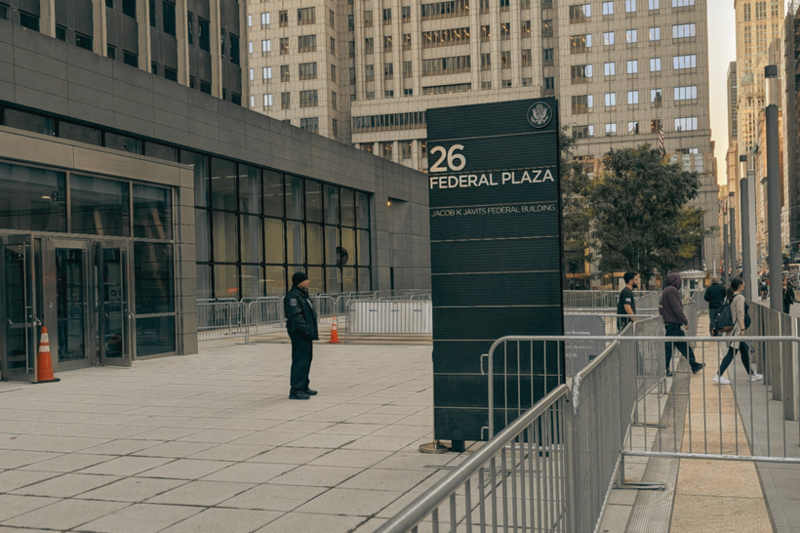
A spokesperson for the immigration judges’ union said it had confirmed that the Justice Department had fired two New York City immigration judges and one each at courts in Concord, California; Sterling, Virginia; and Honolulu, Hawaii. An employee at the immigration court where Dandelet presided told New York Focus that he had been fired. By Thursday afternoon, Dandelet’s name had been removed from the online list of judges at Manhattan’s 26 Federal Plaza, and the three new judges assigned to that courthouse had been added. Dandelet declined to comment.
Sponzo’s name had also been removed from the online list. The city’s immigration attorneys began spreading the word Thursday that she had been fired. One attorney said that he asked court clerks about his upcoming hearings in front of Sponzo and was told Friday that he would receive hearing notices in the mail, a response he said typically indicated a judge was no longer on the court. Reached by phone, Sponzo told New York Focus she couldn’t take the call.
“Judges are terrified. Judges are looking over their shoulders.”
—Jeremiah Johnson, National Association of Immigration Judges
A spokesperson for the Justice Department’s Executive Office for Immigration Review said the agency “declines to comment on personnel matters.”
Unlike criminal or civil judges, who make up an independent branch of government, immigration judges work for the Department of Justice, run by the president-appointed US attorney general. They make decisions on whether to grant asylum, issue deportation orders, and offer bond to immigrants in detention. Many are former Department of Homeland Security or Justice Department officials; others worked as pro bono attorneys for immigrants and low-income people.
Before the Obama administration appointed her as immigration judge in 2017, Sponzo spent nearly all of her career working in the Justice Department’s Office of Immigration Litigation as a trial attorney, according to her official biography. Through fiscal year 2024, she granted about 77 percent of the asylum cases she decided, according to data compiled by the Transactional Records Access Clearinghouse. (Asylum cases represent only a portion of judges’ caseloads.)
Dandelet had spent the seven years of his career before becoming an immigration judge working as a pro bono immigration attorney, and once told an interviewer that he had helped provide know-your-rights trainings and legal screenings for immigrant workers at dairy farms near the Canadian border. Through fiscal year 2024, he granted asylum in about 72 percent of the cases he heard.
During the same time period, according to TRAC, judges nationwide denied asylum more often than they granted it, rejecting about 60 percent of claims.
Both judges’ asylum denial rates increased last year, TRAC data show, in line with the national trend. The Board of Immigration Appeals, which sets legal interpretations for immigration judges to follow, has under Trump issued decisions that have made it harder to justify granting asylum, limited access to bond, and virtually invalidated some forms of deportation relief.
Some immigration attorneys told New York Focus that they felt that Sponzo had recently become one of the city’s least immigrant-friendly judges. She was completing cases at a particularly fast pace: A New York Focus analysis of Justice Department data published by the Deportation Data Project shows that she completed significantly more cases than any of her colleagues at 26 Federal Plaza from the beginning of last year through May 1, ordering deportation about two-thirds of the time. Dandelet ordered deportation in a similar share of cases, but finished about half as many. That dataset includes all deportation proceedings, not only asylum cases.
New York Focus watched proceedings in Sponzo’s courtroom on Wednesday morning, as she oversaw a hearing for dozens of people in deportation proceedings. In most cases, she ordered the immigrant deported, even though many were in the process of pursuing a special status for abused or neglected youth. (One of the Board of Immigration Appeals’ recent decisions deemed that status too uncertain to offer protection from deportation, since recipients must wait years to apply for a green card.) Immigration attorneys appeared flustered and even angry, in some cases telling her the decision violated their clients’ due process rights.
Attorney Adam Tavares represented one of the few people whom Sponzo gave more time to fight their case. “She’s one of the last people I thought would be fired under this administration,” he said.
Albany