Missouri cut aid for fruit and vegetable purchases after SNAP junk food push
May 26, 2026 | 6:55 am ET
Description
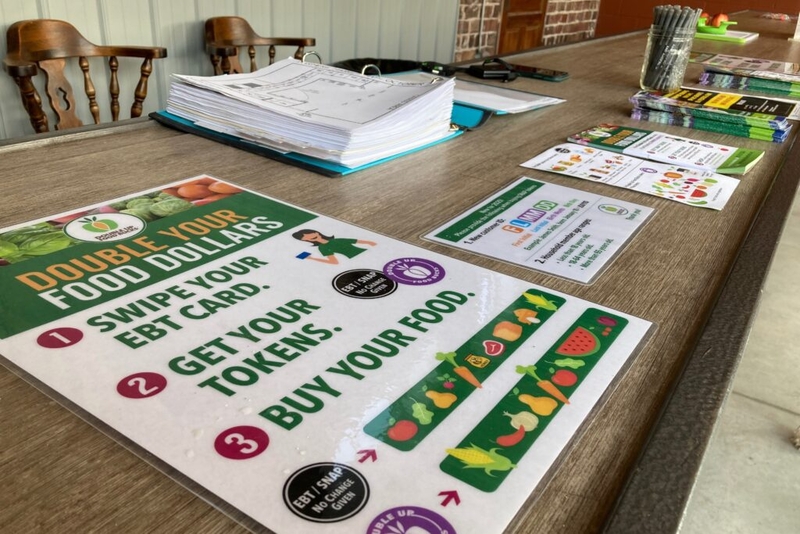
The Double Up Food Bucks program, which doubles the value of SNAP benefits for fresh fruits and vegetables, has more than 70 participating grocery stores and farmers markets in Missouri (Steph Quinn/Missouri Independent).
Missouri lawmakers spent part of this year’s legislative session arguing that the state should steer low-income families away from buying candy, soda and desserts with public benefits.
Then they passed a budget that eliminates $2 million for a program designed to help those same families buy more fruits and vegetables.
Double Up Food Bucks, run by the Mid-America Regional Council in Missouri and Kansas, allows people enrolled in the Supplemental Nutrition Assistance Program, or SNAP, to double the amount of fresh produce they bring home using their benefits at participating grocery stores and farmers markets.
The program is not in immediate danger of disappearing if Gov. Mike Kehoe signs the budget passed by lawmakers earlier this month. Its funding, drawn from a mix of federal, state and private sources, is secure in the short term.
But Donna Martin, director of Double Up Food Bucks in Kansas and Missouri, said losing state funding would make the program less stable and harder to expand in parts of Missouri where it currently has few partners.
“The Missouri state funding is the reason why we have locations in Missouri that are outside of the Kansas City area,” Martin said.
For supporters, the cut is especially frustrating because it comes after lawmakers and Kehoe pushed to limit SNAP purchases of candy and sugary drinks in order to improve nutrition.
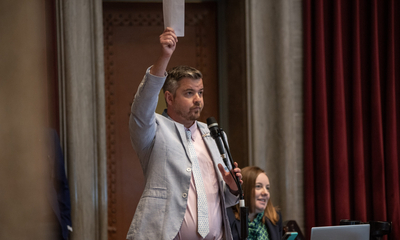
During House budget debate earlier this month, Democratic state Rep. Ian Mackey of St. Louis pointed to that contradiction.
“A few weeks ago, we had a discussion about what poor people can and can’t buy and about how they shouldn’t be buying cake, they should be buying broccoli,” Mackey said. “For the last several years, we’ve had a line in [the budget] that helped poor people buy more broccoli. And you all zeroed it out.”
Mackey was referring to a bill passed by the House that would have directed the state’s social services department to apply for a federal waiver to bar SNAP purchases of sugary foods and drinks — similar to an executive order issued by Kehoe in October 2025. The U.S. Department of Agriculture approved Missouri’s waiver in December, and the bill did not advance in the Senate.
House Budget Committee Chairman Dirk Deaton, a Seneca Republican, said that as general revenue dollars grow scarcer, programs without long track records of state funding are especially likely to be scrutinized. Lawmakers appropriated $2 million for Double Up Food Bucks in each of the past two budget years.
“If we’ve been doing it for 20 or 30 years, we need to look at that too,” Deaton said. “Maybe we don’t need to do it anymore. But the newer something is, the more likely it is to come under scrutiny when we’re having to pull back.”
Another proposal, aimed at allowing the state’s Medicaid program to pay for healthy food prescribed by doctors, received initial bipartisan support in the House but was made an optional part of a wide-ranging healthcare bill that went to the governor.
Responding to the argument that the bill was consistent with federal Make America Health Again initiatives, Republican state Sen. Mary Elizabeth Coleman of Arnold said the proposal was an example of “people co-opting the MAHA movement to try to expand government.”
Benefits for farmers, grocers, families
Paula Stocker, market manager at City Market in Kansas City, told The Independent Double Up Food Bucks translates to more sales for farmers and helps put locally grown, nutritious food within reach of more families.
“It helps them stretch their grocery budgets in a very direct way and means they’re going home with real food and not junk,” Stocker said.
It’s an empowering experience for adult recipients and a fun one for kids, Stocker said, with parents passing out the bright purple tokens to their children.
“The parents will let them spend it on something like strawberries or apples or fruit,” Stocker said. “The kids get really excited that they get to shop with this really pretty money.”
Dan Shaul, executive director of the Missouri Grocers Association, told The Independent the program also helps grocery stores increase customer loyalty and satisfaction.
“They get customer foot traffic in the store, and I think it makes the customers happy,” Shaul said. “And happy customers are going to be more receptive to buying stuff in that store.”
The program can also allow stores to stock fresher fruits and vegetables by increasing the amount of produce they sell, Shaul said.
“If you’re turning more produce or perishables, there’s more of those being sold,” Shaul said, “you’re going to be able to stock fresher and more desirable food.”
For Mike Beal, chief operating officer of Kansas City-based Balls Food Stores, participating in the program when it came to Missouri in 2016 was a natural extension of work his company has done with Missouri and Kansas farmers since about 2000.
“We were interested in trying to focus more on what we thought our customers wanted in terms of produce from local farmers,” Beal told The Independent.
Balls Food Stores had built relationships with farmers by increasing their access to local markets — transporting produce within a 200-mile radius to its Kansas City warehouse, saving them time and money they would otherwise have spent taking their goods to multiple buyers in the metro area. From the warehouse, the company sold the produce to other grocers, restaurant suppliers and in its own stores.
The company used its relationships with farmers and technology it had adopted for its loyalty program to implement Double Up Food Bucks, which initially applied only to purchases of locally grown produce.
Federal funding landscape
Martin said state funding in this year’s budget helped the program secure a three-year, $5 million federal grant in September 2025.
Congress authorizes grants for nutrition incentive programs like Double Up Food Bucks through the farm bill, a massive, multiyear legislative package encompassing farm revenue support, agricultural conservation and nutrition.
Congress hasn’t passed a farm bill since 2018, instead approving short-term funding measures since 2023, when the 2018 legislation expired. The One Big Beautiful Bill Act extended the legislation through September 2026. Last month, the U.S. House passed a version of the bill, but the Senate has yet to act on it.
Funding uncertainty at the federal level has made planning more difficult for the Double Up Food Bucks program, Martin said.
The USDA didn’t accept new applications for nutrition incentive programs in 2025, but funded some high-scoring applicants that didn’t get funding in 2024 — including Double Up Food Bucks in Missouri and Kansas.
In order to receive the funding, Martin said, the council had to show it could match the federal grant with $5 million in state and private contributions, which meant following up with funders it had recruited for the previous year’s application.
“We had to reach back out to them and say, ‘Hey, we are getting confirmation from USDA this year. Are you still on board with providing a match?’” Martin said. “And then in addition, we were able to apply the state money.”
Having a three-year federal contract in place means the program is in a good position for now. But losing out on state money will make it difficult to expand to parts of the state where the program currently has few partners, like northern Missouri.
Entering contracts with new grocers — especially in parts of the state where grocers rely heavily on SNAP sales — requires the program to have money in reserve.
“To have a contract with grocery stores for the amount that they need, you need to make sure you have that money to be able to pay them,” Martin said.
Martin said she feels confident about the program’s future in Missouri. But she said the level of federal funding isn’t keeping up with demand for produce incentive programs nationwide.
“There are more grantees trying to get these funds every year,” Martin said. “… So it’s much more competitive.”
Jefferson City, MO