Spanberger showed bravado in vetoing Democratic bills. What if some return to her in the budget?
May 21, 2026 | 5:25 am ET
Description
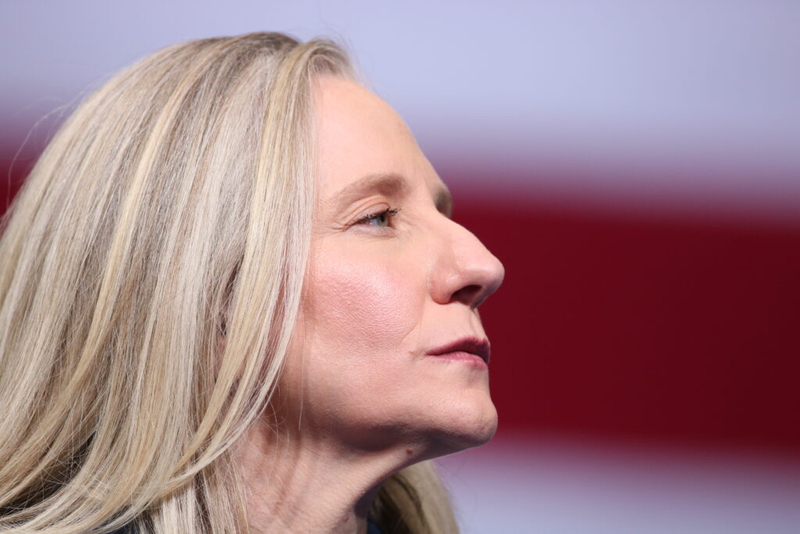
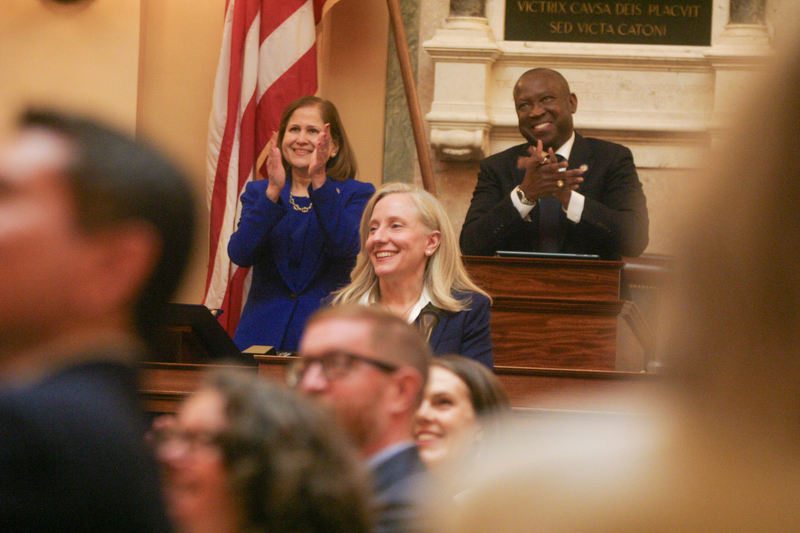
By May 20, Gov. Abigail Spanberger had vetoed nearly two dozen bills, including one that reflected top Democratic priorities like a retail cannabis market and prescription affordability board. (Photo by Charlotte Rene Woods/Virginia Mercury)
I’ll give her this: Gov. Abigail Spanberger knows how to throw down — this time, not uncharacteristically, with some of her Democratic teammates.
The rookie governor has vetoed two fistfuls of bills enacted by the General Assembly, including several with eminent legislative names as chief sponsors.
There were bills by Senate Majority Leader Scott Surovell, D-Fairfax, that would have placed a casino among Tysons Corner’s posh properties and another to extend collective bargaining to state and local government across the commonwealth.
The governor vetoed a bill that would have legalized marijuana sales in Virginia five years after possession of it was legalized. Sen. Lashrecse Aird, D-Henrico, and chair of the Senate Local Government Committee, was a chief patron of that bill.
And, after five years of legislative work to control rocketing prescription drug prices in Virginia, she tanked the Affordable Medicine Act, whose chief Senate sponsor, the venerable R. Creigh Deeds, D-Charlottesville, chairs the Senate Commerce and Labor Committee and was the party’s 2009 gubernatorial nominee.
That bill — seemingly aligned with her successful campaign emphasis on making life affordable — had bipartisan support.
Maybe the governor, little seen or heard during the General Assembly session, felt it was time to emerge from the shadow of House and Senate Democratic leaders and assert herself.
Governor kills Prescription Drug Affordability Board proposal
Maybe the contrarian streak that she famously showed in Congress toward fellow Democrats emerged in her chief executive role, prompting her to substantially amend and moderate some of the 1,156 bills lawmakers saddled her with before adjourning in March.
Add that to her call for an extemporaneous state revenue reforecast as House and Senate conferees haggle over a new state budget that’s already a couple of months behind schedule. In dispute is whether to end a tax break for energy-glutton data centers proliferating in Virginia.
Whatever the reason, Spanberger’s style has been unflinching: lock the door, fight the fight and see what happens.
Let’s not mire ourselves in the minutiae of the vetoes — and more could come by Saturday’s 11:59 p.m. deadline for the governor to act on bills the Assembly returned with her amendments rejected. There’s plenty of good reporting already done there.
Let’s ponder what could happen tactically in the short term and more strategically in the months and years ahead.
Pardon the literal inside-baseball allegory, but Spanberger can anticipate a brushback fastball — chin-high and way inside — from legislative Democrats. And they have some near-term options for bringing the vetoed bills back in a powerful way the governor would find problematic.
There’s the just-referenced budget. Every even-numbered year in Virginia, the two-year spending blueprint for state government is the most essential and consequential bill the General Assembly passes. It carries such importance that provisions tucked among its thousands of line items override other state law.
Unlike governors who can’t serve back-to-back terms in Virginia, legislators aren’t required to clean out their offices every four years. In the House of Delegates and especially the Senate, tenure confers power. Some of the sponsors of bills Spanberger 86ed have held their seats for decades, and — in their closed and cloistered conference committee gatherings — they’re skilled at weaving things deeply into the budget bill.
Also as just noted, the budget bill remains in flux. It could take weeks to work everything out.
Suppose an 11th-hour deal is struck and House and Senate members return to Richmond on June 29, and rush a budget containing one or more of the vetoed bills through House and Senate concurrence. The passed budget bill drops on the governor’s desk hours ahead of a 12 a.m. July 1 deadline, when state government goes dark if a new budget isn’t signed into law.
Does she sign it as-is to avert an unprecedented state fiscal catastrophe?
Does she call the legislature’s bluff and again strike the offending provisions as the government idles?
That’s an admittedly dystopian take on possible political intrigue, but we live in a time when government actions once thought dystopian are the stuff of daily headlines. It’s also a scenario that keeps playing out in the minds of serious people with encyclopedic knowledge and vast experience in Virginia government.
Politically, that scenario would accrue to the abiding detriment of Democrats who swept into power in last November’s wave election — both legislators and the governor. You’d imagine (hope?) that for the good of the commonwealth in such a situation, reason would prevail.
How that plays out would guide longer-term political considerations.
A budget debacle resulting from a desperate bid to resurrect the vetoed bills would give Republicans yet another gift heading into this fall’s congressional midterms.
They won a potentially existential legal victory when the Virginia Supreme Court voided the April redistricting referendum that it ruled unconstitutional. It further buoyed the GOP when the U.S. Supreme Court, without comment, declined to consider the Democrats’ widely criticized appeal of the ruling.
A state government shutdown that the Democrats would exclusively own — or even strong-arm legislative maneuvers to force policy enactment under duress — could also lend Republicans potent talking points in next year’s bid to retake the state Senate and at least narrow the Democrats’ large House majority in the 2027 legislative midterms.
Individually, Spanberger will take hits, but some disappointment was inevitable. You can’t run as a centrist with strong support from moderates and liberals and then satisfy both when your actions determine policy.
At least so far, the hits are survivable, especially with 90% of her term still ahead. Spanberger’s explanations for her vetoes certainly won’t placate groups that supported the vetoed bills, but reasonable people with no stake in the fight can find her stated rationales relatable.
If Democrats can keep the resentments from festering, there’s plenty of time for Spanberger and her legislative partisans to reason together outside the time stresses and pressures of the legislative session and compromise over present differences.
I’m reminded of advice my beloved Little League baseball coach, Mr. Ralph Burrus, gave me regarding my inability to hit a curveball — or a slider, a fastball or most anything else, for that matter — more decades ago than I care to enumerate.
“If you think it’s a big deal, it’s a big deal. Quit thinking it to death, work on it in the offseason, and next summer you might get some hits,” he said.
I never amounted to squat in baseball, despite Mr. Ralph’s efforts. It’s sound advice that still helps me and it’s good counsel now for Spanberger and her party.
Slow things down. Work on it. Do better.
And avoid the high, inside fastball.
Richmond, VA