South Dakota’s water quality reports grow more polished and less honest
May 23, 2026 | 8:00 am ET
Description
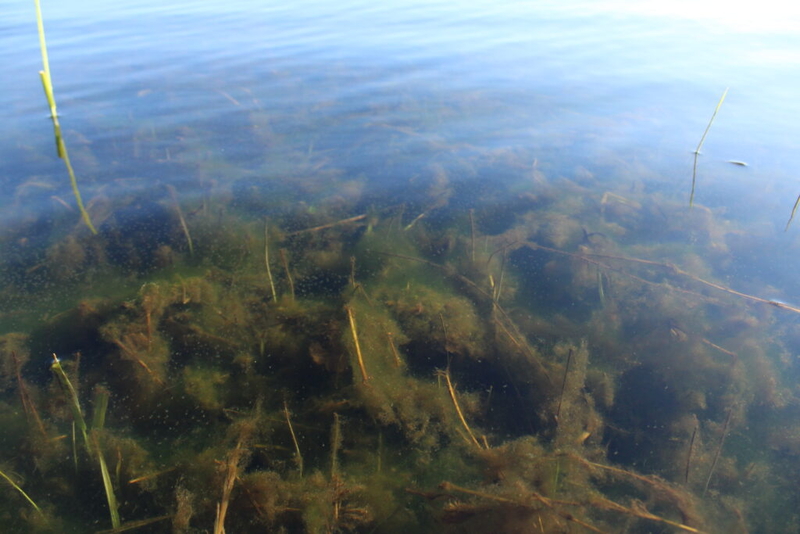
A shallow area near the shore of Lake Mitchell on May 4, 2024. (Photo by Seth Tupper/South Dakota Searchlight)
South Dakota didn’t stop polluting its water. It stopped talking honestly about what’s polluting it.
In 2018, the state’s own water quality report plainly identified the causes fouling South Dakota rivers and lakes: livestock waste, manure runoff, cropland erosion, nutrient loading and failing septic systems. Agriculture was identified as the primary source of surface water pollution, and the report said so directly.
That wasn’t partisan. It wasn’t controversial. It was the state’s own science.
By 2026, the pollution remains. But plainspoken honesty has steadily disappeared.
Across the 2018, 2022, and 2026 reports, one thing changes: the language. The pollutants remain. The impaired waters remain. What disappears is the state’s willingness to say what’s causing the damage.
Praise for simplicity, concern about brevity greet new format for South Dakota water quality report
The turning point came on Jan. 19, 2021, when the Department of Agriculture absorbed the Department of Environment and Natural Resources under then-Gov. Kristi Noem’s government reorganization.
The merger was sold as efficiency — a “one-stop shop” for producers. Then-Lt. Gov. Larry Rhoden said it would “unleash the next generation of agriculture.”
What it created was an agency responsible both for promoting agriculture and communicating with the public about pollution tied to it. That is not a minor administrative tweak. It is a built-in conflict of interest — one that determines what gets highlighted, what gets buried, and what quietly disappears from public view.
The reports themselves tell the story.
In 2018, DENR’s final report spoke plainly. It described nonpoint source pollution as the state’s “most serious and pervasive water quality problem” and directly connected impaired streams and rivers to livestock waste, manure runoff, cropland erosion, nutrient loading and failing septic systems.
The state treated residents like adults: Here is what’s in the water, here are the sources, here is what we’re doing about it.
By 2022, the tone shifted. Pollutants remained, but discussion of their causes slid deeper into the document. Executive messaging shifted toward Environmental Protection Agency “Vision” priorities, scheduling of total maximum daily loads (known as TMDLs, which are the amounts of pollutants waterbodies can receive and still meet safe standards for designated uses), and bureaucratic process. Agriculture’s role was still present but no longer clear and no longer emphasized.
The report read increasingly like something written to minimize political friction, not inform the public.
This year, much of the plain language is gone.
The report tells us 77% of assessed stream miles and 73% of assessed lake acres fail to meet standards. It lists pollutants such as E. coli and mercury. But the discussion of the sources driving those impairments is now far harder for the public to find — and in many cases, simply not there.
Language once describing nonpoint pollution as the state’s dominant water quality threat is gone. References to livestock waste, cropland erosion, nutrient loading and failing septic systems — long understood as central challenges in South Dakota water quality — have been quietly removed from public emphasis.
The water didn’t get cleaner. The reporting got safer for the people in charge.
Some call this modernization: dashboards, graphics, interactive tools, “user-friendly” design. But when public reporting becomes more polished while growing less candid about cause and responsibility, that is not modernization. It is political risk-management disguised as transparency.
South Dakotans deserve better than percentages stripped of explanation.
Communities living with algae-choked lakes, E. coli advisories, beach closures, and rivers that run brown after every storm do not need curated graphics to tell them something is wrong. Producers investing in better grazing systems, manure management and conservation practices know it, too.
Plain reporting does not attack agriculture. It acknowledges reality and respects the people already trying to improve it.
But truth becomes politically inconvenient when the agency authoring the report is institutionally aligned with the very industry contributing most heavily to the pollution.
That is not modernization. It is a retreat from public trust, and a deliberate narrowing of what the public is encouraged to notice.
... When public reporting becomes more polished while growing less candid about cause and responsibility, that is not modernization. It is political risk-management disguised as transparency.
We see what happens after hard rains and spring floods. We see creeks turn the color of soil and lakes bloom green. The land speaks plainly. The water speaks plainly. Government reporting should, too.
The next governor will inherit a system that has grown more polished and less honest. The next governor should not be allowed to dodge the question: Will South Dakota return to clear, independent reporting about the sources of water pollution, or will the state continue managing the issue through euphemism, omission and politically convenient silence?
This is no longer just about water quality. It is about whether residents are being told the truth about the condition of the state they call home, or whether political considerations shape public communications.
Clean water policy begins with direct public accounting. Without that, accountability disappears long before the pollution does.
Pollution doesn’t vanish when the reporting does, and no amount of political messaging can clean a river or a lake.
South Dakotans can manage the truth about their water. The question is whether their government — and the next administration — will choose transparency over political comfort.

Pierre, SD