See How Your Beach Stacks Up To Hawai‘i Water Pollution Standards
Jun 08, 2026 | 6:01 am ET
Description
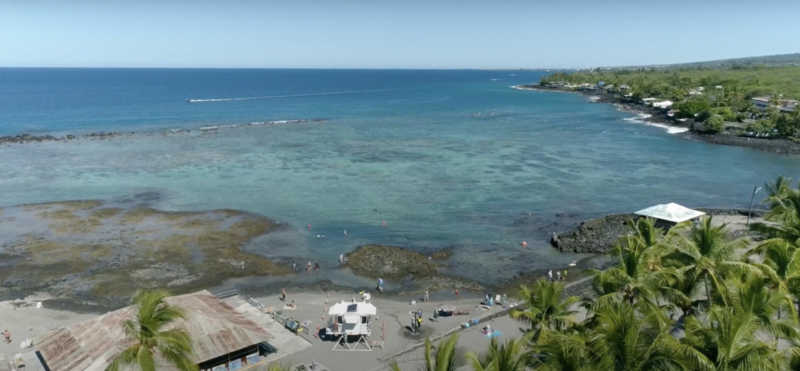
Photo courtesy of Honolulu Civil Beat
“Can I get sick if I swim there?" That’s one question the Surfrider Foundation wants to answer for residents of Oʻahu, Maui and Kauaʻi with its latest water quality report.
Based on the foundation’s ongoing community science effort, the report compiles data from more than 1,100 water samples gathered by volunteers at 90 beaches across the three islands in 2025. Twenty-four of the sites failed to meet the state's recreational health standards for fecal indicator bacteria more than 50% of the time. And two — the Moloa‘a Stream mouth on Kauaʻi and Punalu‘u Beach Park on Oʻahu — failed every single time they were tested.
Hannah Lilley, Hawaiʻi regional manager at Surfrider Foundation, said while the volunteers sampled water from a different set of hotspots than they did in 2024, the data is consistent with previous years.
“It's a dismal situation, and it's only going to get worse with climate impacts,” Lilley said.
Both sea level rise and flooding can overwhelm the islands’ outdated wastewater infrastructure.
Lilley believes the recent Kona low storms were a stress test for that infrastructure.
“We didn't do well. During and immediately after the storms, we were sampling across our three Blue Water Task Force labs and Maui and O‘ahu had bacteria levels that were 10 to 20 times over what the limit is,” she said. “Flooding obviously mobilizes all the pollutants that are already in the watershed.”
The Blue Water Task Force Now is a national network with over 60 chapter-run labs that measure bacteria levels at more than 600 ocean, bay, estuary and freshwater sampling sites across the country.
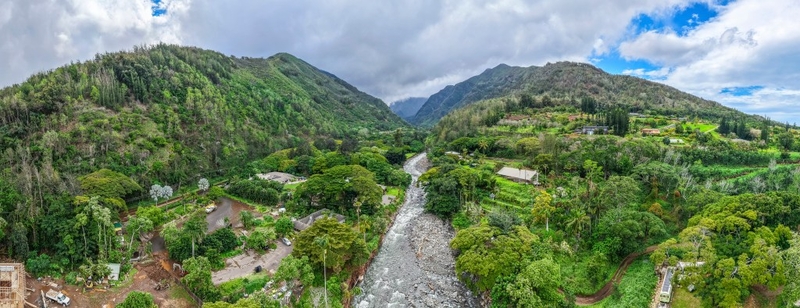
According to Surfrider’s research, beaches that are both downhill from areas with large numbers of cesspools, and located at or near the mouth of a stream or another fresh water outlet, are the most likely to be polluted with enterococcus bacteria.
Enterococcus isn’t usually harmful itself, but it is what’s called a “fecal indicator bacteria,” meaning it signals the potential presence of human or animal waste in the water. And if it’s in the water at significant numbers, that means it is more likely that other illness-causing bacteria, viruses and other invisible pathogens are present.
Surfrider doesn’t have the data needed to tie individual illnesses with the presence of pollution, but Lilley said she had seen a great deal of anecdotal evidence of the problem. “I know a lot of people that were going up on the North Shore and helping in the flood response effort, and then came down with really nasty gastrointestinal illnesses," she said. "We had, across the board, a lot of people reaching out to our Blue Water Task Force leads, complaining about getting sick."
She pointed to a reporting tool from the nonprofit WAI called Seasick, which aims to gather data with the explicit purpose of influencing policy on cesspool conversion.
With 83,000 cesspools — over half of which are on the Big Island — Hawaiʻi’s residents send an estimated 52 million gallons of wastewater into the groundwater below every day. The state would have to convert 3,000 every year to reach the goal set by the statewide mandate to convert them all by 2050.
“We're converting only a fraction of that,” Lilley said.
Converting a cesspool to a septic system can cost upward of $20,000, and there has been little support from the state so far. A bill introduced in the last legislative session would have established a technical advisory group, tasked with evaluating and updating the existing administrative rules, identifying barriers to conversion and exploring affordable alternatives to traditional conversions. It didn’t pass, but the Legislature did approve one to create a revolving loan fund to provide low interest or forgivable loans to homeowners to upgrade their systems.
Surfrider is also advocating for more federal funding under the Beaches Environmental Assessment and Coastal Health or BEACH Act, an amendment to the Clean Water Act that has funded water quality monitoring programs in all 50 states.
“Our Blue Water Task Force is designed to complement that program, but unfortunately it has been flat-funded for 25 years, so we're pushing for an inflation-adjusted amount of $17.6 million,” Lilley said. More funding is also needed at the county and state level, she added, since the state isn’t receiving federal funds for water testing.
Pollution at swim spots tends to be worse on O‘ahu and Kaua‘i than it is Maui due to the islands’ geology — there are more beaches on the windward, wetter side of Oʻahu and Kauaʻi. But stream outlets are also just popular spots for swimming across the board, and that’s why Lilley said the work to gather and test samples in those spots continues to be so important.
“We see a lot of keiki playing there, and families gathering — at Moloa‘a in particular. This is where homeschool groups gather, fishermen rely on this area, and it's where we consistently see some of the worst bacteria levels,” Lilley said. “That's why monitoring and getting that information out there is really important.”
Civil Beat’s coverage of climate change and the environment is supported by The Healy Foundation, the Marisla Fund of the Hawai‘i Community Foundation and the Frost Family Foundation.
Honolulu, HI