Rewriting Tennessee’s national park signs insults our ability to reckon with our history
Jun 22, 2026 | 5:48 am ET
Description
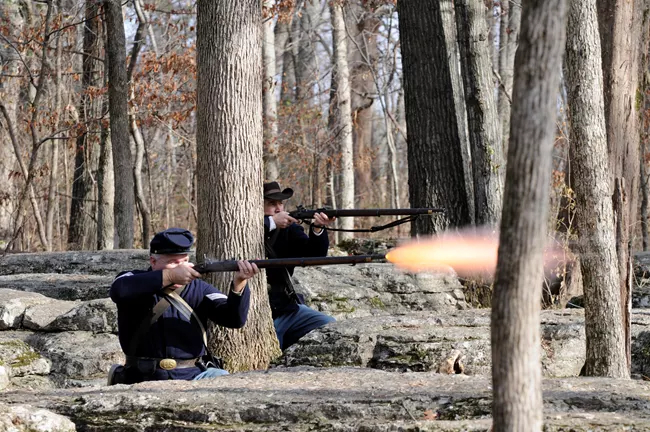
Signage at Stones River National Battlefield, which holds living history reenactments like the one pictured here, is slated to be reworded under an executive order from President Donald Trump. (Photo: National Park Service)
As Tennesseans prepare to celebrate the nation’s 250th birthday on July 4, many will head to the Volunteer State’s federally-managed parks to recreate, view monuments, commemorate historical events, hike trails, camp and pay tribute at national battlefields and cemeteries.
When exploring the trails, statues, historic buildings and visitor centers of these parks, Tennesseans will inevitably find themselves at wayside signs: large-print outdoor panels used by the National Park Service to help visitors understand parks’ landscapes, cultural sites, wildlife and historical events.
Only this time, if the Trump Administration perseveres in lawsuits filed against its May 2025 “Restoring Truth and Sanity to American History” Executive Order, EO, many of the signs could be rewritten.
An executive order designed to alter what we learn about the United States
President Donald Trump used an EO to order the Department of the Interior, DOI, to, “take action, as appropriate and consistent with applicable law, to ensure that all public monuments, memorials, statues, markers, or similar properties within the Department’s jurisdiction do not contain descriptions, depictions, or other content that inappropriately disparage Americans past or living, and instead focus on the greatness of the achievements and progress of the American people or, with respect to natural features, the beauty, abundance, and grandeur of the American landscape.”
At the time of this writing, the Department of the Interior has targeted over 443 wayside signs across America’s 423 national parks. Forty-seven signs have already been removed or replaced, 64 have been revised, and hundreds are pending review during ongoing litigation with national park conservation organizations and historical societies.
Examples of targeted wayside signs in Tennessee
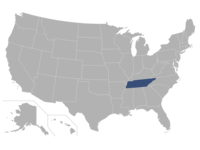
A new resource, missingparkhistory.org, has drawn on whistleblower data to show the public which wayside signs are under review. At the time of this writing, the federal government has flagged 39 signs across seven Tennessee parks.
What types of language and interpretive materials are being targeted in Tennessee? References to slavery, Native American displacement and Americans’ negative impact on the environment take center stage.
Here are a few examples:
- Free State at Fort Donelson National Battlefield. The Feb. 16, 1862, Union victory at the Battle of Fort Donelson was the first major Union win in the Civil War. After Brigadier General Ulysses S. Grant secured the fort, formerly enslaved African Americans established a community there called “Free State,” one of the first free communities in Tennessee. Currently, the park has three interpretive panels examining the history of Free State, all of which have been targeted for removal.

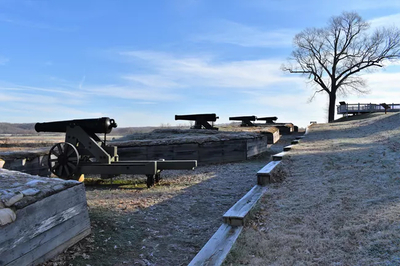
Signage about the Free State, a community of free Black people established at Fort Donelson, pictured here, is targeted for removal. (Photo: National Park Service) - Life of the enslaved at Stones River National Battlefield. The Dec. 31, 1862, Battle of Stones River was one of the bloodiest Civil War clashes. Before the battle, white Americans in the region prospered from enslavement. Nashville boasted “brokerage houses” where Black people were bought, sold and traded. The Trump administration has targeted 11 wayside panels in nearby Stones River National Battlefield that identify slavery as the primary cause of the Civil War, that detail the harshness of plantation life and use the term “slave state” to describe Tennessee.
- Settler colonialism at Cumberland Gap National Historical Park. A natural pass through the Appalachian Mountains along the borders of Kentucky, Virginia and Tennessee created a major migration corridor for Euro-Americans. Now preserved as a historical park, Cumberland Gap has many wayside signs that have been marked for removal or rewriting, mostly because they mention Native American land theft. One flagged sentence reads, “Travelers [Euro-American settlers migrating west] believed they could easily get lost or attacked by American Indians, who, because they still considered [this] their land, were inclined to war against the settlers.”
- Human impact on the environment at Great Smoky Mountains National Park. This park has several signs targeted for removal because they reference Americans’ negative impact on the environment. One flagged sign reads: “A natural, smoke-like haze inspired Cherokees to describe this area as being ‘shaconage,’ meaning ‘blue, like smoke.’ Today’s haze is not all natural. In recent decades air pollution has greatly increased haze and decreased visibility. Many plant and animal species in the Smokies suffer from the effects of acid precipitation and high amounts of ground-level ozone. Modern emission controls on pollution sources and careful placement of new industry can help prevent air quality from worsening. We can all help by conserving electricity, carpooling, recycling, and supporting policies that foster clean air.”
Patriotism cannot be built on false narratives
The American people don’t want the administration to engage in historical revisionism at our parks. According to a poll run by the American Association for State and Local History, 78% of Democrats and 74% of Republicans “support the appropriateness of confronting painful history. Asked whether it was acceptable to make learners uncomfortable by teaching the harm some people have done to others, over three-fourths of respondents said it was.”
By attempting to rewrite history, the administration implies that Americans can’t handle the sometimes grim realities of the nation’s past and the ways those events influence the present.
To be clear, Trump’s order doesn’t say that wayside signs regarding African American slavery or Native American displacement are factually wrong or even misleading. And it doesn’t attempt to deny that Americans are harming the environment. Instead, the order implies that the only way to make Americans more patriotic is to bury any unpleasant historical fact or harsh environmental truth that might make them feel unpatriotic.
Real patriotism is built on a love for this nation and a desire to improve it. Only fake patriots want to tear certain chapters from our nation’s collective storybook and ensure no one reads them.
Nashville, TN