Trust, not uncertainty, should guide the future of organ donation in SC
Jun 29, 2026 | 4:26 pm ET
Description
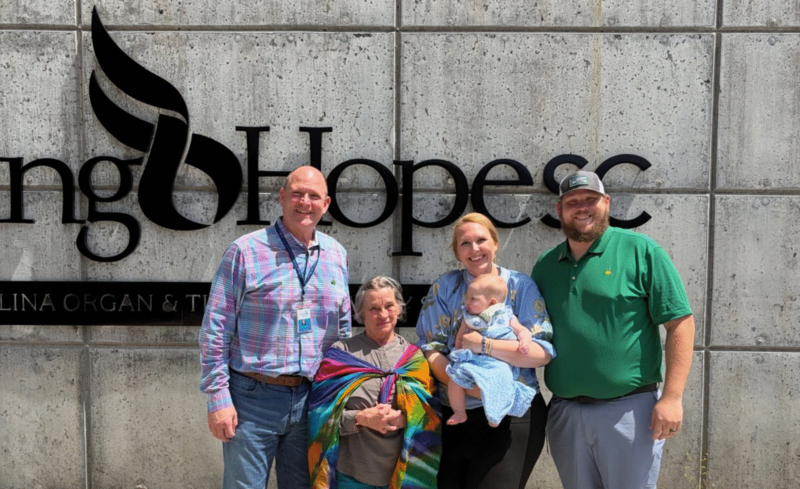
(Left to right) Dave DeStefano stands with Rose Hood, sister of a donor; and Amy and John McArdle, parents of a donor, at We Are Sharing Hope's headquarters in Charleston, South Carolina, in April 2026 on National Blue and Green Day, an annual event encouraging people to register to be a donor. (Photo courtesy of We Are Sharing Hope)
Lives are saved every day through the generosity of organ donors and their families. And behind each donation is a complex, around-the-clock effort to honor that gift and help it reach someone in need.
As South Carolina’s federally designated organ procurement organization, We Are Sharing Hope SC is part of every step of that process, from sitting with a grieving family in a hospital room to ensuring a donated kidney reaches a recipient safely.
With 157 staff members serving communities across South Carolina, our work is rooted in a local presence and a commitment to those we serve.
That community connection is essential because organ donation depends on trust. Our team members understand that organ donation is far more than a medical process. It is an act of extraordinary generosity, often made during moments of profound loss, and requires compassionate professionals who understand local cultures, traditions, and values.
For more than four decades, Sharing Hope has earned that trust while continually improving its service.
Since 2022, we’ve reported an increase in the number of organ donors in South Carolina by 44% and the number of lives saved by South Carolina organ and tissue donors by 37%.
And we have been consistently recognized as a top workplace, helping attract and retain the skilled professionals this work demands.
Which is why the situation Sharing Hope and organ procurement organizations across the country are facing is so concerning.
The nonprofit that coordinates organ transplants in SC could fold under federal change
In 2022, the Centers for Medicare and Medicaid Services introduced new performance metrics intended to strengthen accountability among the nation’s 56 organizations.
Instead, these flawed metrics have created significant confusion and fear, and have placed high-performing organizations, including Sharing Hope, at risk of decertification.
The primary flaw in the metrics outlined by the federal agency is that they do not adequately account for factors outside an organization’s control. Factors like population health, causes of death that affect the ability to donate, and differences in state health data collection.
For states like South Carolina, which faces significant challenges in population health and access to care, these omissions can produce misleading comparisons and distort actual performance.
The fairness and legality of these metrics are now the subject of ongoing federal litigation and rulemaking. And the uncertainty created by these metrics is already negatively affecting decisions across the donation system.
Recently, Prisma Health, one of our valued hospital partners, submitted a federal waiver request to transfer its federally designated organ procurement services to a North Carolina hospital system. We value our partnership with Prisma and, by their own account, Prisma’s decision was not prompted by dissatisfaction with Sharing Hope or the care and service we provide.
Rather, it was a response to the federal metrics that remain under legal and regulatory review.
Prisma Health seeks split with SC organ transplant coordinator facing decertification
That should concern everyone who cares about organ donation.
When major decisions are driven by uncertainty, the consequences can extend far beyond a single organization or state.
Organ donation depends on a carefully coordinated network of hospitals, donor families, transplant centers, and organizations working together with trust and stability. Policies that create confusion risk weakening the partnerships that make lifesaving transplants possible.
In the case of Prisma’s request, the consequence of this uncertainty risks transferring care of South Carolina donor patients out of state to a North Carolina hospital system.
It would re-direct South Carolina’s donation resources — which are meant to serve our community — to support a North Carolina hospital system.
And it would place control of organ sharing practices in the hands of a North Carolina hospital system that has its own transplant program and priorities, creating a genuine conflict of interest with no explanation or controls to ensure fairness and equity in organ sharing for patients in South Carolina.
As policymakers, regulators, and healthcare leaders consider the future of organ donation in South Carolina, we urge them to focus on what matters most: supporting donor families, transplant recipients, and the systems that connect them.
Any decisions should be guided by fair and accurate metrics that reflect real-world conditions and reward meaningful results.
At Sharing Hope, our commitment remains unchanged. Every day, we work alongside hospitals, healthcare professionals, and communities across South Carolina to honor the gift of donation
and help save lives.
We are proud of the trust South Carolinians have placed in us over the past two decades, and we remain dedicated to earning it for decades to come.
Columbia