Groups urge Kentucky’s utility regulator to investigate affordability
Jun 29, 2026 | 4:39 pm ET
Description
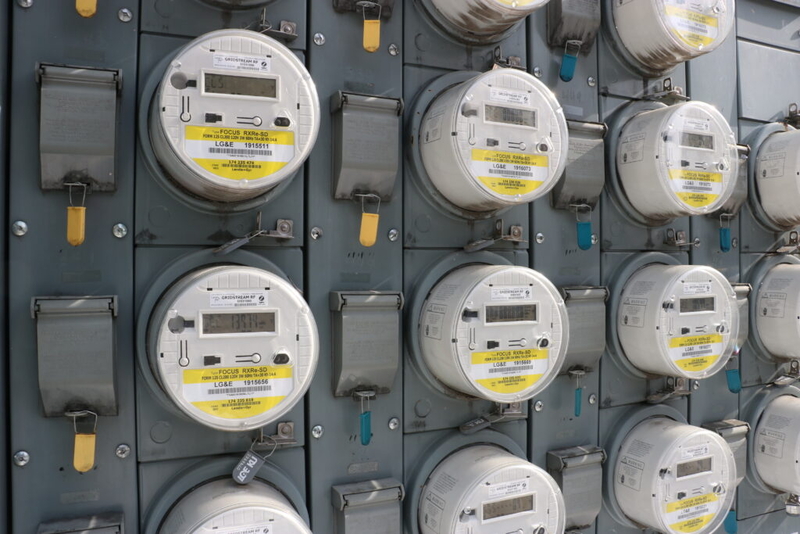
A matrix of electric utility meters for Louisville Gas and Electric. (Kentucky Lantern photo by Liam Niemeyer)
A coalition of consumer advocacy, environmental and renewable energy groups is calling on Kentucky’s utility regulator to study various aspects of utility affordability for ratepayers, including the potential costs of data centers and fossil fuels.
In a letter dated Sunday, the groups are asking the Kentucky Public Service Commission to investigate “the drivers of rising energy costs” and “consider a wide range of durable solutions to address affordability”.
“We believe the commission, the only executive branch agency tasked with providing our legislature information on how to keep utility costs fair, just and reasonable, is ideally situated and statutorily empowered to provide legislators, the public, and other stakeholders with actionable information on how to address the crisis of rising energy prices in our state,” the authors write.
The groups signing the letter include the Letcher County-based Appalachian Citizens’ Law Center, the Berea-based Mountain Association, Kentuckians for the Commonwealth, the Kentucky Solar Energy Society, the Kentucky Conservation Committee and the Kentucky Chapter of the Sierra Club.
The authors point to rising electricity costs amid billions of dollars of revenue pulled in by utility companies, arguing that Kentucky families “need durable solutions that will lower energy burdens and monthly costs.”
The authors ask the commission to study affordability from a wide range of aspects including demand-side management, performance-based ratemaking, the costs of serving data centers and costs of “extending the life of older fossil-fuel generation resources.”
A spokesperson for the commission did not immediately respond to an email Monday afternoon requesting commentary on the letter.
A joint resolution primarily sponsored by Sen. Scott Madon, R-Pineville, that would have directed the commission to investigate improving the affordability of utility service for low-income and fixed-income individuals did not receive full passage through the state legislature.
The commission regulates the rates and services of more than 1,100 utilities, ranging from small water districts providing drinking water to rural communities to the large investor-owned electricity utility Louisville Gas and Electric and Kentucky Utilities. The regulator also has the power to open investigations to study specific topics; it opened a case to study nuclear energy last year.
Frankfort