Rebuilding what was extracted: Black entrepreneurship, HBCUs and Missouri’s future
Mar 06, 2026 | 6:50 am ET
Description
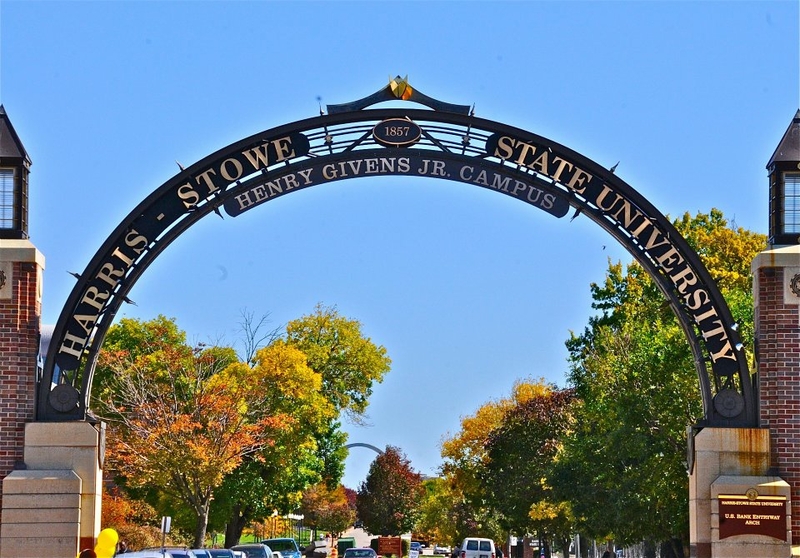
Supporting Black entrepreneurship is a statewide economic imperative. When Black-owned businesses thrive, they create jobs, stabilize neighborhoods, and contribute to local financial infrastructure (photo courtesy of Harris-Stowe State).
We often treat Black history as a February retrospective, but the work of rebuilding what was extracted from communities like Mill Creek Valley requires a calendar without an expiration date.
Mill Creek Valley was a once-thriving Black community dismantled in the name of urban renewal. Its destruction wasn’t caused by a lack of talent, entrepreneurship, or leadership; It was caused by decisions about whose futures mattered. That lesson remains urgent today, far beyond St. Louis.
Before demolition began in 1959, Mill Creek Valley was home to more than 20,000 residents. Spanning roughly 54 blocks, the neighborhood supported 800+ businesses, 40 churches, and 5,600 housing units. Doctors, educators, tradespeople, restaurateurs, and entrepreneurs built wealth, stability, and community there. Within a few years, nearly all of it was erased; a public policy issue, not market failure.
That history matters because Missouri still grapples with the consequences of disinvestment and disenfranchisement in Black communities, particularly when economic opportunity and entrepreneurship are spotlighted.
Entrepreneurship is often framed as a risk. For many under-resourced and underrepresented communities, it is also a necessity, one of the most viable pathways to economic mobility. Small businesses are the backbone of Missouri’s economy. More than 99% of businesses in the state are small businesses, and they employ nearly half of Missouri’s private-sector workforce. Yet access to entrepreneurship as a career pathway remains deeply disproportionate.
Nationally, Black founders receive a fraction of the capital their counterparts do. According to Crunchbase, only about 4% of investment funding went to Black-owned businesses in 2024. This is not because of a lack of ideas, work ethic, ambition, or merit. It is the result of systemic barriers: limited access to capital, networks, mentorship, technical assistance, and markets.
Locally, the data is just as charmless. Over the years, Black entrepreneurship has increased in St. Louis, but compared to other select large cities, we are towards the bottom of the list.
In his recent State of the State address, Governor Mike Kehoe called for building a “foundation for growth” in Missouri. This ambition will only be realized if economic opportunity reaches the communities and entrepreneurs historically excluded from it.
If Missouri is serious about strengthening its economy, especially in historically underinvested areas, entrepreneurship must be part of the solution. And that requires investing in institutions that are designed to meet people where they are.
Historically Black Colleges and Universities have long played that role. HBCUs educate a substantial share of Black professionals, entrepreneurs, and civic leaders nationwide, despite representing a small fraction of higher education institutions. They are uniquely positioned to close gaps of disparity because they combine education with cultural competency, community trust, and mission-driven support.
Missouri has only two HBCUs. That makes their role even more vital.
At Harris-Stowe State University, the Anheuser-Busch School of Business established its Center of Innovation & Entrepreneurship to address unmet needs in the St. Louis region and beyond by providing education, consulting, and support to small businesses and startups, particularly those led by underrepresented and underserved scholars and community founders. Our vision was simple but powerful: create a dynamic environment that promotes innovation, entrepreneurship, and community engagement, while expanding economic opportunity.
The location of that work is not incidental. The Center of Innovation & Entrepreneurship sits in the historic footprint of Mill Creek Valley itself.
That matters because it carries memory and responsibility. The destruction of Mill Creek Valley represents one of the largest forced displacements of Black residents in Missouri’s history. Rebuilding opportunity in that same space prioritizes accountability and intention, not a fascination with nostalgia.
Today, entrepreneurship initiatives at Harris-Stowe are helping cultivate highly skilled individuals, advance applied research, and deliver practical programming for aspiring and existing entrepreneurs. This work recognizes that talent is evenly distributed, even when opportunity is not, and that rebuilding requires sustained investment, not symbolic gestures.
Missouri’s Black population comprises roughly 12% of the state, with higher concentrations in urban metropolitan areas like St. Louis and Kansas City. Supporting Black entrepreneurship is a statewide economic imperative. When Black-owned businesses thrive, they create jobs, stabilize neighborhoods, and contribute to local financial infrastructure. Everyone is a beneficiary.
In addition to honoring what was stripped from communities like Mill Creek Valley, we should also push ourselves to ask whether we are willing to rebuild with intention.
Missouri has a choice: we can limit our acknowledgement of Black excellence and struggle to the shortest month of the year, or we can intentionally invest in the futures that were deliberately sidelined every single day. Rebuilding the foundation for growth that was once disrupted requires sustained commitment, policy alignment, and investment in the institutions already doing the work.
This strengthens Black entrepreneurship, HBCUs and communities that contribute to a stronger Missouri economy.

Jefferson City, MO