Ohio’s Tandanda Foundation on a humanitarian mission in Mali
Oct 27, 2026 | 3:50 am ET
Description
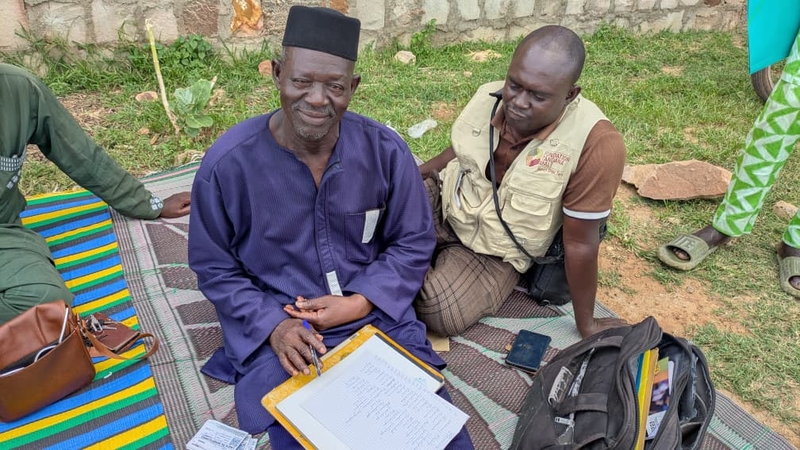
Mayor Garibou Yalcouye (in purple) with Hamidou Yalcouye of Tandana. (Photo provided by Alan Johnson)
With wars and violence erupting in hot spots around the world, Mali is easy to overlook although the West African nation of 26 million has been embroiled non-stop in coups and armed conflicts for more than a decade.
Helping Malians has been the focus of an Ohio-based non-profit group, The Tandana Foundation, for all its 20-year history. The group helped build schools, dig wells and plant community gardens, while providing education and training programs for women.
But in recent years the foundation’s work was forced to shift dramatically from improving people’s lives to helping them survive as rural villages and townships were overrun by insurgent forces, forcing residents to flee their homes and become refugees to Mali’s larger cities.
Anna Taft, Tandana’s founding director and daughter of former Ohio Gov. Bob and Hope Taft, quickly had to come to grips with the transition from empowering communities to helping survivors.
“It’s heart wrenching to see this happening to our friends,” she said. “It’s a challenging, horrible situation. It doesn’t make me feel like all our work is lost … but it hits me in the heart.”
With support from her parents, and dozens of others, Anna Taft created the foundation in 2006 to help communities in Mali in Africa and Ecuador in South America. The foundation’s home base is the Taft’s residence in Spring Valley, Ohio, in Greene County.
Joyce Johnson of Columbus visited Mali in 2011 in what she said was a life-changing trip with Tandana. Johnson, a retired schoolteacher and spouse of Tom Johnson, a former state lawmaker, had traveled to Europe previously but was unprepared for what she experienced in Mali.
“I had no idea what to expect. The territory was so raw. It was almost shocking.”
She remembers carrying stones on her head, helping local people dig wells, building a school and plant gardens. Johnson said she was amazed that children walked up to nine miles each way just to get to school each day.
While she has not been back – there currently is a travel ban in effect for Mali – Johnson said she “can’t image how everything is gone and burned and the people had to leave everything behind. They have to start their lives all over again.”
“But work is still being done,” Johnson said. “Tandana is providing tents and food and supplies and schools and training people to start earning some income.”
An impoverished country comprised two-thirds by the Sahara Desert, Mali was a French colony until 1960. It is home to Timbuktu, a faraway place many have heard of but could not locate on a map. The country’s per capita annual income is $1,137 in U.S. dollars; the leading cause of death is malaria. Mali flirted with democracy, but for years has been battered by military coups and armed conflicts triggered by religious, ethnic and economic tensions. Violence resulted in wholesale murders and purges of dozens of rural communities.
The unrest and suffering in Mali were exacerbated last year by dramatic cuts – as much as 90 percent – made by the Trump administration to allocations from the U.S. Agency for International Development. One program eliminated had trained thousands of young people to read and write in their own language.
Another Columbus woman, Mary Maloney, pitched in to help Mali in the early years of Tandana. Among other things, she purchased a computer system, a gift celebrated with great pomp and local flourishes when she visited Kansongo in central Mali visited in 2009. A new-born baby was named Mary to honor her gift.
“Now that place is filled with refugees, people are usually live and die in the same village, are fleeing violence,” Maloney said. “It is so sad. My heart is with Mali. It was life-changing for me to be able to spend time there.”
While Johnson and Maloney were visitors, the Mali situation is personal to Moussa Tembine, a native and Tandana’s country director. He started working with the Ohio group in 2006 after researching organizations to help his native country.
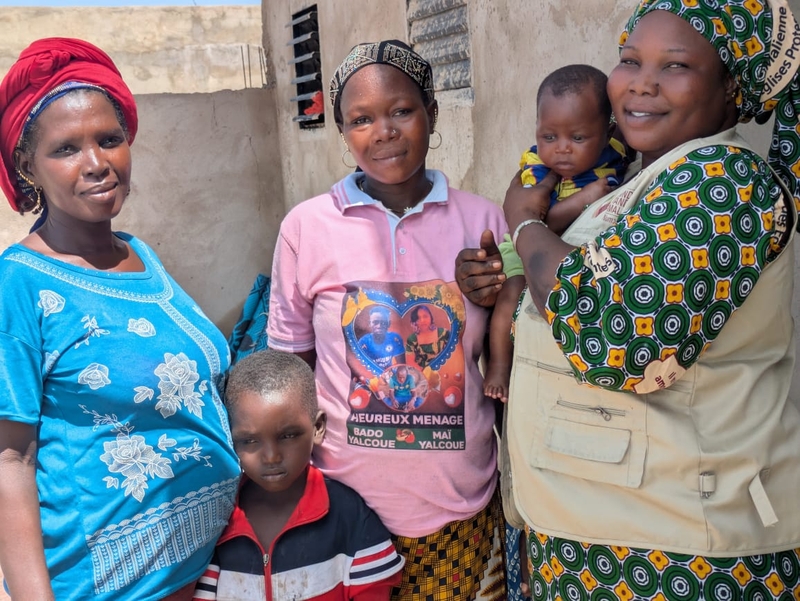
Tandana’s work has focused on an area in the Sahara region with little rainfall and a scattered population of about 90,000. When violent rebels burned their villages, many people fled to Bandiagara, the closest large city. Tandana has been working there to help displaced people, providing food and shelter, schools for children, and teaching job skills to adults who have no experience living and working in cities. They show the new city-dwellers simple things such as how to set up a bank account, something they never dreamed of needing.
The villages “suffered many attacks,” Tembine said. “These groups are very violent and spare no one. They rob, burn the village, and chase the population out … They attack the trucks transporting food and fuel and take everything.”
Tembine estimated 2,000 people from destroyed townships and villages fled to cities.
“We spend sleepless nights. It was hard to see the work of years disappear. I do hope, little by little, peace is doing to come back,” he said. “In any case, we’re in it for the long haul … Without support from the U.S. people, we wouldn’t be able to do this.”
Garibou Yalcouye, a local mayor who worked with Tandana, said his township suffering terrorist attacks four straight months resulting in “great losses of human lives and material damage. I ask the Tandana Foundation and other partners to come to our support. It is a cry of my heart in this crisis.”
Aissa Seguepire, a refugee aided by Tandana, said when people fled the village they had no news of family for weeks. “They killed many people and took all our belongings.” She lost four brothers. As refugees fled, several young women gave birth, including her daughter who had twins.
Tandana will commemorate two decades of humanitarian efforts in Ecuador and Mali with a Nov. 21 celebration at St. Charles Prepatory School, 2110 E. Broad St. in Bexley. Information is at tandanafoundation/20th.
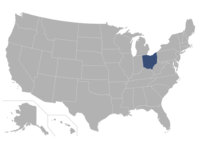
Columbus, OH