Ohio’s Kroger gets $3 million ‘MAHA’ grant. Critics call it taxpayer-funded marketing.
Oct 27, 2026 | 3:55 am ET
Description
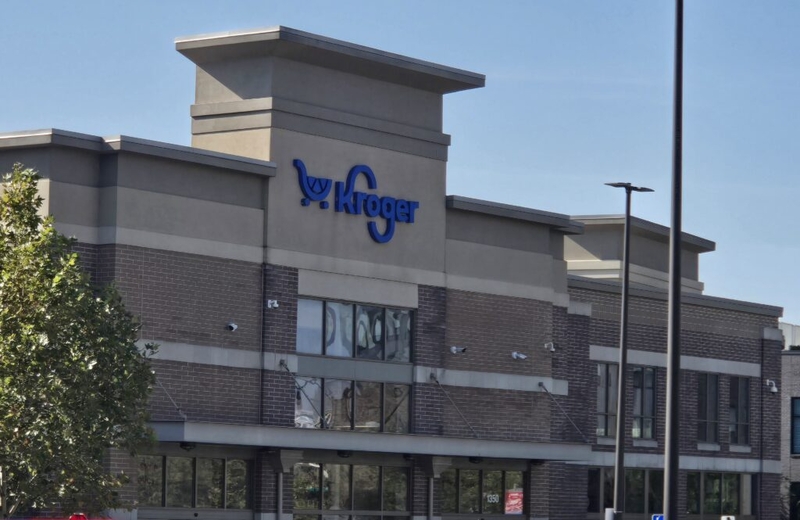
A Kroger store in Columbus, Ohio. (Photo by Marty Schladen/Ohio Capital Journal)
Cincinnati, Ohio-based Kroger has received a $3 million Make America Healthy Again federal grant. Critics say it appears to be a taxpayer gift to market the company and do more customer surveillance.
The award was made by the U.S. Department of Health and Human Services on Sept. 30.
The program is explicitly intended to create a “statistically significant sales lift” in Kroger stores as the company buys out its competitors.
Progress toward those goals will be monitored by Kroger’s data-gathering subsidiary, 84.51°. That operation is already generating more than a third of corporate profits by surveilling customers and selling their information to other businesses.
The award to Kroger is part of the Make America Healthy Healthy Again program spearheaded by Health Secretary Robert F. Kennedy Jr., a lawyer and vaccine skeptic — not a health professional.
Kennedy’s MAHA program says it will “build a healthier, stronger America.”
Kroger and the U.S. Department of Health and Human Services didn’t respond to questions for this story.
The taxpayer grant to Kroger is part of MAHA’s Eat Real Food campaign.
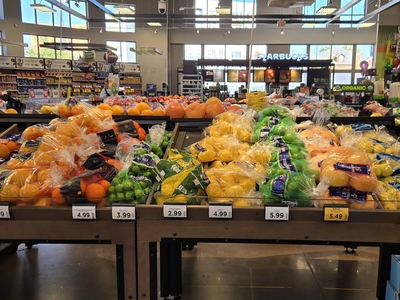
By encouraging consumption of whole foods such as fruits and vegetables, it purports to address what is a real health crisis in the United States.
The Stanford University School of Medicine reports that 60% of calories consumed by U.S. adults and 70% of those eaten by children are ultraprocessed, or non-whole foods.
Nutritionists and doctors report that high intake of ultraprocessed foods is associated with a 32% higher risk of obesity, a 37% higher risk of type 2 diabetes, a 32% higher risk of hypertension, and a 23% higher risk of pulmonary heart disease.
Kennedy’s MAHA movement has its critics. The independent, nonprofit Center for Science in the Public Interest said MAHA’s initial assessment of public health “selectively picks from the scientific literature to support Kennedy’s predetermined biases in favor of specific diets and products such as animal fats, and against vaccines and exposure to electromagnetic radiation — anti-scientific beliefs that Kennedy has raged about for years.”
When it spotted the Kroger grant, the nonpartisan Center for Responsible Food Business saw what it thought was another problem — that the taxpayer grant seemed aimed at as much increasing the grocery giant’s sales as at promoting healthy eating. It also appeared to feed Kroger’s lucrative data-gathering operation.
“Kroger will not only have more of its sales boosted, it will be getting more of that customer data funneled through 84.51°,” Taylor Warren of the Center for Responsible Food Business said in an interview. “I don’t think taxpayers want to be funding Kroger’s customer-surveillance program.”
That the taxpayer grant seeks to boost the Kroger sales is undeniable.
It lays out program activities such as vouchers for whole foods and in-store cooking classes. It also describes local and social media outreach. But among the goals it lists is a “statistically significant sales lift in featured whole foods categories at participating stores.”
Success in meeting that and other goals will be determined through “post-event measuring and reporting via Kroger’s 84.51° data platform,” it said.
Warren sees conflicts in the arrangement.
“So Kroger gets the $3 million and it’s grading its own homework,” he said. “When (the department of Health and Human Services) goes to determine the success of the program, it’s determined by Kroger.”
He added, “Why are we subsidizing any part of what Kroger is doing when they have profits in the billions?”
Kroger turned a $1.25 billion profit in the fourth quarter of 2025 alone. While rising input costs are responsible for much of customers’ sticker shock, in at least some instances, company profits rose even faster.
In a 2024 trial to block a proposed merger with Albertson’s, the Federal Trade Commission presented testimony from a Kroger executive who said the company hiked the price of milk and eggs above the rate of inflation.
The compensation of the company’s top executive also raises questions from critics in an era of sky-high grocery prices: Kroger CEO Greg Foran’s pay is more than $17 million a year.
“For a company as large as Kroger and the profits they’re already making, when they learn they’re taking taxpayer money, people don’t like it,” Warren said. “It just feels so unfair.”
Warren and his group find another use to which the federal grant money might be put to be particularly nefarious.
It has to do with “dynamic pricing” — the ability to use electronic price tags to quickly change prices, similar to the electronic signs used by gas stations.
“We believe there’s a machine built around dynamic pricing that they are putting together and this has implications for that because this grant going to Kroger will be measured by none other than their own data subsidiary 84.51°,” Warren said.
“They’re using this data on us to determine the highest prices we would be willing to pay through things like dynamic pricing, which is very enabled by things like digital price tags that can change at a moment’s notice.”
Kroger has said the labels would allow it to save employee labor and rapidly update prices to reflect changes in supply and demand. But skeptics, including U.S. Sen. Elizabeth Warren, D-Mass., and then-Sen. Bob Casey, D-Penna., in 2024 expressed suspicions.
“Widespread adoption of digital price tags appears poised to enable large grocery stores to squeeze consumers to increase profits,” they wrote in a letter to the company.
Warren, of the Center for Responsible Food Business, said Kroger’s data subsidiary already hoovers up information from 63 million loyalty members every time they scan their Kroger card.
From that, the platform builds customer profiles estimating income, family size and things like whether they have pets. It can also monitor customer behavior and make educated guesses about what the maximum amount one is willing to spend on an item and dynamically price it accordingly, Taylor Warren said.
As it is, Kroger’s 84.51° subsidiary sells the data it gathers from customers to other businesses. In 2025, those sales accounted for 35% of Kroger profits, according to Consumer Reports.
The $3 million taxpayer grant Kroger received envisions engagement with between 1.2 million and 1.8 million customers. Warren said their data likely will be sucked into Kroger’s data operation and commodified along with all the rest.
“This is very unsavory,” he said. “It’s very concerning.”
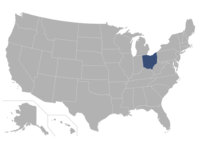
Columbus, OH