Medical debt hit 1 in 4 Americans and 1 in 5 Ohioans last year, even the insured, study shows
Oct 27, 2026 | 4:00 am ET
Description
(Getty Images)
Medical debt hit 1 in 4 Americans and 1 in 5 Ohioans last year, a new study shows, including those who have health insurance.
A recent study by the Urban Institute, supported by the Robert Wood Johnson Foundation, showed that more than a quarter of American adults reported medical debt for them or someone in their family in 2025, and more than half of those who reported medical debt owed at least $1,000.
Of those who reported debt, 26% were adults with current health insurance.
“Health insurance does not shield people from rising healthcare costs and the crushing burden of medical debt,” Katherine Hempstead, senior policy officer for the Robert Wood Johnson Foundation said in a press release announcing the study.
“Historic cost increases and coverage losses are forcing impossible tradeoffs between healthcare and other basic needs.”
The study found that for those with medical debt, 1 in 7 Americans have past-due medical bills or bills they couldn’t pay at all. Adults ages 45 to 54 represented the largest population with medical debt, but 17.6% of those in the study who were on Medicare also reported owing medical debt.
Researchers at the Health Policy Institute of Ohio have also been studying medical debt and the impact it can have on families, as well as overall health outcomes in the state.
“As expected, being uninsured is a major risk for experiencing medical debt,” HPIO researcher Brian O’Rourke told the Capital Journal. “However, recent data in Ohio suggests that this is not just a problem for our uninsured population.”
Citing the Ohio Medicaid Assessment Survey, O’Rourke said more than 1 in 5 Ohio adults were struggling to pay off medical bills in the last year.
While the data shows the highest population of people having trouble paying off medical debt are those who don’t have insurance, a quarter of Ohioans with private insurance were also struggling to pay.
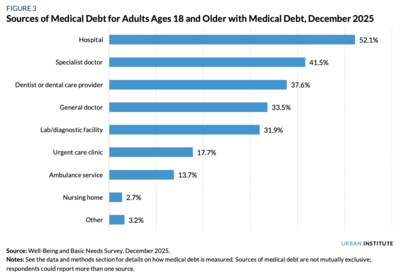
In the Urban Institute study, researchers found that hospital services resulted in the largest debt reported, with 52% of adults with medical debt citing hospital costs.
Debts also came from specialists, dental care, and general doctor services, according to the research.
O’Rourke said out-of-pocket medical spending is “a significant burden in Ohio,” with the average family’s out-of-pocket medical spending in the state exceeding the national average.
The Ohio institute has released several pieces of research showing the potential impact cuts to Medicaid through the federal budget spending bill (also called the One Big Beautiful Bill Act), and reduced subsidies for the Affordable Care Act could have on Ohio’s uninsured population.
Ohio’s population in the ACA Marketplace has already seen a drop of 100,000, and the HPIO projects as many as 300,000 Medicaid participants will be dropped because of newly imposed work requirements, which O’Rourke said will likely leave “many uninsured and with limited resources to pay off medical bills.”
The Urban Institute study also noted anticipated changes, including worsening medical debt, from rising health insurance costs, along with Medicaid and ACA changes.
“This analysis shows medical debt is pervasive, affecting adults across age groups and income levels, and people with and without health insurance,” said the Urban Institute’s Michael Karpman, in a statement.
“It will be important to monitor how the burden of medical debt shifts as policies restricting access to Medicaid and (the ACA) Marketplace coverage take effect.”
More uninsured Ohioans on the books and a higher amount of medical debt certainly causes strain on households, but O’Rourke said state providers, particularly those in rural or underserved areas, will also see impacts.
“More uncompensated care can lead to closures and possibly even raise healthcare prices even further in the state,” O’Rourke told the Capital Journal.
The Ohio legislature is on break until after the Nov. 3 election, but one bipartisan bill that could see action as the lawmakers return is a bipartisan measure addressing medical debt.
Ohio House Bill 257 was introduced in May 2025 by sponsors Rep. Michele Grim, D-Toledo, and Rep. Jean Schmidt, R-Loveland.
The bill would cap the interest rate for medical debt at 3% annually, and bar methods like wage collection to pay the bills.
The bill would also keep healthcare providers or collections agencies from reporting nonpayment of medical debt to consumer reporting agencies.
The bill has seen several hearings in the Ohio House Health Committee, garnering support from groups like the American Lung Association, the American Cancer Society Cancer Action Network, and the American Diabetes Association. Gary Dougherty, director of state government affairs for the ADA, said limiting interest on medical debt in particular would help patients like those with diabetes.
“People with medical debt have reported it as a driving factor for delaying care or not filling their prescriptions,” Dougherty wrote in June testimony to the House Health Committee.
“For people with diabetes, it is critical that we eliminate financial barriers that may result in them forgoing the care they need to manage the disease.”
Groups speaking out against the bill include the Consumer Data Industry Association, and the Association of Credit and Collection Professionals, that argued the bill would “take an overly broad approach to limiting medical billing and collection practices that … would lead to unintended negative consequences for Ohio consumers and providers of medical services in the state.”
The bill has until December to make it through the General Assembly, or it will need to be introduced again in the new year, with the beginning of the new two-year General Assembly term.
Columbus, OH