Ohio Republican threatens public school funding for local districts that stand up for themselves
Feb 12, 2026 | 4:30 am ET

Description
Getty Images.
Ohio spent more than a billion dollars on private school vouchers for the 2025 fiscal year, the second full year with universal (EdChoice) school vouchers — higher than the estimated cost that the nonpartisan Ohio Legislative Service Commission predicted about school voucher programs in the Buckeye State.
According to Ohio Department of Education and Workforce (ODEW) data, there were 1,652,539 students who attended Ohio schools during the 2024-25 school year; 88% of those students were served by public school districts, while only 12% were enrolled by nonpublic Ohio schools.
The total amount for Ohio’s five private school voucher programs, the Autism Scholarship, the Jon Peterson Special Needs Scholarship, the Cleveland Scholarship, the Education Choice Scholarship and the Educational Choice Expansion Scholarship, was $1.09 billion, according to data from the ODEW.
Nearly half of the voucher money ($492.8 million) was not directed to voucher programs for special needs students, but went to Education Choice (EdChoice) Expansion vouchers, which have very little transparency and accountability.
There is much confusion about the scope and breadth of EdChoice school vouchers in our state.
Ohio created America’s biggest school voucher program in 2023, by expanding eligibility to EdChoice vouchers for all Ohioans in the state budget. That move diverted substantial public funds to private and religious schools to pay mostly for students who were already enrolled in private schools.
A coalition of public-school districts came together to sue the state of Ohio over the unconstitutional and harmful EdChoice private school voucher program.
Franklin County Common Pleas Judge Jaiza Page ruled the EdChoice voucher program unconstitutional in a 47-page decision in June 2025.
Ohio legislators eliminated the bipartisan Fair School Funding Plan, slashing the expected public education budget by nearly $3 billion over the next two years, making school districts increasingly reliant on local taxes.
School district leaders and residents finally began to realize that the voucher agenda was created by a legislature that seeks to privatize our public schools, and they are angry. The success of pro-public education local school board candidates and school levies this past election cycle has made citizens more prone to fight back.
School districts continue to join Vouchers Hurt Ohio (VHO) to challenge the constitutionality of the EdChoice private school voucher scheme that will siphon away an additional $1.5 billion from underfunded public schools in the two-year state budget.
Ohio Republicans must be getting nervous about how well VHO is doing in the court of public opinion.
State Rep. Jamie Callender introduced House Bill 671, a bill mandating that the state can withhold funding from school districts involved in the Vouchers Hurt Ohio lawsuit, meaning that the school districts can’t have their state funding until they drop out of the lawsuit.
Mr. Callender’s proposal is dangerous because it is not just about vouchers. It would effectively remove the ability for school districts to challenge unconstitutional legislation.
It would open the door to block other public entities like cities and townships and counties that receive state funding from their constitutional right to appeal to the court system,” said Jocelyn Rhynard, an elected Board of Education member for the Dayton City Schools.
“Mr. Callender is saying to school districts– if you are advocating for your students by challenging the constitutionality of EdChoice private school vouchers, then you will be punished by losing tax dollars Ohioans have paid to support public schools. Think about that,” William Phillis, Vouchers Hurt Ohio leader with the Ohio Coalition for Equity & Adequacy of School Funding, said.
HB 671 is moving very quickly and has already been assigned to the House Finance Committee– rumor is that it will be fast-tracked through the legislative process.
The Ohio Constitution (Article VI, sections 2 and 3) requires the state to secure a thorough and efficient system of public common schools. State leaders have no right under the Ohio constitution to fund alternative educational programs that diminish moral and financial support from the common school system.
And our elected leaders most certainly have no right to punish public school districts that have a long-standing constitutional right to pursue legal action on behalf of the students and families they serve.
Let’s hope that Callender’s legislative intimidation bill encourages more school districts to join the lawsuit against the state of Ohio’s unconstitutional EdChoice voucher program. Vouchers Hurt Ohio!
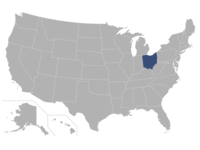
Columbus, OH