NJ health officials confirm probe of potential ‘cancer cluster’ in Keyport
Apr 22, 2026 | 1:29 pm ET

Description
State Health Commissioner Raynard Washington says his department is investigating a high number of cancers near a former landfill in Keyport, New Jersey. (Washington photo courtesy of the Department of Health/Statehouse photo by Hal Brown)
New Jersey health officials said Wednesday they will investigate the potential connection between dozens of reported cancer cases and a former landfill in the bayside township of Keyport, in Monmouth County.
State health commissioner Raynard Washington told lawmakers the state is investigating what residents fear is a “cancer cluster” in an area where toxins have been found in the soil and water near a 50-acre tract that has been an industrial park, dumping ground and teen hangout for decades.
“You have my commitment we are going to move as quickly as possible through the process” of the initial investigation, Washington told Assemblyman Gerry Scharfenberger (R-Monmouth), who represents the area and pressed the health commissioner for answers.
Scharfenberger said pollution in the area is well known. A recent report from NJ.com reported that a local resident had identified 41 people with various cancers in the community, 28 of them on one street near the landfill.
“There is very clear evidence of a cancer cluster around the site,” Scharfenberger said.
Washington, an epidemiologist, cautioned Scharfenberger and other members of the Assembly Budget Committee tasked with reviewing the department’s budget that connecting multiple cancers to a shared cause is a complex and time-consuming process. This work can be “difficult and confusing to the public,” he said.
A cancer cluster is defined by the federal Centers for Disease Control and Prevention as an area where there are a greater number of cancer diagnoses than would normally be expected within a defined group of people in a specific geographic location. Cancers must be of the same type or linked in other ways, like through a cause.
The state Department of Environmental Protection told NJ.com it is responsible for proper closure of the landfill, which ceased operation as a dump in 1979, and protecting public health. The site was first used by an aircraft manufacturer, later for various aircraft operations, and eventually became an industrial park.
Chemicals including ammonia, benzine, chlorine and lead have been found in unsafe levels in the water, the DEP said, while high rates of arsenic, vanadium, and polychlorinated biphenyls were detected in soil at the landfill.
“It has all the bad bells and whistles you can expect” of a toxic landscape, Scharfenberger said.
New Jersey, long home to manufacturing and the chemical residue that results from such work, has a history with suspected cancer clusters. At least 65 graduates of Colonia High School, in Woodbridge Township, were diagnosed with a rare brain cancer in 2022, but experts found it failed to qualify as a true cluster.
However, officials did confirm a cancer cluster existed in Toms River in the mid 1990s after more than 100 childhood cancers were eventually linked to polluted waterways. The former Ciba-Geigy Chemical Corp., the town’s largest employer, was charged criminally and paid millions in fines and for the cleanup, which continues today.
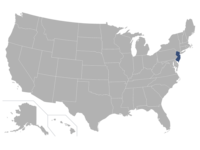
Trenton, NJ