Algal toxins emerge as a new concern in Alaska’s Northern Bering Sea
May 29, 2026 | 9:40 am ET
Description
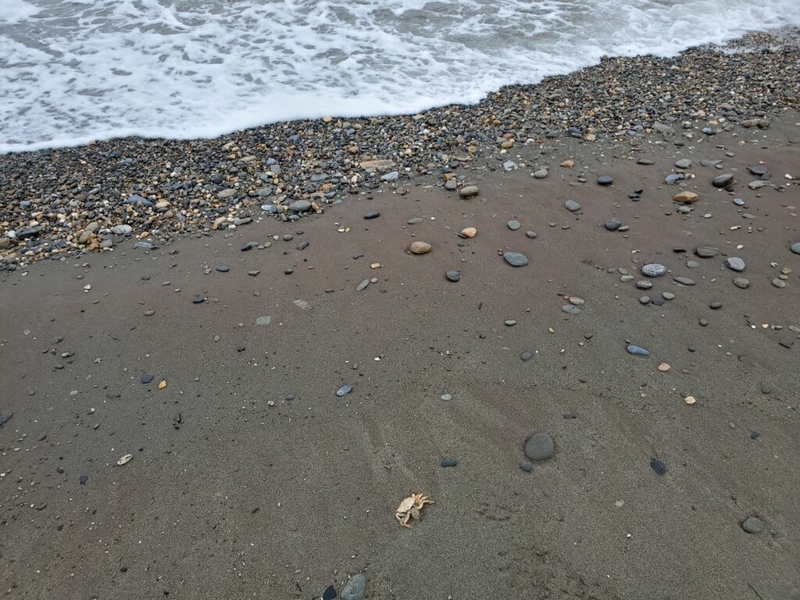
A juvenile crab washed ashore on Nome beach after stormy weather is seen on Oct. 1, 2020. (Photo by Yereth Rosen/Alaska Beacon)
For countless generations, people of the Bering Strait region have relied on the food they harvest from the sea without worrying about harmful algal blooms that threaten seafood eaters in warmer and more southern latitudes.
Now, as the Northern Bering Sea undergoes cascading effects of a warming climate, algal risks pose a new challenge.
The change has been dramatic.
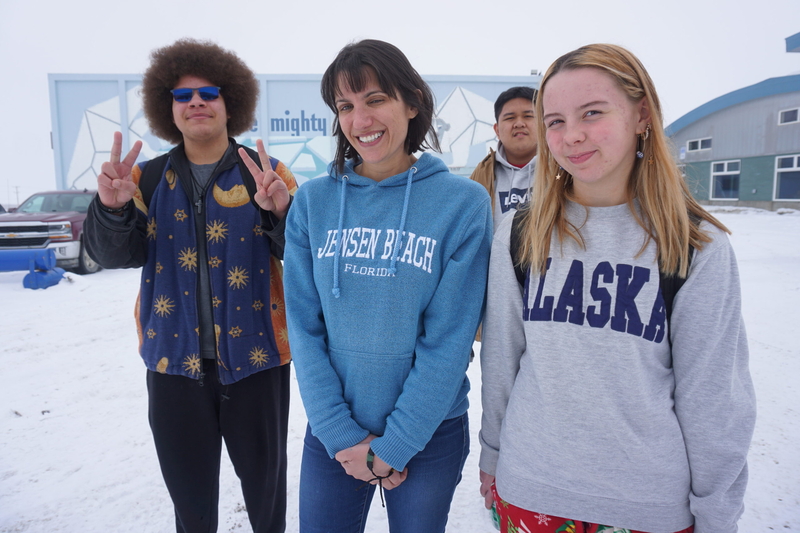
And it has prompted a change in the way Nome youth grow up learning about collecting food from the waters around their home. In early April, Nome high school students traveled to Bethel with their science teacher, where they presented their research at the Western Alaska Interdisciplinary Science Conference held by Alaska Sea Grant.
Algal toxins were present, at very low but detectable levels, in fish they eat.
Sophomore Audrey Bruner-Alvanna was among the group of student researchers. She said young people are concerned about algal blooms, which proliferate in warmer conditions, and their potential effects on wild food resources.
“Because, you know, as the climate changes, as the world gets warmer and stuff, there’s going to be more of these toxins and stuff during summer,” she said. “I feel like a lot of people that I’ve talked to have been wondering about how our subsistence is going to change in the future based on all of that.”
The student research came about after one of the nation’s densest and biggest concentrations of toxin-producing Alexandrium algae ever documented burst forth in the waters of the Bering Strait region in 2022.
Until the appearance of the “massive bloom, the most toxic bloom, the longest-persisting bloom in the U.S.,” local people barely knew what harmful algal blooms or Alexandrium are, said Emma Pate, president of the Nome Eskimo Community, the local tribal government.
“So we had to figure things out and learn really fast,” Pate said during an October “Strait Science” presentation hosted by the University of Alaska Fairbanks’ Nome campus.
That 2022 bloom followed prior years’ discoveries of Alexandrium toxins in clams and marine mammals, and it was followed by more discoveries and another big Alexandrium bloom. For local people, who harvest marine foods year-round, using sea ice as a platform in winter and open water after the ice melts in summer, the developments present new questions.
How far in the marine food web have the paralysis-causing algal toxins spread? How can people ensure that wild foods are safe? How can younger generations understand and manage something that used to be a non-issue but is now an environmental reality?
Those high school students were enlisted to help find some answers. Pate, who was working at the time for the Nome-based tribal health provider Norton Sound Health Corporation, and Gay Sheffield, the Nome-based marine advisory agent for the Alaska Sea Grant program, recruited the students from Nome-Beltz High School.
They led them in a crash course in 2023 on harmful algal blooms. The instruction included field work to learn how to sample water for algal contents.
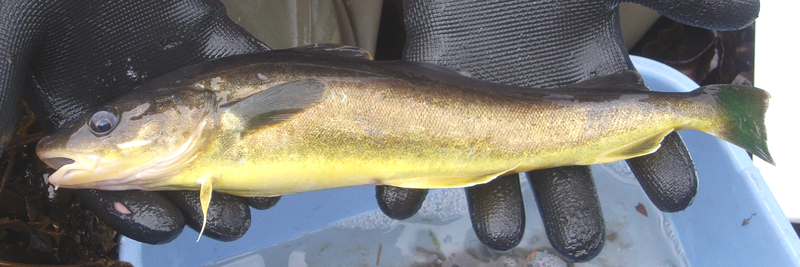
The students followed up by descending on Nome’s frozen harbor with ice-fishing gear. They plucked out masses of tomcod, a species also known as saffron cod, that is a favored local food. They shipped off some of the tomcod to the Alaska Department of Environmental Conservation lab in Anchorage for testing; they cooked, shared and ate the rest.
The assumption was that no toxins would show up in tomcod swimming in the harbor in winter but that the exercise would be a good lesson in the scientific method, said Sarah Liben, the Nome-Beltz High science teacher helping to lead the project.
Results reported in early 2024 from the DEC lab were startling: Livers of the tomcod that Liben’s students caught held detectable levels of Alexandrium-produced saxitoxin and related gonyautoxin that also cause paralytic shellfish poisoning. Levels were far below anything that would pose dangers to people, but the presence itself was an important scientific discovery.
“When these results first came out, scientists were actually shocked,” Liben said.
Her students’ work continued. An ice-fishing expedition last December produced another round of fish tested at the DEC lab, this time in a different methodology that examined full body contents. The lab tests revealed no saxitoxin in the students’ tomcod, but they did show the presence of potentially poisonous gonyautoxin compounds, which are related to saxitoxin.
Changing environment holds a ‘sleeping giant’
Scientists have already confirmed the potential for continued massive blooms of algal toxins in the Bering Strait region and farther north. On the sea floor, they have discovered some of the world’s biggest and most concentrated beds of dormant Alexandrium, the algae that produces saxitoxin and related toxins. Those Alexandrium cyst beds were once the dead end for algal cells that, for decades and even centuries, drifted north and sank. But now underwater temperatures are occasionally high enough to enable those cyst beds to bloom.
Don Anderson of the Woods Hole Oceanographic Institution, who has been leading research expeditions mapping the Bering, Chukchi and Beaufort sea cyst beds, describes them as a “sleeping giant” that are poised to erupt in massive blooms if temperatures get warm enough.
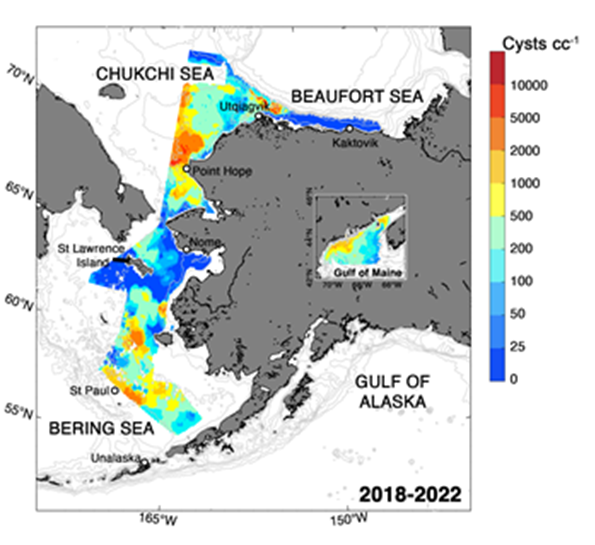
Anderson and Kathi Lefebvre, a Seattle-based National Oceanic and Atmospheric Administration research biologist, have devoted several years of study to the spread of harmful algal blooms in Alaska’s northern waters. Their work is part of a NOAA program called Ecology and Oceanography of Harmful Algal Blooms, or ECOHAB.
In the Bering Strait region, the algal blooms and the toxins they produce are among the long-term and cascading changes that stem from warming.
There is less sea ice year-round, and what exists is thinner and younger than the ice cover used to be. Successive marine heat waves have triggered bird and mammals die-offs. Fish species are shifting, with the higher-fat Arctic species like Arctic cod being pushed out by expanding lower-fat boreal species like pollock and Pacific cod. More open waters have drawn more ship traffic through the Bering Strait, the Pacific gateway to the Arctic Ocean. There is increased industrial activity, including harvests by large-scale fishing vessels chasing Pacific cod and other species that have moved north from the southern Bering Sea. Heightened activity extends the military sphere; there are increased geopolitical tensions as Russian and Chinese aircraft and ships make incursions into territory near the strait.
All that affects the people who depend on the sea for their food, starting with clams, the usual suspects in paralytic shellfish poisoning cases farther south.
Clams retrieved from the seafloor in the floors of the Northern Bering and Chukchi seas during research expeditions from 2019 to 2022, as well as some harvested by residents, turned out to have saxitoxin levels well above the threshold for safe consumption by people. One clam harvested at St. Lawrence Island was shown to have toxin levels more than five times the safety threshold.
There were no reports of algal toxin-related sickness in this region during and after the 2022 algal bloom. But it did affect people’s behavior. Many residents opted out of eating their traditional wild foods, substituting sometimes costly store-bought items for them, according to a study co-authored by Nome-based tribal and health care officials.
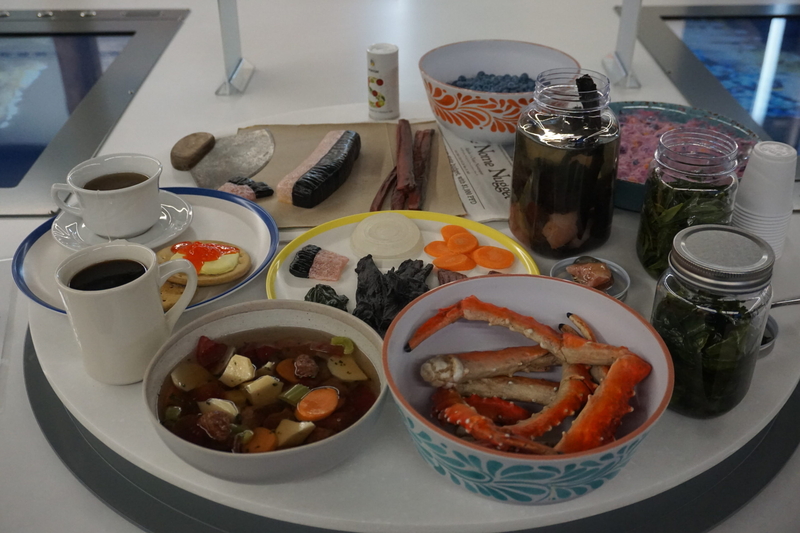
Traditional consumption extends to parts of those fish that are not usually eaten elsewhere – organs like livers, which can be mixed with berries to make a traditional dish, and the crab viscera that is usually discarded by commercial harvesters. That is part of the tradition of “comprehensive utilization of the marine environment for food,” as described by Gay Sheffield, the Nome-based Alaska Sea Grant marine advisory program agent.
Walrus concerns
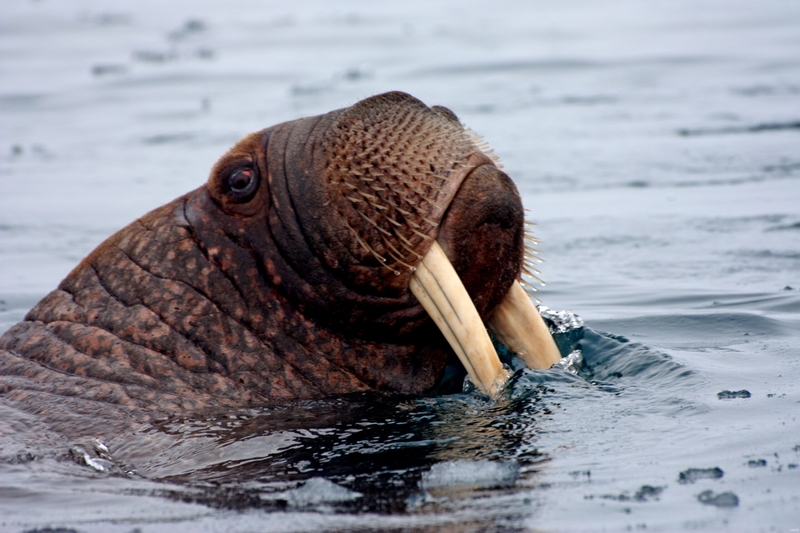
Walrus hunting is another tradition for Indigenous residents — supplying meat, along with skins and walrus crafted into artwork. The food includes what is in walrus stomachs.
“We eat the clams that wash up from the storms,” said Merle Apassingok, a walrus hunter and traditional knowledge holder from Gambell, one of the two St. Lawrence Island communities. “But we also eat clams from inside the walrus.”
Those clams found inside walrus stomachs are already cooked by digestive juices, he explained. “They microwave naturally in the walrus stomach,” he said with a laugh.
People who depend on wild foods from the sea have another worry besides algal toxins’ impacts on food safety: the conservation of the fish and wildlife populations that support their cultures.
There are already some indications of impacts to clam-eating walruses.
In the late summer of 2019, there was a die-off of 39 walruses in the western part of the Bering Strait. Four of them were found to have saxitoxin in their bodies.
The walrus die-off was not considered an algal toxin smoking gun, and its cause remains undetermined. It was not until 2024, when several dead northern fur seals were found on St. Paul Island in the Pribilofs archipelago nearly 500 miles south of Nome, that saxitoxin was confirmed as killing any marine mammals.
The network is a collaboration of government agencies, tribal organizations, science institutions and other entities that monitor algal blooms in the state.
In general, toxins in birds and mammals are more transitory than they are in clams and mussels, which can hold toxins for several months, Farrugia said. However, toxins can accumulate and linger in organs like fish livers and crab viscera, also known as “crab butter,” which are part of some traditional diets, he said.
It will take much more work to figure out what is dangerous for animals and people, Farrugia said. “All this is cutting edge,” he said.
Even sublethal amounts of algal toxins could be a problem, he said. Chronic exposure to toxins might, over time, weaken animals and compromise their ability to forage effectively. “It could kill them by starvation, eventually,” he said.
Lefebvre pioneered the study of algal toxins in Alaska’s Arctic and subarctic marine mammals. A groundbreaking study she led, published in 2016, found toxins in all 13 species examined.
But figuring out the population-wide impact of algal toxins on animals like walruses is difficult, given the wide range of challenges they face in the Arctic, she said.
“Marine mammals have so many things to deal with,” she said during an April trip to Nome, where she met with tribal members to plan upcoming research tasks. “I mean, the loss of ice, the warmer waters, the movement of prey, other diseases. And then on top of it, harmful algal bloom toxins.”
Loss of summer sea ice is forcing walruses to crowd on shore, away from prime feeding areas where they used to forage from ice floes, for example. In such crowded conditions, young walrus calves can be killed in stampedes. Those stampedes can be touched off by noise and other disturbances from ship and aircraft traffic that is growing as the open-water season widens.
While walruses’ clam-eating behavior can explain their exposure, the mechanism of toxin delivery to fish like tomcod remains unknown, Farrugia said. The students’ detection of paralytic toxins in tomcod bodies in the winter adds to the mystery.
“If you see toxins in December, January or February, somebody along the way, some component in the food chain, has held onto toxins,” he said.
Tribes and local partners doing research
The emerging questions about algal toxins are at the core of a new ECOHAB project led by Anderson and Lefebvre that is putting Bering Sea tribes at the forefront of the research.
The project, part of NOAA’s ECOHAB program, is aimed at assessing the exposure risks and impacts of algal toxins on marine resources utilized for subsistence and the security and safety of traditional wild foods. The Nome Eskimo Community and more than a dozen other tribal governments are partners, as is the North Slope Borough. The project began last year and is to run until 2030. Goals include the fine-tuning of methods to measure harmful algae in the water, building local toxin quantification capabilities and establishing foundations for early warnings about food safety and potential risks to wildlife.
The tribes have incentives to take on the project responsibility. The Bering Strait region is somewhat isolated from government agencies that might otherwise do a lot of the work.
Trump administration cuts have affected the work of the National Weather Service, an agency that provides information critical to people who gather their foods from the land and water. The detailed daily weather reports broadcast by local radio station KNOM, now come with a disclaimer: “Due to staffing changes at the National Weather Service, the current weather may differ from what has been forecasted.”
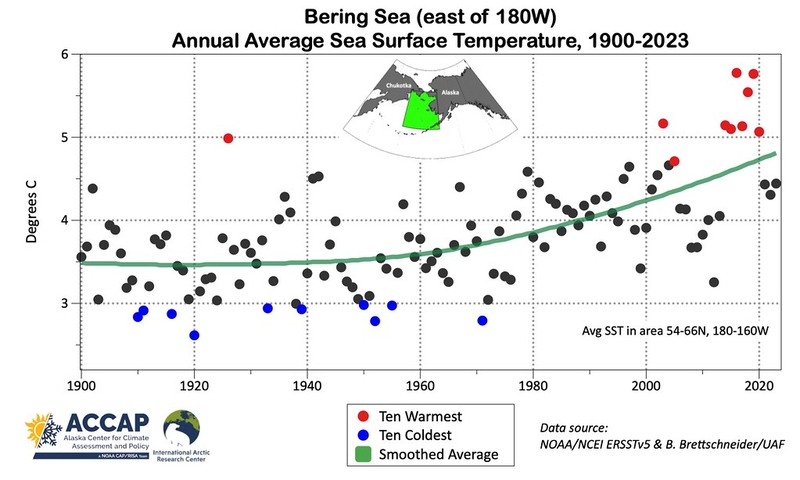
The region’s residents and the ECOHAB-affiliated scientists are also challenged by the lack of information from the Russian side of the Bering Sea. International tensions have shut down communications, even though conditions and events on the Russian side of the maritime border affect Alaskans. One important feature is the Anadyr Current, which originates in Russia’s Gulf of Anadyr. It is a major source of low-saline water, nutrients and algae, including Alexandrium, that sweeps up through the Bering Strait. Conditions on the Russian side of the Bering Sea might prove important this summer; while the Eastern Bering Sea off Alaska was unusually cold, the Western Bering Sea off Russia has been unusually warm.
Those obstacles make local observation and science more important as algal blooms spread north. Still, even as the environment changes, close examination of it is nothing new, said Apassingok, the walrus hunter, who himself is a co-author of a 2024 scientific study about climate change impacts on walrus hunters.
“Our forebears were vigilant people,” Apassingok said. “They were vigilant of wild animals, creatures. But nowadays we’re being vigilant on the molecular level, too.”
This article was produced as a project for USC Annenberg’s Center for Health Journalism and Center for Climate Journalism and Communication 2025 Health and Climate Change Reporting Fellowship.
Juneau