Pancreatic cancer director sues NU for alleged racial discrimination, malpractice
May 28, 2026 | 5:41 pm ET
Description
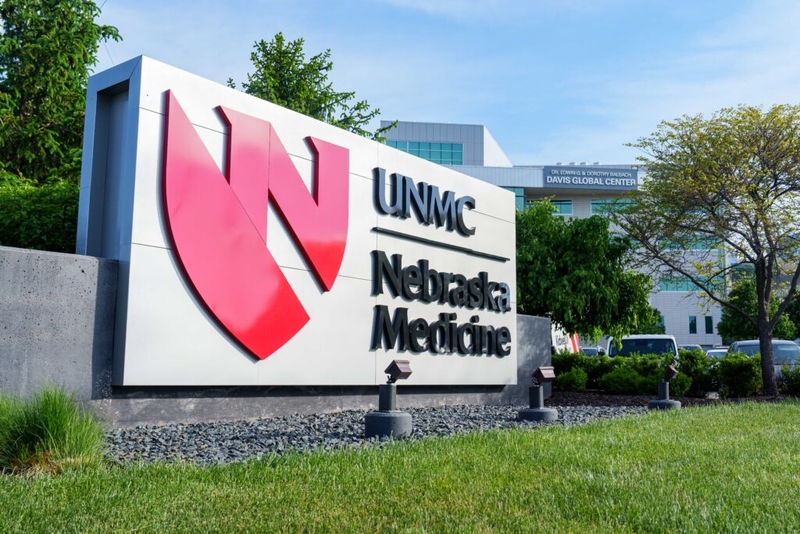
The Davis Global Center at the University of Nebraska Medical Center campus, which holds the National Quarantine Unit, is seen on May 11, 2026, in Omaha. (Dylan Widger/Getty Images)
LINCOLN — The director of the University of Nebraska Medical Center’s Pancreatic Cancer Center of Excellence filed a complaint this week against the University of Nebraska, alleging that leaders discriminated against him and that retaliatory actions they took may have contributed to the early death of a patient.
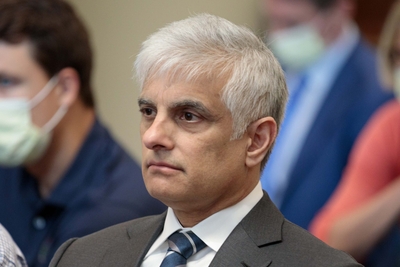
According to the complaint filed in U.S. District Court for the District of Nebraska by Dr. Sunil Hingorani, University of Nebraska Medical Center officials heavily recruited Hingorani for two years to lead the center. While Hingorani said he wasn’t initially interested in leaving his previous position in Seattle, he eventually agreed to lead the center on the belief that NU would support his goal of finding a cure for pancreatic cancer within his lifetime.
Shortly after he began working at UNMC in 2022, however, his lawsuit claims he began hitting roadblocks. One of the first signs came when university officials allegedly resisted Hingorani’s marketing proposals for the PCCE.
Hingorani’s complaint says he was told by Nebraska Medicine’s former vice president of marketing and communications Frank Lococo that he couldn’t refer to the Pancreatic Cancer Center of Excellence as a “center of excellence” in marketing. He said Hingorani first needed to apply for a clinical center of excellence designation by the National Pancreas Foundation.
When Hingorani secured that designation, Lococo allegedly dismissed it, saying, “Everyone knows those things are just pay-to-play schemes.”
Hingorani continued to press Lococo and university officials on the need for an extensive marketing campaign for the PCCE.
Lococo’s response, according to the complaint: “Lots of people come here and say they’re going to do great things, and nobody ever does.”
Hingorani’s complaint states that no legitimate marketing campaign has ever been conducted for the PCCE. As a result, he alleges that other medical practices didn’t realize Nebraska Medicine had a pancreatic cancer clinic, and he knew of at least one Omaha-based practice that regularly referred pancreatic cancer patients to a different facility.
“Defendants have sadly squandered the tremendous opportunity to place the University [of] Nebraska at the forefront of the fight against pancreatic cancer,” wrote Hingorani’s attorney, Michael Willemin. “Dr. Hingorani was treated with astonishing disregard, but the harm runs deeper. As the complaint alleges, critical research was delayed or thwarted, patient care was compromised, donors were betrayed, and resources were wasted.”
Hingorani claims he hit multiple similar roadblocks in the following years, including officials rejecting his proposals for information technology improvements and interfering with equipment purchases for his labs. Several of these moves, Hingorani alleges, breached his contract.
“While Nebraska Medicine and the University of Nebraska cannot comment on pending litigation, our organizations are proud of our strong national reputation for excellence in research, education and service to Nebraska, as well as to be counted as one of the safest academic medical centers in the country,” wrote Kayla Thomas, senior media relations coordinator for Nebraska Medicine, in a statement on behalf of Nebraska Medicine, UNMC and Gold.
In August 2024, Hingorani alleges that university officials retaliated against him by drafting a false and defamatory report that claims the PCCE had made little to no progress since its inception. This contradicted what Hingorani had been told by current University of Nebraska President Jeffrey Gold, the former chancellor of UNMC, that PCCE did not have a deadline for a progress report.
Later that same year, the complaint alleges, university leaders told Hingorani he was not allowed to be present in the clinic he was leading unless he had a scheduled appointment with a patient. Hingorani’s complaint says this was based on claims that Hingorani’s team members had complained about him stifling their ideas, but university leaders could not give specific examples.
Further, no team members admitted to complaining about Hingorani to university leaders. The complaint claims that “it is simply impossible” for university leaders to believe they were removing Hingorani for legitimate reasons.
The lawsuit specifically calls out Dr. Joann Sweasy, director of the Fred and Pamela Buffett Cancer Center, who it claims was involved in the allegedly defamatory progress report and the decision to remove Hingorani from the clinic. The complaint accuses Sweasy of targeting Hingorani based on racial discrimination.
The complaint notes that Hingorani was one of six mid- to senior-level scientists of East Asian origin that reported to Sweasy, and Hingorani is the only one who still holds his leadership position. The rest, his complaint alleges, were either terminated or forced out.
As a result of Hingorani not being allowed in the clinic, he couldn’t participate in meetings regarding treatment decisions for patients. This led to at least one instance of a patient being referred to surgery that his complaint alleges contributed to his decline.
“Sadly and unsurprisingly, the patient died soon thereafter,” the complaint reads.
Had Hingorani been present for the discussion, he claims he would have instead recommended chemotherapy. Such decisions constituted medical malpractice, the complaint states.
Hingorani further accused university officials of trying to hide the mistake. He claims the family was not told that the patient should not have been operated on and that other questions have gone unanswered.
Hingorani claims he went to Gold seeking support but was largely brushed off.
Hingorani is suing the University of Nebraska, the Board of Regents, UNMC, Nebraska Medicine, UNMC physicians, Gold and Sweasy in district court. He is seeking reinstatement as well as a money judgment to cover consequential damages, lost wages, back pay and front pay, among other things.

Lincoln, NE