New Hampshire is moving its state primary. Will it improve the state’s politics?
May 28, 2026 | 5:00 am ET
Description
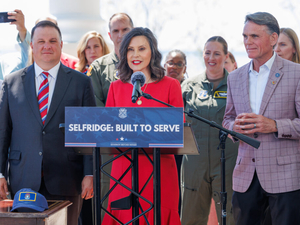
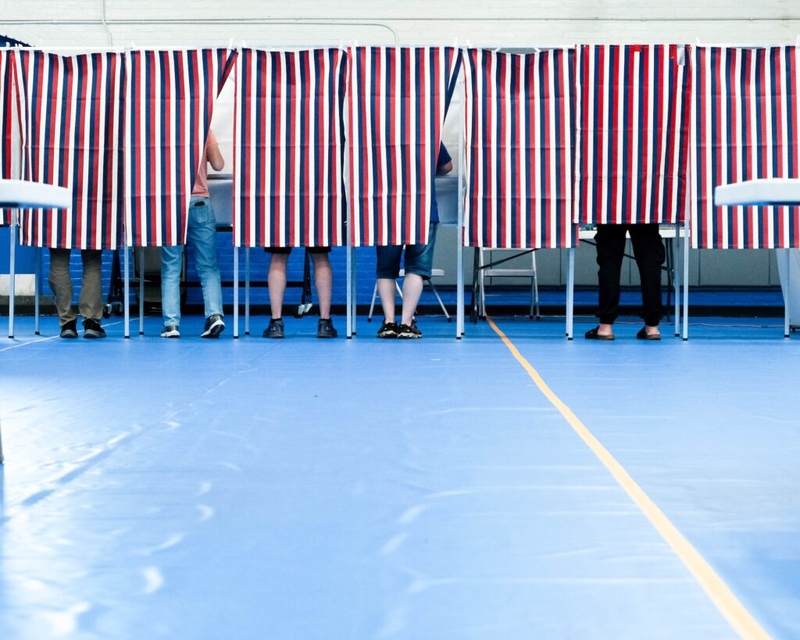
Starting in 2028, state primaries will be held on the second Tuesday in June. (Photo by Will Steinfeld/New Hampshire Bulletin)
Kris Schultz moved to New Hampshire in 2002 with one mission: get Mark Fernald elected. The Democratic state senator was running for governor, and Schultz had moved from Kentucky to run his campaign.
For Fernald, it was a clear opportunity: fellow Democrat and then-Gov. Jeanne Shaheen was departing the corner office to run for U.S. Senate, leaving the seat open for any Democrat to succeed her.
But right away, Schultz ran into an unusual — and to her, irritating — feature of New Hampshire elections. The state primary was not until September, one of the latest in the country. That meant Fernald spent far longer campaigning against fellow Senate Democrat Beverly Hollingworth to win the primary than he did focusing on Republican Craig Benson in the general election.
Fernald, who supported a state income tax, lost to Benson that November, and Schultz never forgot her frustration. She felt that the Fernald campaign did not have enough time to adequately attack Benson for his flaws.
“It just was insane that there was only like 58 days before the general election,” she said in an interview.
Two decades later, Schultz, now a Democratic state representative from Concord, has changed that dynamic. In early May, Gov. Kelly Ayotte signed Schultz’s bill, House Bill 481, to move the state primary from September to June.
Starting in 2028, state primaries will be held on the second Tuesday in June. And the space between the primary election and the general election will grow from two months to five.
Ayotte signed the bill without fanfare or even a statement, but the new law represents a major change. New Hampshire is currently one of just four states with September primaries. This year, Massachusetts will hold a primary on Sept. 1; New Hampshire on Sept. 8; Rhode Island on Sept. 9, and Delaware on Sept. 15. In contrast, 16 states hold primaries in June and 13 in May, according to a tally by the Federal Voting Assistance Program.
Moving New Hampshire’s primary earlier in the year has been a yearslong, bipartisan effort. Supporters say it will erode a longstanding incumbent advantage, give candidates more time to make their pitch, and create healthier elections that are not dominated by low-turnout primaries.
But now that the state has finally made the leap, more questions loom. Will the move to summer voting hurt turnout? Will a longer general election meaningfully impact competitiveness? And will the spring primary season clash with the state legislative calendar?
Extending the runway
Rep. Ross Berry, a Weare Republican, chairman of the House Election Law Committee, and co-sponsor of the bill, is optimistic. “I’m super excited about this one,” he said in an interview.
To Berry, who pushed for an earlier primary for six years, the problems with the September primary were evident in the 2024 governor’s race. That year, like 2002, the governor’s office was open after Sununu announced he would not run again. And that year, Democrat Joyce Craig was forced to narrowly defeat Cinde Warmington in the September primary before she could take on Ayotte.
Even Berry, who opposed Craig, thought the primary calendar worked against her. Ayotte, who beat her Republican primary opponent Chuck Morse that September by a far more comfortable margin, could afford to focus on general election voters — and run attack ads — earlier than Craig could, Berry argued.
“First of all, Joyce Craig can’t hit back because Joyce Craig has to focus on Cinde Warmington. … Simultaneously, Kelly Ayotte’s money is dragging Joyce Craig down in her own primary,” he said. “That can only happen because you have a primary that is so late in the process.”
Republicans have raised their own concerns over how the late primary affects their efforts to oust members of New Hampshire’s all-Democratic congressional delegation. In 2022, for example, Don Bolduc narrowly won a fierce Republican primary against Chuck Morse only to lose to Sen. Maggie Hassan two months later.
Schultz agrees. In Fernald’s case, the short general election period gave the Democrat a shorter window to raise and spend money against Benson, a businessman who spent almost $9 million of his own money in the general election and used it to buy expensive ads in the Boston television market, Schultz said.
“We just could never match his firepower in advertising,” she said.
Lawmakers are considering a similar move in Massachusetts, whose state law requires the primary to be held in September. Since 2019, State Sen. Becca Rausch, a Needham Democrat, has submitted four bills to move the state’s primary to June.
This year, an omnibus bill of Rausch’s that includes the primary date provision was greenlit out of the Committee on Election Laws, the furthest it has ever advanced, but it needs Senate Ways and Means Committee approval before it can appear on the floor.
Rausch, who has called the September primary “our current terrible, horrible, no good, very bad primary date,” is motivated to move it in part because of logistics concerns — the current statutory date often puts the state out of compliance with overseas ballot laws — and in part to improve voter access. Massachusetts lawmakers can vote to move the primary to another date in September, but there are also potential clashes with Jewish holidays of Rosh Hashanah and Yom Kippur, and with Boston’s city-wide Sept. 1 moving day for renters.
“Having a primary date so very late does a disservice to voters,” she said in an interview. “And they are the most important piece here.”
Rausch is less motivated by more political priorities, such as eroding the “incumbent advantage,” she said.
But, she said, when the primary is earlier, “you give voters a much better opportunity to engage in both the primary and the general. You have plenty of runway in both places.”
Summer doldrums
Some in New Hampshire have opposed moving the primary into early summer, arguing that doing so could dampen turnout. Former Secretary of State Bill Gardner frequently said a summer primary could clash with vacations, and in 2021, Sununu vetoed a bill that would have moved the primary to August.
“This is a time when many Granite Staters are enjoying their vacations and are far less likely to be engaged in the electoral process,” Sununu wrote in his veto message.
Some research backs that up. Turnout is slightly lower when primaries are held in summer months and higher when they are held in the fall, according to a 2017 study of congressional primary election data between 1984 and 2016, by researchers at Clark University and the University of Connecticut.
The study also found that of the 14 states that moved their state primaries to an earlier month, 13 saw lower turnout after doing so. Nine of those 14 states saw more competitive congressional primaries after doing so, the researchers found, according to a metric of competitiveness known as the fractionalization index.
After Utah moved its primary from September to June in 1994, for instance, turnout in the Democratic primary dropped from 8.2% of the electorate to 3.5%, and in the Republican primary from 16.2% to 10.8%. Additionally, states with fall primaries tended to have higher general election turnout, potentially because voters had been recently “primed,” the study concluded.
Robert Boatright, a co-author of the study and professor of political science at Clark University, says a late primary can have advantages for candidates: The shorter window for campaigning and fundraising can make the campaigns cheaper.
“If you think about it from the candidate perspective, the value of the late primary is that you basically only have to run one campaign,” he said in an interview, comparing late fall primaries to spring primaries, where there is sometimes a summertime lull.
Still, Boatright and his co-researchers found no meaningful correlation between when a primary is held and how competitive or expensive it is for candidates. More often, the study concluded, turnout, engagement, and competitiveness are influenced by outside factors like the personalities of individual candidates or the presence of a presidential election.
“The real problem with primary turnout is that, for the most part, it’s driven by excitement, so if there’s a competitive statewide race for (U.S.) Senate or for governor, you’ll get people showing up because of what they think about that particular candidate,” he said.
Boatright has co-written a book coming out in July, “The Problem with Primary Voters,” in which he argues for passing a federal law to require all state primaries be held on the same day, so that national media can gin up more awareness for voters and so that the political significance of individual primary results — like recent ones in Texas, Louisiana, and Kentucky — is not overstated.
His preferred time of year for that national primary day? “In the early fall,” he said.
Pivoting to the general
For his part, Berry says he isn’t worried about turnout for state primary elections, because it already is low and unrepresentative. Instead, he argued, the bill will allow for more breathing room in the general election, when national media buzz drives more interest from voters.
“We didn’t do this to make the primaries more competitive,” he said. “We did this to make the generals more competitive.”
Beyond helping candidates and campaign staff, the extra five months of general election time could improve the quality of politics, Berry says. New Hampshire’s poorly attended primaries create political silos for candidates; it is the general election, not the primary, that incentivizes moderation, he said.
“I actually think it will reduce extremism,” he said of the date change. “Because people play to their parties’ bases in a primary, and then they try to run to the middle.
“By getting this further back, you’ll allow both sides to articulate a message that is, in theory, more popular to the voters on both sides.”
Then there are the concerns about the legislative calendar. Currently, state candidates must file for office in June; the new law would make that deadline March. That will put pressure on state legislative leaders to recruit their party’s slate of candidates in late winter — just when the Legislature is busiest with bills. And it means that sitting lawmakers may be battling their primaries in the middle of April and May, as legislating continues.
Berry dismissed worries a primary could disrupt that, noting that few state lawmakers face primary challengers to begin with.
Schultz has a more complicated outlook.
“It’s going to be an interesting transition,” she said. “It won’t be easy for state candidates. It won’t be for the incumbents. … But we’ll be OK. It’ll be better for everybody in the long run.”
Concord, NH