More Iowa nursing homes are cited, but not penalized, for too few staff
Apr 24, 2026 | 5:47 pm ET
Description
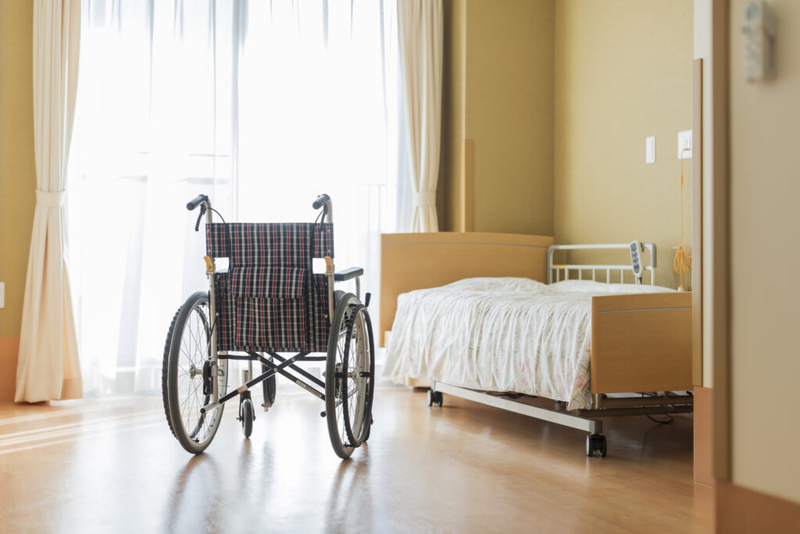
Five Iowa nursing homes have been cited recently for failing to meet federal standards for nursing home staffing. (Photo by byryo/iStock/Getty Images Plus)
In the past eight weeks, five Iowa nursing homes have been cited for failing to meet federal standards for nursing home staffing.
Inadequate staffing is believed to be the single biggest contributor to poor quality resident care, according to several federal and private studies of nursing home quality.
In recent years, staffing levels have become a hot political issue, with the Trump administration rolling back Biden administration’s efforts to increase federal staffing requirements for homes that collect taxpayer dollars through the Medicaid and Medicare programs.
A recent Iowa Capital Dispatch review of federal data found that in 2025, 60 of Iowa’s 397 nursing homes — 15% of all the homes in the state — were cited for insufficient staffing. That represents a rate of staffing-level violations that’s two to five times higher than most other nearby states.
Nationally, a new report from the Long-Term Care Community Coalition indicates that in the third quarter of 2025, almost 9 in 10 nursing homes fell below their expected their staffing levels, with the average facility understaffed by 24% on a daily basis. The report is based on federal data derived from the homes’ self-reported payroll information and assessment of residents’ needs.
Inspectors: Staff ignored feeding-tube alarm
One of the Iowa homes recently cited for violating the existing, longstanding requirements for “sufficient” staffing is Harmony House Healthcare Center in Waterloo.
On March 25, 2026, state inspectors visited Harmony House to investigate eight separate complaints pertaining to quality-of-care issues.
Based on a sample review of the home’s electronic call-light records related to just three of the home’s 42 residents, the inspectors concluded that the staff failed to answer all three residents’ call lights in a timely manner.
In addition, the “wait times for multiple residents” at the home frequently exceeded 15 minutes, and sometimes stretched to more than 90 minutes, inspectors reported.
One resident reportedly complained of waiting up to two hours for a response to her call light. A certified nursing assistant allegedly reported an instance in which a resident’s call light went unanswered for more than an hour, and no one reported it to the nurse on duty because she had previously threatened to quit.
“The failure persisted despite residents reporting concerns through interviews and the facility’s own grievance logs, and after staff were reportedly re-educated on the importance of responding to call lights,” the inspectors alleged.
Even with state inspectors in the building, call lights went unanswered, according to the inspectors’ written reports. In one instance, the staff, including the director of nursing, allegedly failed to respond to a prolonged audible alarm that indicated a resident’s feeding-tube pump wasn’t working.
For one hour, an inspector allegedly watched as the pump’s digital screen flashed yellow, indicating a blockage in the feeding tube, and the device made a continuous beeping alarm that could be heard from the hallway.
While the inspector watched, nearby housekeeping workers failed to respond to the alarm, then a male staff member twice walked past without responding, then the director of nursing stood in the hallway outside the resident room without responding, after which a licensed practical nurse stood at a medication cart in the hallway without responding to the alarm.
The home was cited for several additional violations, some of which resulted in $5,500 in fines that were held in suspension due to the possibility of federal penalties being imposed.
Other Iowa homes cited for staffing issues
None of the five Iowa nursing homes recently cited for insufficient staff were fined for that particular violation, according to state records.
In addition to Harmony House, these Iowa nursing homes were recently cited for too few staff:
Adel: Adel Acres, a 40-resident nursing home, was cited March 26, 2026, for failing to meet the legal minimum staffing standard of having at least one registered nurse working for a minimum of eight hours each day. According to inspectors, the home’s administrator acknowledged that for two days in a row in mid-February, there was no registered nurse scheduled to work.
Separately, the home was also cited for failing to meet professional standards, medication errors, food preparation violations, inaccurate staffing reports, and inadequate infection control. A citation for inadequate nursing services, tied to a series of medication errors that resulted in a resident receiving an overdose of an opioid painkiller, resulted in a proposed $15,000 state fine that is being held in suspension pending a possible federal penalty.
Carroll: Accura Healthcare of Carroll, a 48-resident care facility, was cited on April 2, 2026, for insufficient staffing, with inspectors noting that residents had complained of inadequate staffing and long waits of up to two hours for a response to their call lights.
In addition, the home was cited for failing to provide a safe, clean, homelike environment, a failure to meet professional standards, overall quality-of-care deficiencies, medication errors, and inadequate infection control.
Marshalltown: Accura Healthcare of Marshalltown, a 59-resident nursing home, was cited on March 12, 2026 for insufficient staffing due to a failure to have a registered nurse in the building for at least eight consecutive hours every day.
According to the inspectors, the facility failed to meet that standard on 19 separate days between Dec. 1, 2025, and March 8, 2026. The home’s administrator allegedly acknowledged the issue and explained the home typically went without any registered nurses on duty every other weekend.
Tabor: On March 4, 2026, the 40-resident Tabor Manor Care Center was cited for insufficient staffing as part of an investigation into four separate complaints against the facility. According to inspectors, the home’s electronic log of call lights showed the facility often failed to respond to call lights within the expected 15-minute timeframe, with residents sometimes waiting 50 minutes for a response. The home’s administrator reportedly acknowledged the problem and the need for improvement.
Tabor Manor was cited for more than a dozen other violations, including failing to provide a safe, clean, homelike environment, a failure to meet professional standards, overall quality-of-care deficiencies, inadequate treatment of pressure sores, medication errors, and inadequate infection control.
Des Moines, IA