Five of six Kansas public universities seek student tuition increases of 3.5% to 6%
May 26, 2026 | 12:26 pm ET
Description
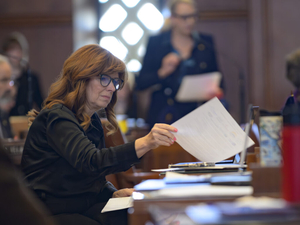
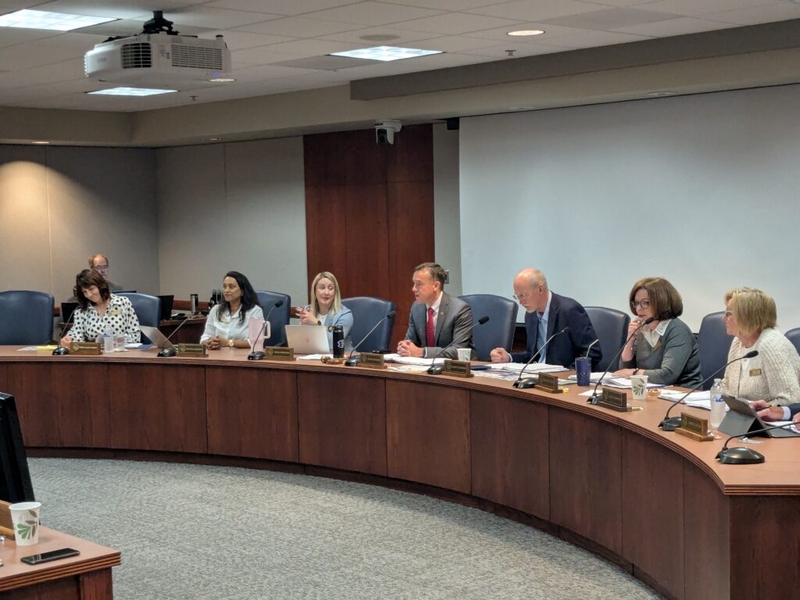
The Kansas Board of Regents is scheduled to vote in June on tuition proposals for the 2026-2027 academic year at public universities in the state's higher education system. While Emporia State University wants to hold tuition flat, requested increases range from a low of 3.5% at Pittsburg State University to a high of 6% at Fort Hays State University. (Photo by Tim Carpenter/Kansas Reflector)
TOPEKA — Five public universities in Kansas are seeking in-state undergraduate tuition increases ranging from 3.5% to 6% in the upcoming academic year, while Emporia State University wants to hold tuition steady another year as an incentive to increase enrollment.
Campus officials say Kansas Board of Regents universities remain a financial and academic bargain, but the majority requested tuition adjustments in wake of the 2026 Legislature’s imposition of millions of dollars in cuts the state university system. Higher education costs continue to escalate as the Midwest consumer price index for urban areas advanced 4.1% during the 12 months ending in April.
Matt Baker, who began in March as Emporia State’s president, said the university had resources to sustain existing tuition rates for a third consecutive year.
“We’re very excited and proud at Emporia State to propose no tuition increase for our students next year,” he said. “I will tell the board that I don’t think that will continue much longer. I don’t think we have the ability to do that for four years or five years.”
ESU has been striving to rebuild enrollment in wake of multi-year declines amplified by the controversial firing in 2022 of tenured faculty and cuts to academic programs.
Jill Arensdorf, provost at Fort Hays State University, said the western Kansas institution sought a 6% increase in on-campus undergraduate tuition and a 4% surge in the rate for students in online courses. The escalation was the largest percentage adjustment recommended within the KBOR’s six-university system, she said, but the result would leave FHSU with the system’s lowest overall tuition and fee structure.
“The tuition and fees that we are proposing for ’26-’27 are still far below our KBOR average in the current year,” Arensdorf said.
Richard Muma, president of Wichita State University, said pressure of state budget reductions factored into internal debate about tuition rates, but the continued reduction in international student enrollment on the Wichita campus was a central reason for a proposed 4.9% tuition spike. If approved by the Board of Regents in June, it would be the most significant adjustment at WSU since a 5.9% surge in 2024.
He said the result would leave Wichita State’s tuition at a level competitive with its academic peers at Cleveland State University, Portland State University and University of Memphis.
“We don’t think we’re overpricing our education,” Muma said.
Muma said WSU’s peak in international enrollment, which was driven by an effort to import engineering students from India, occurred in fall 2022. Decline among international students was a national trend, he said, but Wichita State has endured loss of about 2,000 international students in the past four years and was expected to have an international enrollment of approximately 750 students this fall.
University of Kansas chancellor Doug Girod suggested the Board of Regents authorize a 4% tuition increase for in-state undergraduate students and a 5% tuition increase for nonresident undergraduates enrolled on the main campus in Lawrence. Escalation in student fees at KU would drive the overall cost increase to 5% for resident students and 5.5% for nonresident students, he said.
The recommendation submitted by Kansas State University would drive up undergraduate and graduate student resident tuition by 4% and nonresident tuition by 5.5% this fall, said K-State president Richard Linton.
Pittsburg State University president Thomas Newsom, who assumed leadership of the southeast Kansas college in 2025, said a 3.5% tuition increase would make up about one-third of the rising cost of delivering education to the students. A portion of new tuition revenue would be dedicated to a scholarship program open to all students at PSU, he said.
“Our strategy is to use this tuition and fee increase to offset some growth in expenses for our Great Gorilla Scholarship program,” he said.
Newsom said PSU was in the process of expanding a program to offer in-state tuition rates to prospective students residing in New York and Pennsylvania to bring that initiative to 34 states.
From 2020 to 2023, the Legislature provided supplemental funding to the six Board of Regents universities in exchange for holding tuition flat during that four-year period. In 2024, the arrangement was abandoned and the six universities were granted tuition rate increases of 5% to 7%.
While ESU didn’t raise tuition in 2025 and 2026, rates at the other state universities went up from 2.8% to 6% in 2025 and from 2.5% to 4% in 2026.
Topeka, KS