More than half a dozen states allow negligence lawsuits against the gun industry. RI could be next.
Mar 09, 2026 | 5:30 am ET
Description
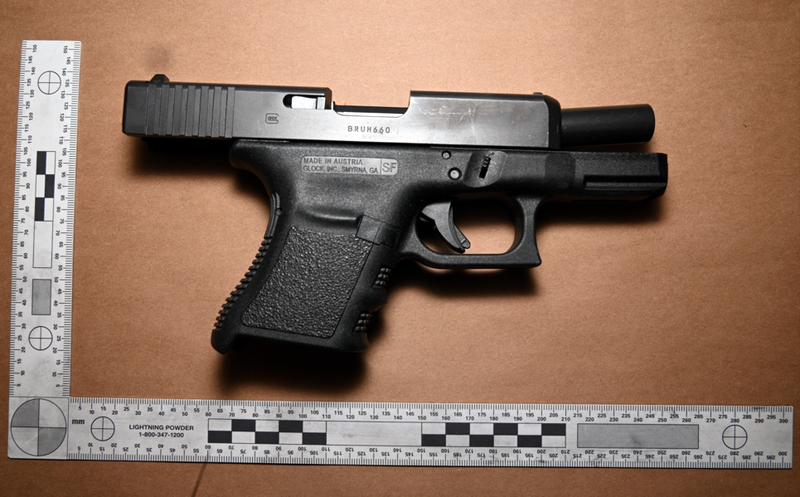
The Glock 10mm pistol recovered by the Pawtucket Police Department after shooting at the Dennis M. Lynch Arena on Feb. 16, 2026. Four people, including the shooter, were killed. (Photo via Pawtucket Police Department)
For two decades, gun manufacturers have largely been protected under federal law from civil lawsuits over crimes committed with their weapons, but that could change as soon as October at the state level in Rhode Island under proposals introduced in the General Assembly.
Companion bills from Rep. Susan Donovan and Sen. Pamela Lauria would require firearm manufacturers and retailers to establish “reasonable controls,” such as avoiding sales to people who are buying guns for someone else, trafficking them, or legally barred from owning them.
Firearm manufacturers and retailers would also be prohibited from marketing their products “in a manner that promotes unlawful sales, unlawful use or use that promotes risk to public safety.”
Any business found in violation of the legislation would be open to civil action by those harmed by the industry member’s action or inaction. Lawsuits could also be filed by any of Rhode Island’s municipalities or the attorney general’s office.
“Every industry has a responsibility to ensure its products do not cause undue harm through negligence, and every Rhode Islander has the right to access our justice system,” Donovan, a Bristol Democrat, said in a statement. “This bill ensures the gun industry is no longer the exception to that rule, creating clear standards that will help keep illegal firearms off our streets and ensuring survivors of gun violence can get their day in court.”
Under the federal Protection of Lawful Commerce in Arms Act signed in 2005, firearms manufacturers are largely shielded from “qualified civil liability actions” in state or federal courts. But the federal law allows states to set rules for the industry within their own jurisdictions, which can create liability if companies violate those state laws.
“By mandating that members of the industry implement reasonable control and procedures to prevent things like theft and gun trafficking, we can ensure the small number of bad actors within the industry face the same liability as any other business in Rhode Island,” Lauria, a Barrington Democrat, said in a statement.
States such as Connecticut, Maryland, New York, California, Delaware, Illinois and New Jersey have each passed similar laws that repealed state immunity protections for gunmakers and offered a way to navigate around a federal law.
But allowing negligence lawsuits against the gun industry too has proven to be a double-edged sword.
New York was sued in 2021 by a group of manufacturers including Beretta and Glock, which was ultimately upheld last year by the Second Circuit Court of Appeals. That coalition has petitioned the U.S. Supreme Court to hear their case.
The legislation comes after two mass shootings in Rhode Island in the span of two months. A Glock 10mm pistol and a SIG Sauer P226 were both recovered from the Feb. 16 shooting at the Dennis M. Lynch Arena ice rink in Pawtucket that left four people dead.
Authorities did not publicly identify a specific brand or model of the gun used in the Dec. 13 shooting at Brown University, only that a 9mm handgun was used to kill two students and wound nine others inside the Barus & Holley Engineering Building.
Under state law, the statute of limitations for a personal injury or death-related lawsuit is three years from the date of the injury or death.
Neither bill has been vetted by the House and Senate legal teams, spokespeople for each chamber confirmed.
Both bills have the support of GIFFORDS and the Rhode Island Coalition Against Gun Violence.
“For too long, the gun industry has enjoyed a unique shield from the consequences of dangerous business practices that put Rhode Islanders at risk,” Ariana Wohl, board chair of the Rhode Island Coalition Against Gun Violence, said in a statement. “By requiring basic, reasonable steps to prevent illegal gun trafficking and other harms, this legislation ensures that the firearms industry is held to the same standards of responsibility as every other business in our state.”
Frank Saccoccio, president of the Rhode Island Second Amendment Coalition, did not immediately respond to a request for comment. Nor did owners of numerous Rhode Island firearm retailers.
Both bills have been referred to their chamber’s respective judiciary committees, where they have not yet been scheduled for their initial hearings. If passed and signed by the governor, the law would take effect Oct. 1, 2026.

Providence, RI