Missouri bill aims to make it easier to dismiss lawsuits that punish public criticism
May 29, 2026 | 7:00 am ET
Description
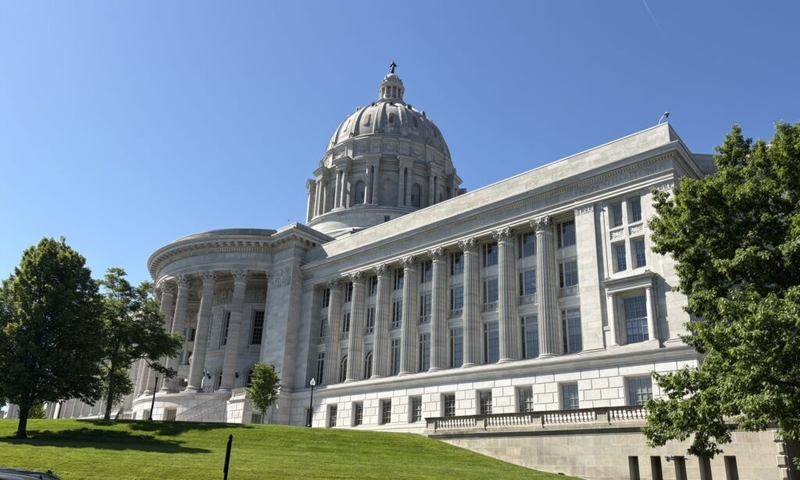
The Missouri Capitol Building in Jefferson City on May 12 (Jason Hancock/Missouri Independent).
A Missouri bill awaiting action from Gov. Mike Kehoe would give judges broader power to quickly dismiss lawsuits designed to chill speech, replacing what supporters have long described as among the weakest anti-SLAPP laws in the country.
The legislation, sponsored by Republican state Sen. Mike Henderson of Desloge, would repeal Missouri’s current anti-SLAPP law and replace it with the Uniform Public Expression Protection Act, a model statute meant to curb lawsuits filed to intimidate critics, activists, journalists or others speaking on matters of public concern.
So-called SLAPP lawsuits — short for strategic lawsuits against public participation — are generally claims brought not necessarily to win in court, but to burden defendants with legal costs and pressure them into silence or settlement.
Missouri has had an anti-SLAPP law on the books for years, but it applies narrowly. Henderson’s bill would expand the law to cover civil actions based on communications in government proceedings, speech about issues under consideration by government bodies and the exercise of speech, press, assembly, petition or association rights on matters of public concern.
The bill passed the Senate 31-0 in April and cleared the House 135-4 on the final day of the legislative session earlier this month. The proposal was also added as an amendment to a larger bill pertaining to civil proceedings.
If signed by Kehoe, it would apply to civil actions filed, or claims asserted, on or after Aug. 28.
Supporters say the change would bring Missouri closer to states with stronger protections against lawsuits that use litigation itself as punishment.
“This bill at long last gives it some bite, and would cause Missouri to catch up with the roughly 30 other states with strong laws protecting citizens’ right to free speech,” Eric Weslander, a Kansas attorney who has handled prominent anti-SLAPP cases, previously told The Independent.
Missouri Senate passes bill aimed at meritless lawsuits targeting free speech
Under the bill, someone sued over speech covered by the law could file a special motion to dismiss within 60 days of being served. Once that motion is filed, discovery and most other court proceedings would generally pause while the judge decides whether the case can continue.
A hearing would generally have to be held within 60 days of the motion, with a ruling due within 60 days after the hearing.
For a lawsuit to survive, the plaintiff would have to show enough evidence at the outset to support each required element of the claim. A judge also could dismiss the case if the defendant shows the claim is legally deficient or that there is no genuine dispute over material facts.
If the defendant wins, the case is dismissed with prejudice and the defendant is entitled to recover costs, reasonable attorney fees and litigation expenses tied to the motion.
If the plaintiff defeats the motion, the plaintiff can recover costs and fees only if the court finds the motion was frivolous or filed solely to delay the case.
That difference drew questions during House debate on the last day of the legislative session. State Rep. David Tyson Smith, a Columbia, asked how the fee provision would work and whether the bill applied only to defamation and slander cases.
State Rep. Ben Keathley, a Chesterfield Republican who handled the bill in the House, said defamation and slander are examples of claims that could be affected, but the bill is broader than that.
“It’s to stop any lawsuits related to speech-based content,” Keathley said during debate.
Keathley said the bill is aimed at cases where a person is sued over constitutionally protected speech and forced into expensive litigation before a court determines whether the claim has merit.
“The idea is to avoid long, protracted litigation for things that are meant to just extract settlements rather than result in a ruling on the merits,” Keathley said.
The legislation includes several exceptions.
It would not apply to lawsuits against government bodies or public employees acting in their official capacity. It also would not apply to certain government enforcement actions brought to protect against an imminent threat to public health or safety.
The bill also excludes some claims against people or businesses primarily engaged in selling or leasing goods or services when the claim arises from communications related to those sales or leases. But the legislation specifies that “goods or services” do not include dramatic, literary, musical, political, journalistic or artistic work.
In practical terms, supporters say, the bill would force speech-related lawsuits to clear an early legal threshold before defendants are required to go through discovery, depositions and prolonged litigation.
Weslander said the attorney fee provision is central to that deterrent effect.
“If this bill becomes law, Missouri attorneys will need to sit up and take notice: don’t blindly agree to your client’s request to haul off and file a defamation lawsuit against the client’s critics if you haven’t done your homework and can’t establish each and every element of your claim,” Weslander previously told The Independent. “Otherwise you may end up with an order to pay the defendant’s attorneys’ fees.”
Weslander, a former journalist who has represented The Independent in the past, was among the attorneys awarded legal fees after Kansas Senate Majority Leader Jim Denning’s defamation lawsuit against Kansas City Star columnist Steve Rose and the newspaper was dismissed under Kansas’ anti-SLAPP law.
Missouri Right to Life and the Missouri Press Association have been among the groups that pushed for stronger anti-SLAPP protections in recent years. Similar proposals have advanced before but did not reach the governor’s desk.
During House debate, Tyson Smith noted that the bill had drawn support in committee from groups that often find themselves on opposite sides of political fights.
Keathley said that reflected the nature of the issue.
“There’s generally,” Keathley said, “been nonpartisan, broad-based support.”

Jefferson City, MO