Fires in Hartford have displaced almost 3,000 people since 2020
May 29, 2026 | 4:41 pm ET
Description
Photo courtesy of CT Mirror
At a Hartford city council meeting on Dec. 8, Ryan Pirre recalled the night he thought he was going to die.
“Every time I hear a multi-truck response when I’m on a break at work … all I can think about is myself getting rescued,” Pirre said.
Pirre was rescued from a fire at 271 Wethersfield Ave. in October that displaced him and 25 other tenants, making him one of at least 458 Hartford residents who lost their homes in a fire last year and one of almost 3,000 Hartford residents who have been displaced by fire in the last six years, according to the city fire marshal’s office.
That’s the equivalent of about 2.4% of Hartford’s population, a much higher rate than some other Connecticut cities.
Hartford residents had a 1 in 264 chance of being displaced by a fire last year, compared to rates of 1 in 677 in New Haven, 1 in 935 in Bridgeport and 1 in 2,209 in West Hartford, where the buildings are newer and the residents are wealthier.
The reason why Hartford’s rate is higher is a matter of some debate, but Hartford residents who have had to leave their homes claim negligence on the part of their landlords and a city that turns a blind eye.
Hartford officials, while acknowledging that annual inspections are lagging, say their hands are tied if landlords won’t let them into apartments to respond to complaints or conduct inspections.
The result is one of the highest rates of fire displacements in Connecticut.
Populations
Stamford, Danbury, and Waterbury do not collect data on how many residents are displaced each year. Instead they rely on the Red Cross to track only how many displaced residents reach out for housing assistance. The Red Cross could not be reached for comment.
But data show that Hartford has more fires that displace people each year than New Haven, despite a smaller population. And when a damaging fire in Hartford does occur, it leaves more people displaced.
Displacements caused by fires occur across the city.
As recently as May 21, there was a fire on Bedford Street that displaced 19 people.
But the residents who live in neighborhoods centered around Wethersfield Avenue, like South Meadows, Barry Square and Charter Oak — two of which are majority Latino — are more than twice as likely to be displaced as the average Hartford resident, according to a CT Mirror analysis of fire data. Frog Hollow, another majority Latino neighborhood located farther west, is also a hot spot. And these areas have housing with more units than the Hartford average.
Hartford, like the rest of the state, struggles with a lack of housing that’s affordable and available for its lowest-income renters. Rents have risen over the past few years, and Hartford and Bridgeport have some of the oldest housing stock in the nation.
Are landlords partly to blame?
It was the fire that residents had seen coming. Tenants at 271 Wethersfield Ave. said they had complained to their landlord, Israel Wiznitzer, for years about issues including electrical wiring problems, a leaking roof and power outages.
Repeated phone calls seeking comment from Wiznitzer were unsuccessful. A person hung up without speaking during an initial call to a phone number for Wiznitzer provided by Sarah White, an attorney from the Connecticut Fair Housing Center who has been communicating with Wiznitzer on behalf of the Wethersfield Avenue tenants. A second call led to a brief conversation with a person who did not identify themselves but expressed concern about people writing “bad things” before hanging up. Subsequent phone calls were not answered.
On Oct. 30, tenants awoke to their neighbors’ screams and smoke from a fire that started in the basement. Residents believe it came from the heating unit down there, which they said had been running hot for weeks. According to Hartford’s fire marshal’s office, the fire displaced 18 adults and 8 children, who spent a Halloween without costumes. Pirre and another tenant were rescued from the building by firefighters.
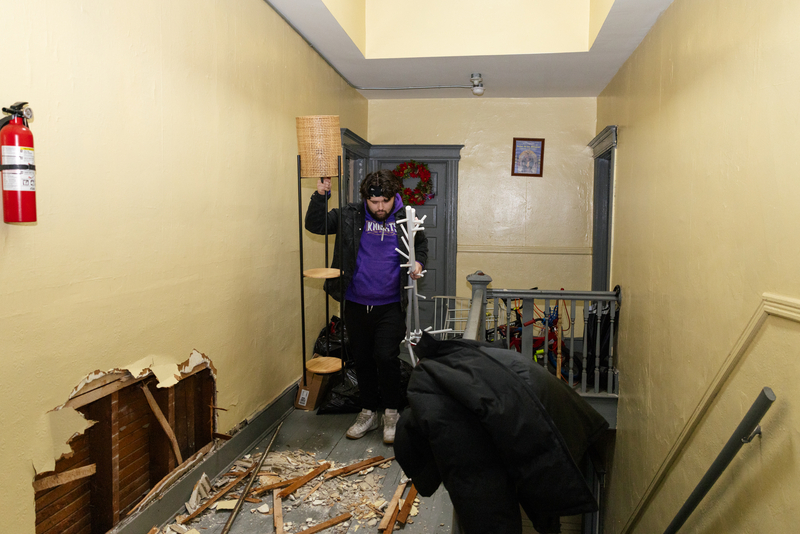
Tenants were told by city officials that they could not return to the building because it was unsafe, and if they did it would be considered trespassing. By the time they returned, some of their possessions, including jewelry, had been burglarized.
“We have been complaining about leaking in our building to the landlord since two years ago, and the city as well, but this issue is still there,” wrote tenant Victor Avila in a complaint to the city in 2024.
One tenant, Juana Mendez, told the city in a written complaint that she fell on the stairs inside her apartment, which had been glazed with ice from a leaking roof above.
The tenants rallied in December 2023, January 2024 and February 2025, asking Mayor Arunan Arulampalam to hold Wiznitzer accountable for hazardous living conditions. Records show that tenants at 271 Wethersfield Ave. have complained about housing conditions through the city’s official channels for years. But they said fixes were often superficial.
Two months before the fire, tenant Vanburne Powell reported problems with the electrical wiring. The city closed the complaint a week later without inspecting the property, saying it couldn’t move forward until the landlord responded. City officials told CT Mirror that Powell withdrew his complaint over text, which Powell denies.
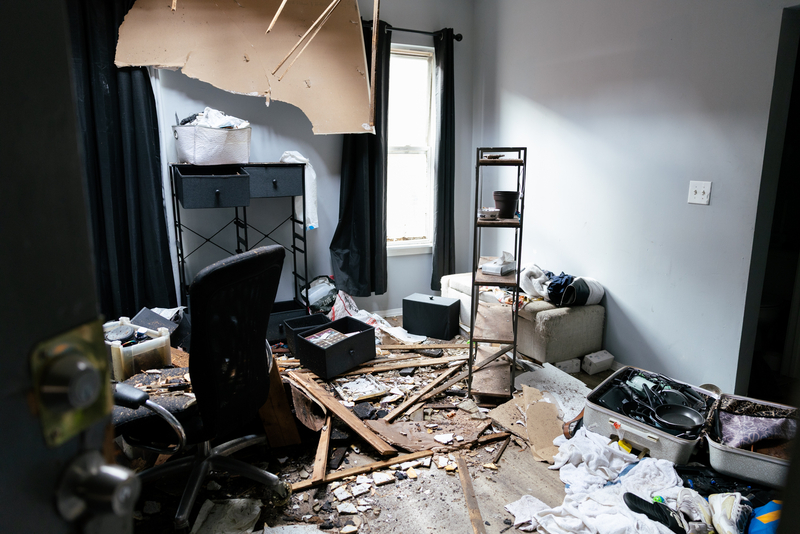
Residents told city councilors on Dec. 8 that city officials told them the fire started in the basement due to faulty wiring.
“There was absolutely nothing that a tenant could have done to ever prevent what happened to us,” Pirre said. “It was strictly building codes and then those not being held up.”
The fire department confirmed that the cause of the fire was electrical and started in the basement.
The last annual fire safety code inspection of 271 Wethersfield Ave. before the fire was in 2022.
Why Hartford?
Hartford officials don’t agree on exactly why the city’s residents are more likely to be displaced by fires than people living in New Haven or Bridgeport.
Arulampalam said he believes it is due to older housing stock and poor maintenance, which has “caused far more of our residents to live in substandard housing and far more of our residents to be exposed to fires.”
Fire Marshal Ewan Sheriff said it could be due to larger buildings in Hartford compared to other parts of the state.
“Big buildings tend to have a lot of people displaced,” he said. If a fire starts in just one part of a building, it may not be safe for residents in other parts of the building to reoccupy.
About 44% of Hartford’s housing units are in buildings of five units or more, compared to 33% in New Haven and 28% in Bridgeport.
Sheriff also told CT Mirror that getting absentee landlords to respond to maintenance requests and give them building access to perform annual fire safety inspections is a “headache.”
“[Landlords] call and then ghost you, or you cannot get a hold of them,” Sheriff said.
“We do have a problem with landlords responding to us at all or in a timely manner,” Sheriff said. “We spend a lot of time chasing down property owners.”
Advocates like Luke Melonakos, vice president of the Connecticut Tenants Union, say the issue rests with city officials’ attitude.
“That mentality [among officials] that Hartford residents should just tolerate unsafe housing conditions, because that’s just what you get in Hartford, is a huge part of the problem,” he said.
The mayor’s list
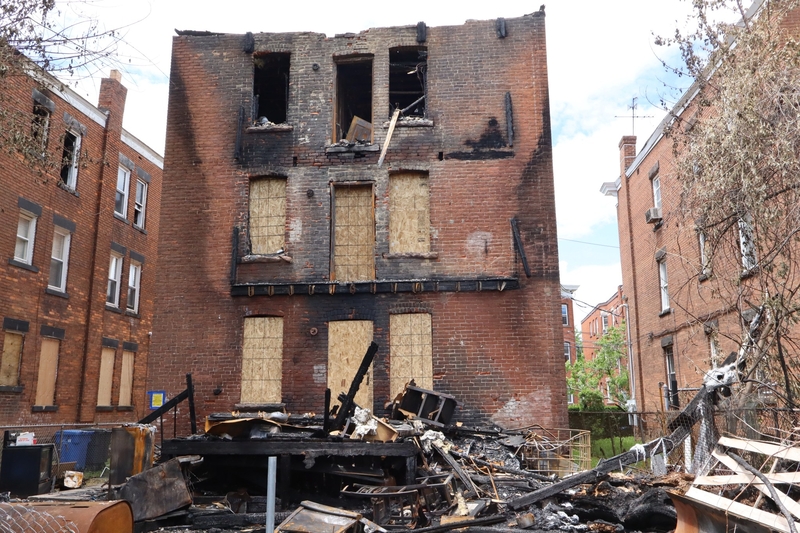
In December, Arulampalam stood before the charred remains of another house on Wethersfield Avenue, this one built in 1918, to announce his list of seven “negligent, absentee and out-of-state landlords.”
“We are going to have so many tenants that are dealing with persistent lack of heat in these cold winter months. Tenants who are dealing with rodents, rat infestations, lack of safety standards, doors that don’t lock, stairways that are faulty, leaky roofs, ceilings, walls, mold. These are conditions that no one should find acceptable in this state,” Arulampalam said.
“We in no way mean to imply that this is an all-inclusive list,” Arulampalam told CT Mirror. He said he chose landlords to single out based on the number of violations, repeated offenses and number of units they own.
But Arulampalam told CT Mirror that Wiznitzer’s operation of 271 Wethersfield Ave. was “unconscionable.”
“The reports I’ve heard of the property at 271 Wethersfield are horrific, and it is unconscionable that a landlord would ignore the tenants in their building and continue to make money off of the tenants in those buildings who are living in the kind of conditions they’re living in,” he said. “It’s absolutely deplorable and is the exact example of the types of properties that the city of Hartford is trying to prioritize and crack down on.”
December’s list was Arulampalam’s second. The year before, he named three different landlords. The city had placed liens on several of their properties, and he also referred a set of landlords called the GreyHill Group to the Chief State’s Attorney’s Office for criminal prosecution. The state’s judicial database does not show any conviction or pending records of the GreyHill Group landlords. The Chief State’s Attorney’s office declined to comment.
But the warning had come too late for some tenants. A fire had already displaced 99 residents in August 2024 from the GreyHill Group’s 105 Sherbrooke Ave. property, which was built in 1971.
“I believe that many of these landlords are violating portions of the state criminal code in maintaining the conditions that they have on many of their properties,” Arulampalam told CT Mirror.
Wiznitzer, owner of 271 Wethersfield Ave., was not included on the mayor’s 2025 list. Wiznitzer owns multiple properties in Hartford, New Britain and Waterbury that he rents out under at least 22 limited liability companies based in New York and New Jersey. Tenants say they have struggled to find new places to live because his company owns many available properties in their price range.
Reforming the Uniform Relocation Assistance Act
After a fire, tenants are put up in hotels as per the Uniform Relocation Assistant Act, which requires municipalities to provide relocation support when tenants are displaced as a result of code violations. But many say the hotels are substandard.
Tenants who were displaced spoke at a Jan. 20 meeting of the city council in support of a municipal bill reforming the URAA.

Marisol Navarro, a tenant of the 105 Sherbrooke Ave. site, told city councilors that her apartment was untouched by the fire but had been vandalized and looted by the time she was allowed to return.
Tenants displaced from 271 Wethersfield Ave. spoke about how, since the fire, their possessions were stolen, they were living in substandard conditions, and they were unable to find new housing.
“I’m having a really hard time listening to these other tenants because it is something that we lived through a year and a half ago,” Navarro said.
“It was just heartbreaking to hear people having the exact same experience with the city that we had when we pushed them so hard to reform,” said Melonakos, who worked with residents of 105 Sherbrooke Ave.
After the Sherbrooke fire, tenants shuffled between multiple city departments to claim benefits and attended press conferences to fight for better conditions, all while trying to hold down jobs. It was months before the city placed Sherbrooke Avenue tenants in hotels with kitchen appliances, Melonakos said.
“It felt like [the city] kind of responded because they were under immediate pressure in that case but then clearly have not implemented any actual long-lasting reforms,” he said.
“That comes from the top,” Melonakos said. “We were so disappointed at the mayor and the city administration’s resistance to working with us, considering he had just been elected on a platform of holding slumlords accountable.”
“The problems have been brought to his attention so many times now,” Melonakos said.
Sarah White of the Connecticut Fair Housing Center, who has provided legal assistance to the Wethersfield tenants, told CT Mirror she called Wiznitzer the day after the fire to ask him to give tenants access to get their belongings because they were concerned about theft.
What followed, she said, was a series of calls between White, the property manager, a housing code inspector and Wiznitzer — with each party White spoke to indicating another party was responsible for giving tenants access. There was also conflicting information on whether the property was properly secured.
“It is the landlord’s responsibility to provide safe access to the building after an order to vacate is issued and to ensure the building is properly secured,” said Cristian Corza, the mayor’s deputy chief of staff. “For this example, the landlord clearly failed to properly secure the building, so the city called in another contractor to ensure the building was secured and billed the owner for those costs.”
By the time the city arrived to secure the building, many of the tenants’ possessions had already been stolen.
Incomplete rental license applications
After the Wethersfield Avenue fire, tenants learned that Wiznitzer was operating with an incomplete rental license application, a housing code requirement Hartford enacted in 2019 that requires landlords to provide an inspection report for their property’s heating system through an online portal. Landlords face a $1,000 fine for failing to comply.
But instead of enforcing the fines, the city has extended the deadline for landlords to file a rental license for multifamily properties across the city. Initially, the city extended the 2023 deadline for four- to nine-unit properties through November 2025.
In January, Arulampalam proposed extending the deadline again to June 2026 because of the “staggeringly low” compliance rate. As of December 2025, compliance was at 54%. The extension passed the city council with an 8-1 vote.
The city plans to reach out to noncompliant landlords by issuing notices, sending letters and doing individual outreach, Arulampalam said.
Now they can’t find housing
Pirre has viewed apartments with rodent and cockroach infestations, been ghosted by property managers and seen apartments for rent listing Wiznitzer as the owner.
Many landlords ask for application fees and a “reservation fee” for apartments. And residents cannot apply for apartments that require a letter of recommendation from their previous landlord because, they said, Wiznitzer won’t answer their calls.
Some apartments also don’t accept pets.
Displaced tenants told CT Mirror that the city’s housing liaison, Luz Holmes-Padgett, sent them a list of available apartments after initial calls but did not follow up. Holmes declined to comment but asked a CT Mirror reporter to pass on her contact details to the affected tenants.
Arulampalam said that the “goal of the tenant liaison is to be a point of contact for those who become displaced.”
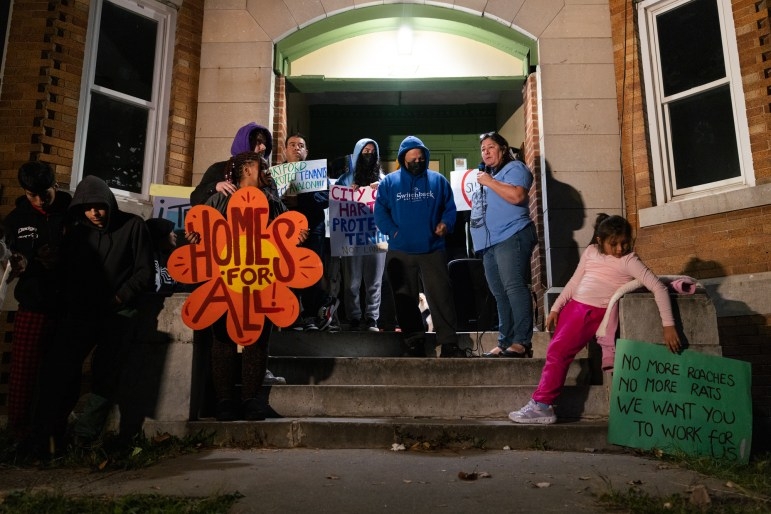
“It’s too late to help us,” Pirre told city councilors at the Dec. 8 meeting. “I hope you guys see the size of the people that showed up here. We are going to be calling to action similar victims and this is only going to grow if tangible change is not seen.”
Behind him, his fellow residents held signs saying, “Sue the slumlords protect tenants” and “We all deserve safe & healthy homes.”
CT Mirror reporter Ginny Monk contributed to this story.

Hartford, CT