Michigan State professor explores Downriver’s history of working-class environmental activism
Jul 13, 2026 | 4:00 am ET
Description
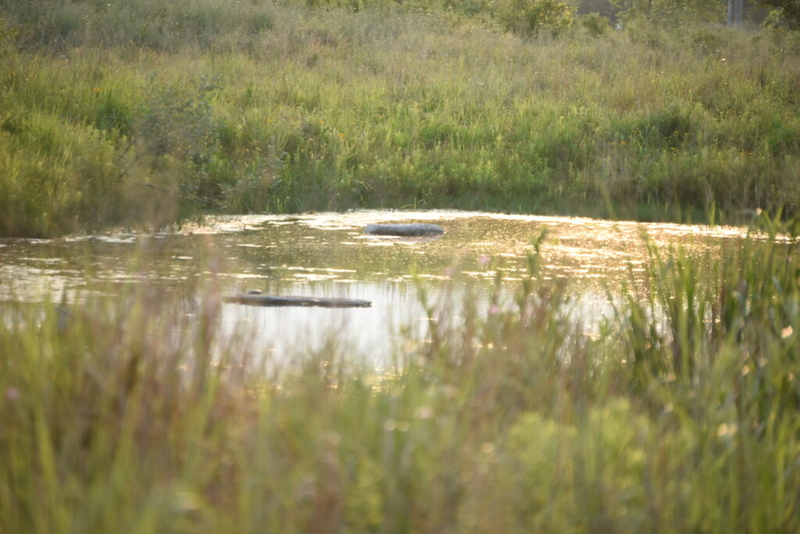
A swampy area at the Detroit River International Wildlife Refuge, which includes the Humbug Marsh. July 7, 2026. | Photo by Katherine Dailey/Michigan Advance.
When describing the Great Lakes State, Michigan residents will generally gravitate toward two characterizations: one as an industrial powerhouse, fueled by the auto industry, and the other, a tranquil haven characterized by its many lakes and streams.
For Downriver Detroit, the first description will be the first to come to mind for many. The marshy region located to the south and southwest of the city along the Detroit River has long been characterized by its ties to industry and its blue-collar residents.
That second image is less familiar. Those living outside of Downriver may be more familiar with the consequences of industrial pollution in the region – like the 1969 Rouge River Fire – than the long-running efforts to ensure residents can enjoy waters free of contamination.
In “Downriver Detroit: The Working Class, the Environment, and the Bonds of Place,” Lisa Fine, a history professor at Michigan State University, details how working-class residents resisted threats to their communities and natural resources, challenging the notion that industrial work and environmental conservation are inherently at odds.
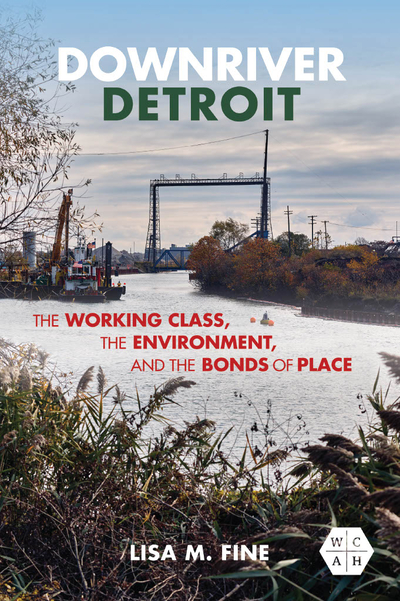
Fine told Michigan Advance that her look into the history of labor and environmental efforts in the region was part of a long process which emerged and evolved over time.
While writing her second book, “The Story of REO Joe: Work, Kin, and Community in Autotown U.S.A.,” which examines the history of workers at the REO Motor Car Company in Lansing, Fine found strong ties between the male autoworkers and outdoor activities, particularly hunting.
Hunting and other outdoor activities led workers to develop an interest in habitat preservation, which brought them to conservation and cleaning up the environment, Fine explained.
“I knew that once the REO book was done, I wanted to explore that in more detail,” Fine said.
Fine was also interested in examining the ways community and geography factor into working-class identity and pushing back on the notion that working class people don’t care about the environment.
She decided to pick a location and examine what working class people had done there on behalf of their environment and their community.
Fine picked Downriver, telling Michigan Advance she’d intentionally selected a less-recognizable location that people living outside the region may not think of as beautiful in the same way they think of lush, mountainous areas written about in other books.
“The different sort of treatments in each of the chapters were just what I discovered through my research,” Fine said. “I’d let them – the workers and the people that live there – tell me. And I don’t think I exhausted it at all, but hopefully these are important enough stories.”
Across its five chapters, Fine discusses the community, its relationship to its waters and marshes, opposition to the Fermi nuclear power plant and the history of McLouth Steel Corporation. In its epilogue, Fine points to three themes between how individuals are interacting with and shaping the land in its recent history.
For some, the community is a gateway to other destinations. For others, it’s a refuge for outdoor activity, while still others look to the region as a sacred space to be reclaimed and preserved.
In her exploration, Fine describes a distinctive environmental ethos of the region, rather than weighing in on whether the workers of Downriver were participating in authentic or qualified environmentalism.
“When the environmental movement sort of burst on the scene they allied with them, they conversed with them, they collaborated with them, but they weren’t the same,” Fine said. “They had their own way of approaching this, and part of it was because they worked in the very companies and industries that sometimes were guilty of the pollution, right?”
Making sure the water was clean enough for fishing, boating, swimming and other types of recreation was key for Downriver residents, Fine said, as was ensuring the air was clean and residents were not getting sick from pollution.
“They had some very clear ideas about what they wanted, and they also wanted the people to be responsible for it to be the companies,” Fine said, noting that the workers rejected “environmental blackmail” or the notion that environmental regulations would force industrial plants to close up shop, leaving them without a job.
“They viscerally understood that this should not be something that they would have to pay for, in any way,” Fine said. “And I think that’s just a different approach to the way you think about environmentalism.”
Fine also pointed to a 1962 letter to the Monroe County News, where John Chascsa, who served as chairman of the Estral Beach Village Council and chair of the Lake Erie Cleanup Committee, spoke out on the double standard working-class folks faced compared to corporate polluters in how they treat the land and its creatures.
In his letter, Chascsa described a hunter from Trenton, who was fined $200 for baiting and shooting a duck in a wildlife refuge, while “someone dumped a considerable amount of oil and industrial acid and other caustics into the Detroit River,” killing 12,000 ducks, without any fines issued to the polluter.
From residents’ perspective, they’d agreed to abide by the rules to protect wildlife in the region, and it fell on their employers to do the same, Fine explained.
“Everybody has to do their bit at their level,” Fine said. “I think that that’s sort of the ethos right there.”

While the United Auto Workers played a formative role in the modern environmental movement and the creation of various organizations in Downriver centered on those concerns, Fine told the Advance she was also interested in delving into the efforts that preceded that movement.
This work, which may have been labeled as conservation or habitat preservation, was a part of efforts to preserve the environment from industrialization, Fine explained. Downriver, these things are directly connected, she said, noting that land designated for a hunting preserve can’t be used for a factory.
Fine also pointed to the residents’ history of enlisting others to engage with the environment in ways that are meaningful to them – whether that’s through working in a watershed or through outdoor recreation – as a particularly important finding.
“I think Downriverites, just because of where they were and who they were, they’ve been doing that for a really long time,” Fine said.
“Downriver Detroit: The Working Class, the Environment, and the Bonds of Place” is available through the University of Illinois Press.

Lansing, MI