Nevada faces ‘unrealistic reductions’ in ‘fundamentally flawed’ Colorado River plan, officials say
Jul 31, 2026 | 7:55 pm ET
Description
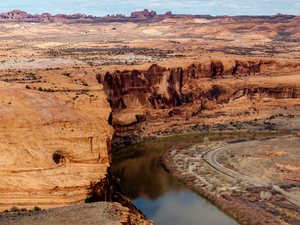
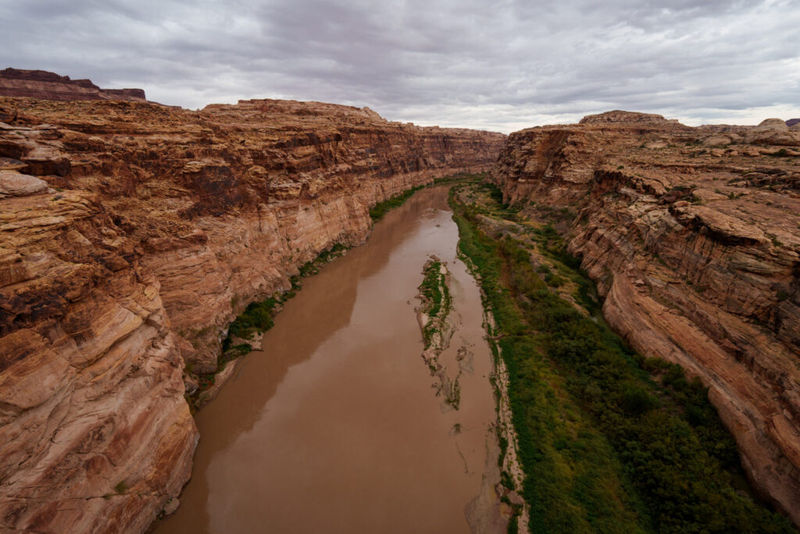
The Colorado River is pictured just beyond the upper reaches of Lake Powell. (Photo by Spenser Heaps for Utah News Dispatch)
The federal government has released its long-awaited 10-year plan to manage worsening water shortages along the Colorado River, including deep cuts to Nevada’s allocation of the drought-stricken river.
Following months of negotiations — and years of states failing to reach an agreement on their own — the Bureau of Reclamation on Friday published a final environmental impact statement laying out their framework for how to manage the river’s largest reservoirs, Lakes Mead and Powell, after current guidelines expire in October.
The proposal does not outline specific operating plans, but does call for the development of river operating plans every two years through 2036, unless the basin states reach a consensus agreement. The first of those plans for 2027 and 2028 will likely be released in the coming days.
“This framework provides the flexibility to respond to changing hydrologic conditions while preserving the opportunity for the basin states to continue working toward durable, consensus-based solutions,” Interior Secretary Doug Burgum said in a statement.
The guidelines published Friday spared Nevada, Arizona, and California from the most severe water cutbacks that had been proposed over the course of negotiations, instead using water cuts originally proposed by the Lower Basin states.
The plan would require Lower Basin states to reduce their water use by 1.5 million acre-feet over the next two years, with Nevada on the line for a reduction of 50,000 acre-feet.
However, under the Bureau of Reclamation’s preferred method of managing the dwindling Lake Powell and Lake Mead, Lower Basin states could be required to cut their use by as much as 3 million acre-feet annually during especially dry years.
Nevada would face the lowest mandatory reductions on an acre-feet basis under the preferred alternative, with a maximum curtailment of 210,000acre-feet annually during especially dry years under the guidelines. Nevada also has the smallest allocation of Colorado River water among the three lower basin states.
Nevada Gov. Joe Lombardo said the federal plan “seeks to impose unrealistic reductions on Nevada and our water users,” and “could have devastating economic and environmental impacts on Nevada.”
The governor called for “shared sacrifice from all water users across the Colorado River Basin.”
Upper Basin states – Colorado, New Mexico, Wyoming and Utah – will not be subject to mandatory water cutbacks under the plan, however, the plan does outline a range of reservoir releases in the upper Colorado River to protect downstream reservoirs from reaching critically low levels.
The final environmental impact statement instead sets a target for voluntary water cuts in Upper Basin states of up to 200,000 acre-feet, about 5% of the Upper Basin’s annual water use of 3.8 million acre-feet.
John Entsminger, Southern Nevada Water Authority General Manager and Nevada’s lead negotiator on the Colorado River, echoed the governor, saying that “any plan built around significant reductions for only three of the seven basin states that share the river is fundamentally flawed by its nature.”
“While our community is prepared to manage through short-term reductions to protect the Colorado River system, as the basin’s smallest water user, Nevada cannot solve the river’s imbalance alone,” Entsminger said. “Long-term solutions must recognize that the Colorado River’s challenges are basin-wide and require basin-wide participation.”
Lombardo and Entsminger said they remained committed to finding a seven-state consensus agreement.
The Upper Colorado River Commission said they are waiting on final reports to “provide a more comprehensive assessment of the federal operating plan,” but plan to impose mandatory cuts to water users and advance conservation programs to boost water storage in Upper Basin reservoirs.
Las Vegas, NV