Fish and Wildlife Commission probe finds wrongdoing, doesn’t recommend punishment
Jul 31, 2026 | 10:59 pm ET
Description
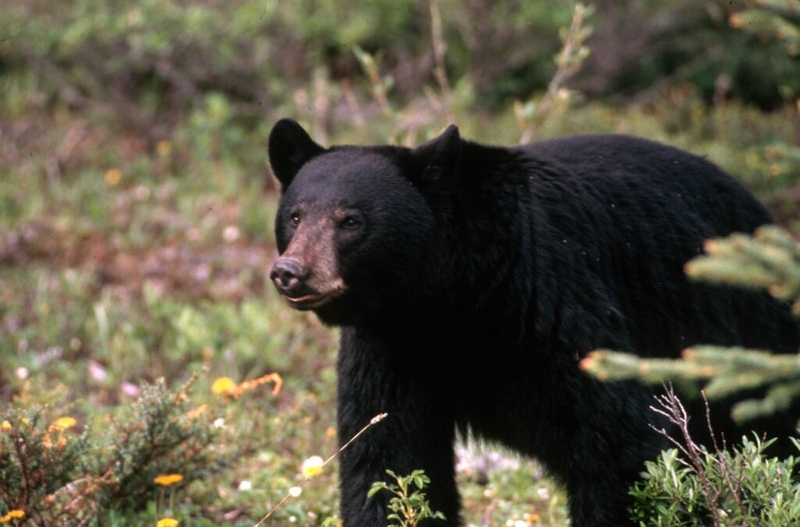
(Photo courtesy of U.S. Fish and Wildlife Service)
Washington fish and wildlife commissioners routinely disregarded government transparency laws, skirted conflict of interest rules, and sparred with agency leaders, but their actions and behavior did not reach the level of serious misconduct, according to the findings of a nearly yearlong investigation released Friday.
Commissioners’ repeated violations of public records and open meeting laws partly stemmed from a lack of understanding and training, and their tense interactions with Department of Fish and Wildlife leaders revealed “a significant breakdown in trust” but did not amount to harassment or mistreatment, the report concludes.
“In each instance, the evidence stops short of establishing the most serious forms of the alleged misconduct,” wrote Chiedza Nziramasanga of Transformative Workplace Investigations.
“What the record does establish is that legal obligations existed, that compliance was inconsistent, and that the consequences of that inconsistency were real — for staff, for the department, and for the institution itself,” she wrote.
Gov. Bob Ferguson ordered the investigation last August. Since then, its cost had climbed to $80,000. The governor had not seen the results Friday, according to his staff.
“Now that the report is final, we expect to brief the governor in the next few days on the content,” Communications Director Brionna Aho said in an email. “After the governor reviews the report, he will determine next steps.”
The Department of Fish and Wildlife received a copy Tuesday. A statement issued Friday said it is “reviewing the report and awaiting further information from the governor’s office.”
Kelly Susewind, the leader of Washington’s Department of Fish and Wildlife, formally asked Ferguson to investigate commissioners’ behavior. This was an extraordinary request for an inquiry into the nine-member commission, which oversees his department and has the power to remove him should it choose.
On Friday, he issued a one-sentence statement that did not reference the report. “Our focus remains on our mission and continuing our work to conserve and manage fish, wildlife and their habitats,” he said
The commission devises policies to sustain fish and wildlife populations in Washington while allowing for commercial and recreational opportunities to fish and hunt.
The 68-page report focuses on current commissioners Lorna Smith, Melanie Rowland, John Lehmkuhl and Barbara Baker, and two past members, Tim Ragen and Woody Myers. All but Ragen were interviewed last fall by the investigator. Commissioners are gubernatorial appointees. Those at the center of the inquiry were appointed by Ferguson’s predecessor, Jay Inslee.
Susewind and Deputy Director Amy Windrope were interviewed, as was the current commission chair Jim Anderson.
In recent years, commission meetings have become an ideological battlefield for groups fighting over how far the state should go in protecting wildlife or allowing for hunting or fishing of various species.
Release of the report is likely to inflame rather than calm those tensions as it doesn’t recommend the removal or resignation of any commissioners, as some of their critics hoped. Nor does it absolve commissioners of wrongdoing, as others wished.
“The record reflects a Commission navigating a period of significant institutional pressure, marked by escalating outside advocacy, high-volume public records litigation, ideological disagreement, and deteriorating relationships between commissioners and department leadership,” Nziramasanga concludes.
She recommends the governor require comprehensive training on public records and open meeting laws, and establishment of clearer rules for how commissioners communicate with members of advocacy groups, especially those actively engaged in suing the panel or the department.
She does also suggest “corrective or personnel action” could be considered against Smith and Rowland who, in one instance, were found to have purposely declined to turn over certain public records for 18 months.
How we got here
This investigation traces back to the commission’s narrow and controversial decision in November 2022 to stop recreational hunting of black bears in the spring.
Sportsmen’s Alliance, an Ohio-based advocacy group for hunters and anglers, opposed the outcome. It responded by seeking commissioners’ emails, texts and other communications to figure out if, as the group was convinced, state public meeting laws had been violated ahead of the vote.
After receiving thousands of records, the group petitioned Ferguson in May 2025 to remove four commissioners — Smith, Rowland, Baker and Lehmkuhl — alleging misconduct and malfeasance. Ferguson has not acted on the petition.
But the report seemed to validate those misgivings.
Smith described how she and three other commissioners reached agreement on the substance of the spring bear motion and then sent the language to Baker, who was chair. They did it because the panel had a “no surprises” rule, meaning the chair would be kept aware of issues that might come up.
By contacting Baker, they involved a fifth commissioner. That achieved a quorum, and because it was not done in public, it breached the provisions of the public meeting law.
“The investigation vindicates the Sportsmen’s Alliance’s claims and substantiates the rampant problem of serious ethical, and perhaps even criminal, behaviors several members of the commission routinely engaged in,” Brian Lynn, vice president of marketing and communications for the alliance, said in an email.
“With the evidence of wrongdoing on full display for the citizens of Washington to see, it’s now up to Gov. Ferguson to hold these commissioners accountable,” he said. No one from the group was interviewed for the investigation.
Ferguson greenlit the probe last year after receiving Susewind’s request and a copy of a scathing memo prepared by a Department of Fish and Wildlife attorney who reviewed records provided to the Sportsmen’s Alliance.
That memo alleged that commissioners Smith and Rowland appeared to have colluded with the leader of a conservation nonprofit, Washington Wildlife First, with whom they had regular undisclosed meetings on policy matters. It said the commissioners’ behavior presented “serious risks” to the department, “especially when it comes to avoiding a conflict of interest and favoritism.”
It suggested the governor might want to consider pursuing their removal.
Susewind and Deputy Director Amy Windrope raised the same concerns when interviewed for the investigation. And the report flagged similar worries with the appearance of commissioners having undisclosed communications and meetings with advocacy organizations actively litigating against the department.
“The evidence does not establish unlawful litigation collusion or statutory conflicts of interest, but does reflect appearance concerns, institutional risk, and inconsistent compliance with the Commission’s own disclosure standards,” the report found.
No one from Washington Wildlife First, which provides a counterpoint to the hunting group and has publicly called for Susewind’s removal, was interviewed by the investigator.
Late Friday, a Washington Wildlife First spokesman issued a statement expressing disappointment with the report’s “extremely limited scope.”
“Unfortunately, it appears that the investigator limited her work to the scope that Susewind and Windrope defined, and the documents that they provided, without ever stopping to consider their motivations or question their assertions,” said Francisco Santiago-Avila, science and advocacy director for the organization.
Internal combustion
Susewind and Windrope also alleged commissioners had mistreated staff and retaliated against the director after he sought Ferguson’s involvement.
According to the report, Susewind said that after he reached out to the governor, Smith “conveyed that a group of commissioners did not trust and could not work with him” and his job was at risk.
Baker told the investigator that the director’s action was “a major turning point in commission-director relations. She stated that some commissioners viewed the letter as insubordinate,” the report reads.
The investigator found “isolated instances of confrontational or inappropriate tone” toward employees, but not “a coordinated pattern of harassment, systemic mistreatment of staff, or formal retaliatory employment action” against Susewind.
A fifth and final allegation centered on Susewind’s concern that Smith was improperly claiming compensation for commission work. The report found the allegation unsubstantiated.
Meanwhile, Smith has filed a federal civil rights lawsuit against Susewind and Windrope, accusing them of manufacturing allegations of misconduct in retaliation for her criticism of them, and to incite the governor’s investigation.
The suit also accuses Susewind and Windrope of making defamatory statements and unfounded allegations against attorney Claire Davis, who leads Washington Wildlife First, in an alleged rebuke for her critical comments and the group’s numerous lawsuits against the department. Davis and Washington Wildlife First are plaintiffs alongside Smith in the suit.
A copy of the report released on July 31, 2026, with the findings of the investigation into Washington Fish and Wildlife Commission members. Gov. Bob Ferguson ordered the investigation in August 2025.
Olympia, WA