Utah won’t face mandatory cuts in feds’ new Colorado River proposal, but Lower Basin states could
Jul 31, 2026 | 8:12 pm ET
Description
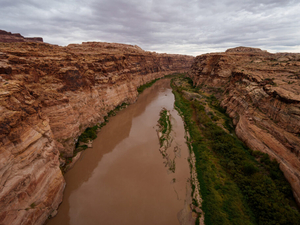
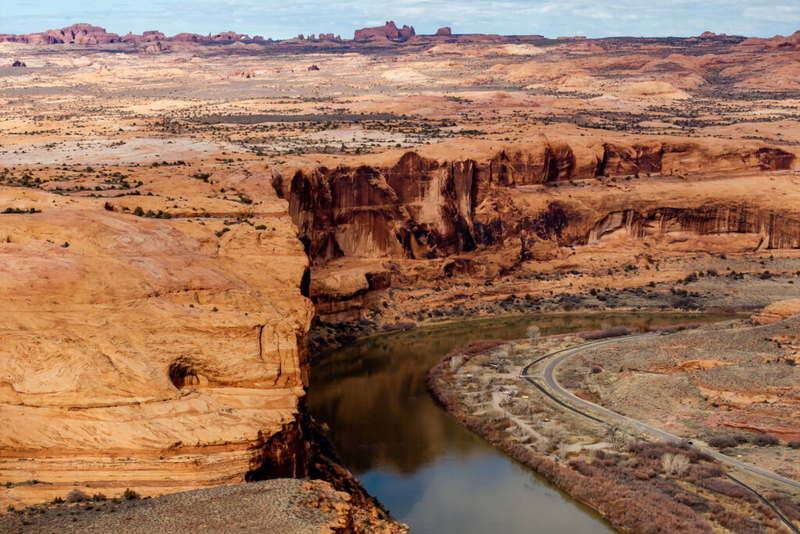
The Colorado River is pictured near Moab on Sunday, Feb. 18, 2024. (Photo by Spenser Heaps for Utah News Dispatch)
After Utah and six other states along the Colorado River failed to reach a deal on how to share its dwindling water supply, the federal government on Friday released its own 10-year outline.
Under the proposal from the U.S. Bureau of Reclamation, the Lower Basin states of Arizona, California and Nevada would share in cuts of up to 3 million acre-feet per year. The framework doesn’t mandate cuts for Colorado, New Mexico, Utah and Wyoming.
Instead, it identifies a conservation goal for the Upper Basin — 200,000 acre-feet per year — about as much as Utah’s Deer Creek and East Canyon reservoirs together can hold. The plan would also allow for smaller annual releases from Lake Powell of down to 5 million acre-feet, compared to the current 6 million acre-feet, with new operating guidelines every two years.
Utah’s chief Colorado River negotiator, Gene Shawcroft, praised the proposal on Friday, telling reporters it recognizes the reality of the water available, not just the demand. But he emphasized it provides a broad framework, with the details to follow in coming days.
“I would just simply say, this is a bridge, not a destination,” Shawcroft said in a virtual news conference. “It certainly could be a bridge over troubled waters, but perhaps a bridge over no waters. We just aren’t quite sure.”
He and Amy Haas, executive director of the Colorado River Authority of Utah, were still reading through the 2,600 pages contained in the bureau’s environmental impact statement released Friday.
Haas said the state will know more about what it’s contending with when it gets a copy of a two-year operations plan for 2027 and 2028 in coming days, though the exact timeline wasn’t clear.
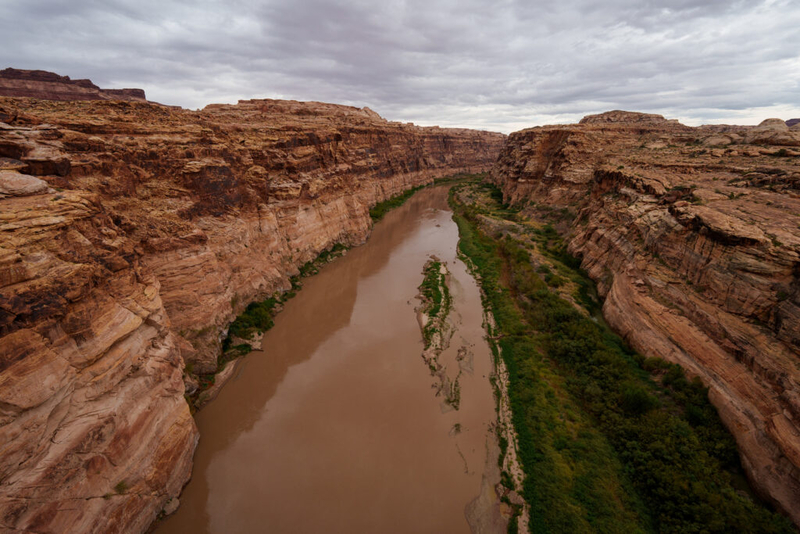
The Colorado River provides water to 40 million people across the U.S. and Mexico, contributing 27% of Utah’s water supply. It’s shrinking because of drought, overuse and hotter temperatures linked to climate change.
This year’s record-high temperatures and lowest snowpack on record aren’t helping. Normally, Colorado River runoff is about 13 million acre-feet, Shawcroft said. Now it’s 3.5 million acre-feet.
He told reporters: “We’re in a dire situation.”
On Friday, Arizona’s Department of Water Resources called the proposal’s cuts for the Lower Basin “unacceptable,” saying such reductions would devastate Arizona’s water users and its economy.”
The agency described negotiations over many months as “an exercise in lowering expectations, particularly for a long-term, seven-state agreement on operating this vital river system.”
The disagreement could find its way into a courtroom soon. Arizona and Utah have both taken steps this year to build up litigation funds.
“For Utah, litigation is never our plan A,” Haas told reporters Friday. “Whether it’s a plan B, depending on the context of this document, that remains to be seen. But litigation is not going to get us anywhere on this river. It’s not going to get us more water.”
At issue in the negotiations is who absorbs necessary cuts. Upper Basin states argue they use less water than Lower Basin states, don’t have huge reservoirs to store water in dry years, and lack legal authority to place significant restrictions on water users.
The proposal out Friday is adaptable and allows the states to keep negotiating, said Secretary of the Interior Doug Burgum.
“This framework provides the flexibility to respond to changing hydrologic conditions while preserving the opportunity for the Basin States to continue working toward durable, consensus-based solutions,” Burgum said in a statement.
Utah Gov. Spencer Cox, in a joint statement with his counterparts in the other upstream states, said they’re encouraged that incoming operating guidelines “will better reflect existing water supply, which must underpin any practicable plan going forward.”
They went on to say that both the upper and lower divisions of the basin “are feeling the pain of severe drought. This is a reality that all states, and the federal government, will need to address practically, which is why a seven-state agreement will provide the best outcome for all water users in the Colorado River Basin.”
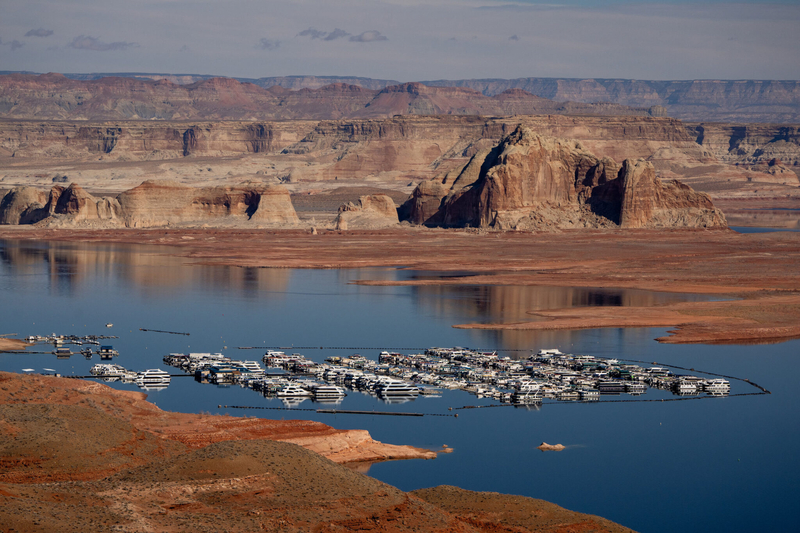
Water use is outpacing the river’s flows, and that overconsumption adds up. The combined amount of water in Lake Powell and Lake Mead is at its lowest point since before Glen Canyon Dam began to fill up in 1963, the bureau said in its Friday news release.
If water levels dip to critical lows, as forecasts suggest they could by late this year, the nation’s two largest reservoirs could fail to produce power. If their depths continue to slide, they’ll fail to send water downstream.
Conservation and recreation groups have called for an end to the gridlock, saying it’s dragging on in the background while hotter and drier conditions are driving up wildfire risks, air quality concerns and restrictions on the water supply.
Salt Lake City, UT