Menhaden management board advances addendum with potential cuts to Chesapeake Bay fishery limits
Aug 06, 2026 | 5:26 am ET
Description
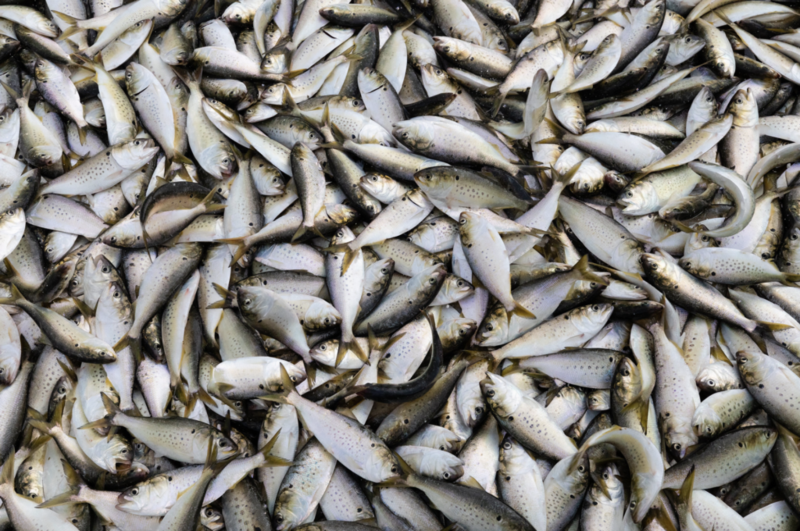
Menhaden are small, oily fish that commercial fisheries catch and grind into meal and oil. The tiny fish also support several Chesapeake Bay species including Atlantic striped bass and ospreys. (Photo courtesy of the Chesapeake Bay Program)
The regional board overseeing menhaden management along the Atlantic coast on Wednesday advanced a measure to implement new restrictions on Virginia’s only reduction fishery that harvests the oily forage fish within the Chesapeake Bay.
The Atlantic States Marine Fisheries Commission’s draft addendum would reduce the Bay-specific menhaden catch limits for the fishery, Ocean Harvesters, which contracts with Omega Protein. Other changes include harvest time period quotas to aid in menhaden migration.
Reduction fisheries catch menhaden in purse seine nets to then grind them up into fish meal and oil. Virginia is the only state that allows reduction fishing of menhaden within the Bay.
Currently, the Reedville-based Ocean Harvesters is allowed to catch 51,000 metric tons of menhaden within the Chesapeake Bay annually without any time period quotas. Last October , the menhaden management board voted to reduce the East Coast limit by 20% – bringing the catch limit to 186,840 metric tons for all fisheries, but leaving the Bay cap in place.
Board members have raised concerns over whether menhaden populations are waning and potential repercussions of a decline. In past meetings, Maryland representatives have warned about impacts to pound net fishermen and small bait fisheries, and said various fish and bird species could go hungry.
There are several options included in the draft addendum that the public will have a chance to review and respond to. One is to decrease the Bay cap by 10 to 50%.
Another entails quota periods that allow different percentages during certain parts of the harvest season, with special rules regulating the quota process.
The draft also suggests adding language directing the management board to either tie the Bay catch cap to coast-wide cap fluctuations, or to review the Bay cap every three years.
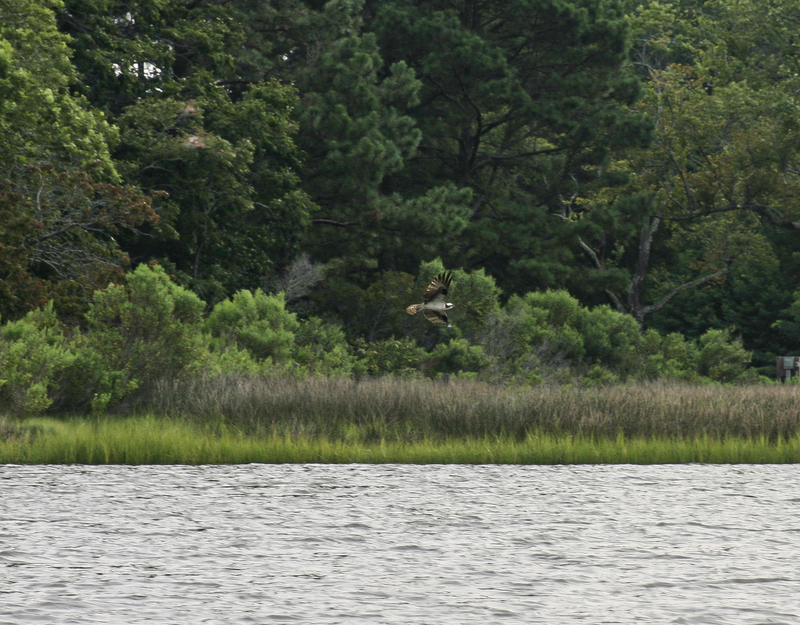
Concerns about catch limits for East Coast fisheries have grown following the decline of striped bass and osprey. Scientists have used those species as proxies for the menhaden population in the Bay, because there hasn’t been a Bay-specific study on the forage fish.
Virginia this year allocated funding for in-depth Bay menhaden research, which will support a multi-year study into menhaden within the Chesapeake Bay and how policies could be shaped around the findings.
One of Virginia’s representatives on the board, Del. Adele McClure, D-Arlington, said it would be premature to pass an addendum before the study is completed, since it could have a major impact on the reduction fishery.
“I’ve heard a lot of ‘I think’ and uncertainty versus ‘we know this is happening, and we know this is the cause and the correlation,’ but I need to know that we’re putting out a complete picture to the public,” McClure said.
At the Aug. 5 public hearing, experts on osprey and other wildlife framed the dwindling numbers of these species’ populations as evidence of the need to manage the menhaden, because they are one of the key foods the birds feed on.
Their observations about ospreys reflect continued debate about how other animals should factor into determining the health of the menhaden population.
Bryan Watts, who studies ospreys extensively at the Center for Conservation Biology at William & Mary, said in recent years he has seen the number of the birds laying eggs in Virginia decrease by 20 to 30%.
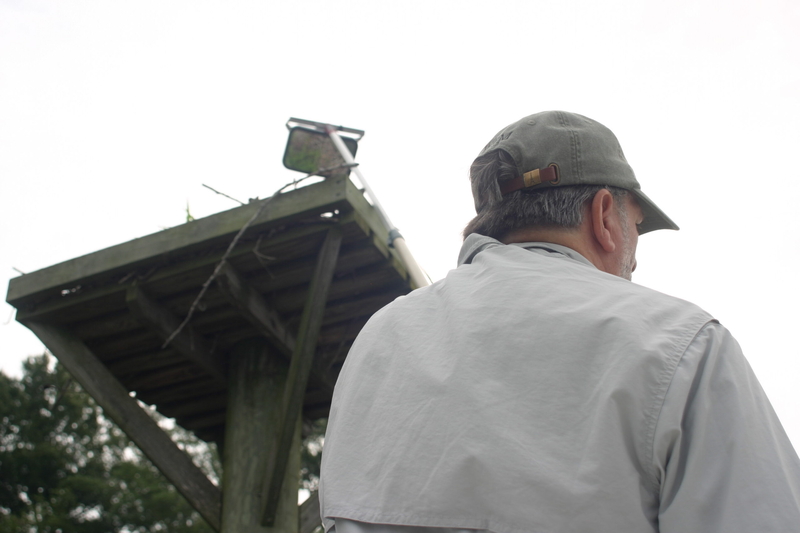
“They come here, they arrive at the normal time, and they’ll sit there on the nest all season,” Watts said. “But they just won’t lay. And if you go back in time to the 1980s and 1990s, that rate was about 2%. So, it was rare. That’s why it was so surprising to us.”
On a research trip to the Ware River in the Northern Neck, Watts said the nests along the waterfront have lacked eggs and that the osprey are traveling inland to get food. Mehaden haven’t been found in the river for a long time, he said, which is part of the bigger picture of the fish population’s health.
“Menhaden are a public resource, and so it’s up to us, as the public, to decide how we want that resource allocated,” Watts said. “So if we want all of it allocated to industry, that’s a social decision that we can make. But if some of us care about the osprey and what’s happening with them, maybe we would like to allocate some of that public resource to them.”
Ocean Harvesters has vociferously denied the accusations that the fishery could be contributing to the lack of menhaden in the Bay or blocking them from migrating further into the waters towards Maryland.
Representatives from the company suggested that detractors haven’t fully considered how the environment and other factors contribute to the situation. More data is needed, the company insisted, to make informed decisions on any potential restrictions.
“The addendum says menhaden availability ‘may be affected’ by changes in abundance and distribution and that recent observations ‘suggest that availability of menhaden in Chesapeake Bay may be changing,’” Ocean Harvesters said in an email, highlighting the lack of definite data “to comprehensively characterize menhaden abundance and distribution in the Bay or the influence of fishing pressure.”
The company urged the board not to adopt the addendum, and flagged the negative economic impact to communities in Virginia that rely on the jobs provided by the fishery if the Bay cap is lowered.
“If Bay harvest were eliminated and vessels could not replace those landings in coastal waters, Northumberland County could lose as many as 176 jobs, including 98 direct jobs,” the company said.
The addendum will be available for the public to view through October and public hearings will be held across all the states represented on the commission before the board will take up the issue for final decision in November.
“You know we’ve worked on this addendum, and I think it’s time for the public to weigh in. The public wants to hear, wants to see this addendum, and they want to help us make a decision,” New Hampshire board member Dennis Abbott said.
Richmond, VA