At least 3 school districts vote to display Ten Commandments allowed by new Tennessee law
Aug 06, 2026 | 6:01 am ET
Description
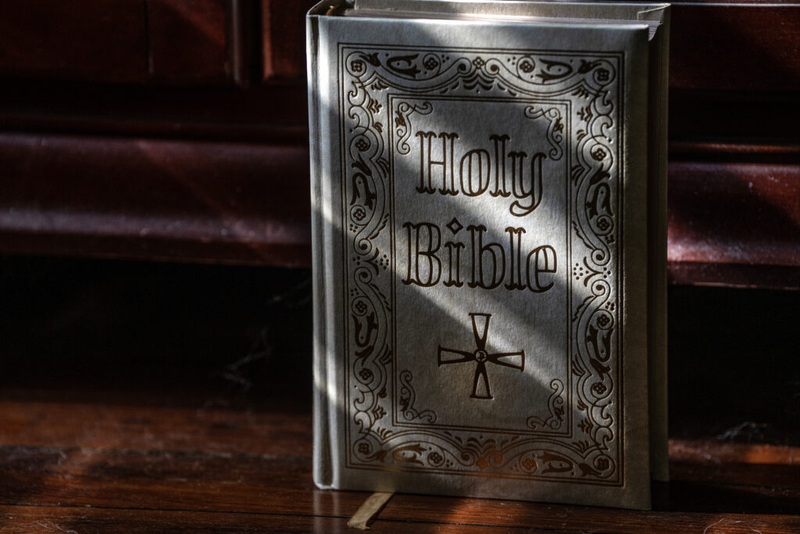
At least three public school districts have approved the display of the Ten Commandments since a GOP-backed law allowing them to do so took effect July 1. (Photo: John Partipilo/Tennessee Lookout)
Photograph by John Partipilo/
A northeast Tennessee school board this week became at least the third in the state to approve the display of the Ten Commandments in its public schools since a new GOP-backed law giving districts the option took effect July 1.
With little debate, the Washington County Board of Education voted unanimously Wednesday in favor of the text’s display in a “prominent” place in each of its 15 schools, alongside the preamble to the U.S. Constitution and an excerpt from the Declaration of Independence, in accordance with the new state law.
Last month, the Wilson County Board of Education voted to post the same documents in common areas of its schools. In anticipation of the then-bill becoming law, the Rutherford County Schools in April also voted to approve displaying the documents in all of the county’s K-12 public schools.
On Wednesday, only one member of the Washington County Board expressed reservations about the measure, but said he felt compelled to cast a “yes” vote after an “overwhelming response” from constituents in favor of it, including “a couple personal visits to my front door.”
Vince Walters, another board member, said he had no reservations.
“I stand under Jesus Christ, and I just have a problem with people singling the commandments out of these documents,” Walters said after several community members urged board members to vote against posting the Biblical text in public schools.
“We’re not worried about coercing kids with the Declaration of Independence, so-called coercion, or the Constitution, Tennessee or U.S. If we’re not worried about posting those, why are we worried about posting the Ten Commandments? I’m tired of God being singled out and God’s things being singled out because somebody’s afraid of a little bit of a liability.”
The Ten Commandments is a Judeo-Christian text, distinct from the foundational documents that established the framework of American society and governance, including the First Amendment, which begins: “Congress shall make no law respecting an establishment of religion.”
Critics of the legislation say the religious text has no place in public schools, interferes with parents’ well-established right to guide their children’s religious education and violates the First Amendment. There have been no known legal challenges filed against the Tennessee law in the weeks since it took effect.
The legislation, signed into law by Gov. Bill Lee in May, contains in full the state-approved version of the Ten Commandments that school districts that opt to post the text must use.
It is a variation of the version in the King James Bible developed, in part, to promote the 1956 Cecil B. DeMille film, “The Ten Commandments.” Catholic, Protestant and Jewish faiths each embrace different versions of the Ten Commandments and the exact phrasing may vary depending on Bible translations.
The text contained in the law is also identical to language inscribed on a monument at the Texas State Capitol that the Supreme Court in 2005 ruled was constitutionally permissible.
The Tennessee law says the Ten Commandments may be posted alongside the preamble to the United States Constitution and the first sentence of the second paragraph of the preamble to the Declaration of Independence, which reads:
“We hold these truths to be self-evident, that all men are created equal, that they are endowed by their Creator with certain unalienable Rights, that among these are Life, Liberty and the pursuit of Happiness.”
The legislation gives each local school board and public charter school the discretion to decide the size and placement of the documents, but requires that they be displayed in a “prominent location, with text in a font size that is no smaller than at least twenty-six point, and in a style and manner that is easy for students to see and read.”
It defines “prominent location” as a school entryway, cafeteria, or common area where students are likely to see the display.
The legislation says the prominent placement of the Biblical and government texts is intended “to educate students on the documents’ historical significance and how the documents shaped the common cultural heritage of (a public school district) or public charter school, this state, and the United States of America.”
The legislation, in its initial form, would have mandated that all Tennessee school districts post the texts, but was amended during the legislative session to make it optional.

Nashville, TN