Maine survey shows trans students face double the threats and violence as their peers
Dec 15, 2025 | 4:33 am ET
Description
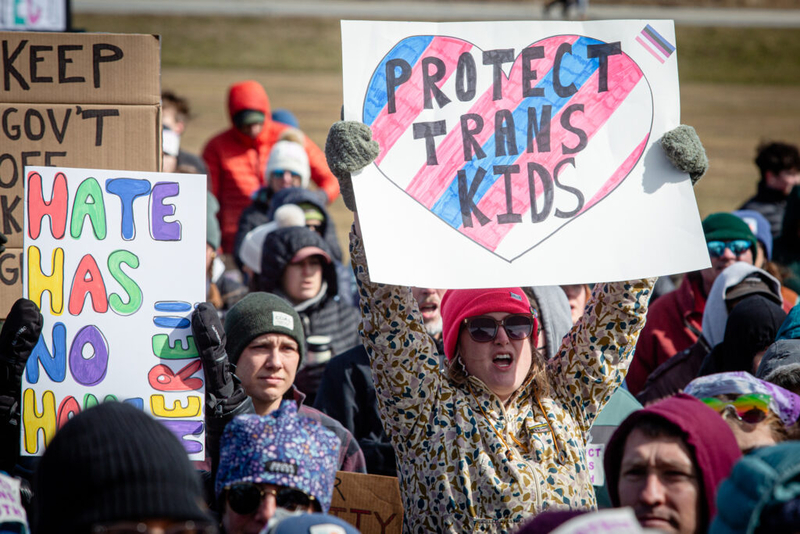
Supporters yell and wave signs at rally in Cumberland, Maine on Sunday, March 23, 2025, calling on Maine lawmakers, and local MSAD51 school officials, to support transgender student athletes. (Photo by Troy R. Bennett/ Maine Morning Star)
Transgender students in Maine public schools this year faced more than twice the threats, violence and bullying of their peers, according to new state data — disparities advocates say are worsening as political attacks on LGBTQ-inclusive school policies escalate.
They were also more than four times as likely to attempt suicide, and more than three times as likely to self-harm through cutting or burning themselves, according to the latest Maine Integrated Youth Health Survey, which was conducted Feb. through March 2025 and studies the mental and physical health of students 5th grade and older.
Trans students, who make up almost 4% of high schoolers and 2% of older middle schoolers in the state, have been disproportionately impacted by bullying and poor mental health, according to several years of data. Since the survey began asking about gender expression in 2019, that trend has remained consistent.
Whether that disparity has continued in the current school year is not yet known, but it’s something the Department of Health and Human Services, which publishes the survey every two years, will be looking for in the 2027 survey, according to Sheila Nelson, who oversees adolescent health for DHHS.
The anti-trans rhetoric that has ratcheted up under the second Trump administration and its scrutiny of Maine’s inclusive policies, coupled with recent legislative attempts to walk back protections for trans students and a handful of local school boards rescinding those rights have all played a role in making LGBTQ+ students, particularly trans youth, feel unsafe at school, advocates told Maine Morning Star.
“When we have school boards that are changing policies that say, ‘You don’t matter and you don’t know you shouldn’t exist,’ and then those things are getting implemented in schools, that sends a huge message,” said Sue Campbell, executive director of Out Maine. “And that is going to make it even more difficult for our young people in schools and in communities.”
Across the three reports the Maine Department of Health and Human Services released last month, trans students reported the highest rates of bullying and being targeted for their perceived gender expression or sexual orientation. About 21% of all high school students reported being bullied, but double that percentage — nearly 43% — of trans students said they had experienced bullying at school. More than half of the more than 25,000 children in 7th and 8th grades reported being bullied at school last year, which increased to more than 78% of trans students.
“Since we’ve started asking questions about sexual orientation and gender identity on the survey, we have seen these differences around bullying and harassment as well as many other health indicators for LGBTQ+ young people,” Nelson said.
“It’s not new, but it is concerning,” she added. “It’s one of those long term, really persistent health disparities that we’ve seen.”
Surveys from 2023 and 2019 also show comparable percentages to 2025 of total students who said they were bullied at school, and trans students who experienced bullying at double the rate. The 2021 reports show an overall dip, but that could be attributed to students studying remotely because of the COVID-19 pandemic.
Across several years, two-thirds of trans high schoolers reported experiencing offensive comments or attacks at school because of their perceived gender expression or sexual orientation, indicating that the bullying trans students face in schools is directly related to their identity. Middle schoolers were not asked that question.
“We know that those experiences in school have a big impact on young people’s ability to learn and their ability to feel safe at school, and ultimately, their ability to enjoy all of the things that we want young people to be able to enjoy,” Nelson said.
According to the 2025 report, 8% of total students skipped at least one day of school because they felt unsafe, which increased to 13% of LGBTQ+ students and almost 20% of trans students. Overall, more than 86% of all high school students and 80% of middle schoolers felt safe at school, but only 67% percent of trans students in high school and 50% of those in middle school did.
“When students don’t feel safe at school and they’re hurting, like LGBTQ+ students are, that affects just not just them, but it affects their friends and their families and their classmates, and it erodes what communities are supposed to be,” said Gia Drew, executive director of Equality Maine and a former high school teacher and coach.
That’s reflected in the disproportionately high number of trans and LGBTQ+ students who shared in the latest survey that they experienced depression, planned or attempted suicide, and engaged in self harm, such as cutting or burning themselves.
According to the high school report, 63% of trans students and 52% of LGBTQ+ students reported feeling sad or hopeless to the extent that they stopped doing daily activities. Of all high school students, 5.6% attempted suicide in the past year, whereas 23% of trans and 13% of LGBTQ+ students did.
“People should be horrified by these statistics and recognize that we’re talking about children — and all children, regardless of their identity, should feel safe,” Campbell said. “And when they don’t, that’s on the adults for not doing the right thing.”
Prevention
The Maine Department of Education and DHHS have both been working on prevention to improve overall student well-being and provide additional mental health support in schools as well as increasing professional development for teachers. The health department has been more focused on community resources, such as partnerships to improve mental health resources for students outside of schools. Both agencies believe that building a supportive climate for all students will eventually benefit LGBTQ and trans students.
Although trans students continue to be severely impacted by bullying and more prone to depression or hurting themselves, there are some positive signs in the 2025 report compared to two years prior. About 10% fewer students reported feeling sad or hopeless and about 7% more said they felt safe at school between 2025 and 2023.
The education department works with school leadership organizations such as the Maine Principals Association and the Maine School Boards Association to offer models of affirming policies for schools, which Bear Shea, who leads the team focused on school climate and mental health, said are important to ensure students feel safe at school.
“So really it’s looking at, what are the policies, what are the legal pieces that are in place, and how are those being used,” Shea said. For example, looking at whether students are referred to by their chosen names in learning platforms.
But recently, school administrators have been wary of utilizing such evidence-based supports that affirm students’ identities because of the politicization of inclusive policies, according to Drew and Campbell.
“I think there were administrators around the state that really wanted to know what life was like for their students and they were trying to make changes,” Drew said. “But so much of that has been under attack that it’s now dangerous to do those things, and it looks like kids are paying the price.”
Out Maine, which works with both the health and education departments to offer school trainings and community events, has been hearing from LGBTQ students that they’re afraid to come out at school or use the bathroom. Anecdotally, Campbell said more families, particularly with trans kids, are choosing to homeschool.
Part of that is because LGBTQ resources are vanishing from all aspects of school life, including Gay Straight Alliances — of which there were dozens around the state a few years ago —cultural awareness training for teachers, and LGBTQ representation in school curricula, Drew said.
The Maine DOE’s resources can be useful if schools chose to utilize them, but the department can’t mandate any school to implement these practices. This local discretion opens the door to anti-trans groups or parents pressuring districts to walk back affirming policies, curricula and teacher trainings.
“It doesn’t seem like the state has the authority to make those changes happen at the local level, so how do local communities see this as a really pressing issue and demand more from their schools?” Drew asked.
Augusta, ME