The long goodbye — how reconnecting with my dad led to discovering he had Alzheimer’s
May 21, 2026 | 3:30 am ET
Description
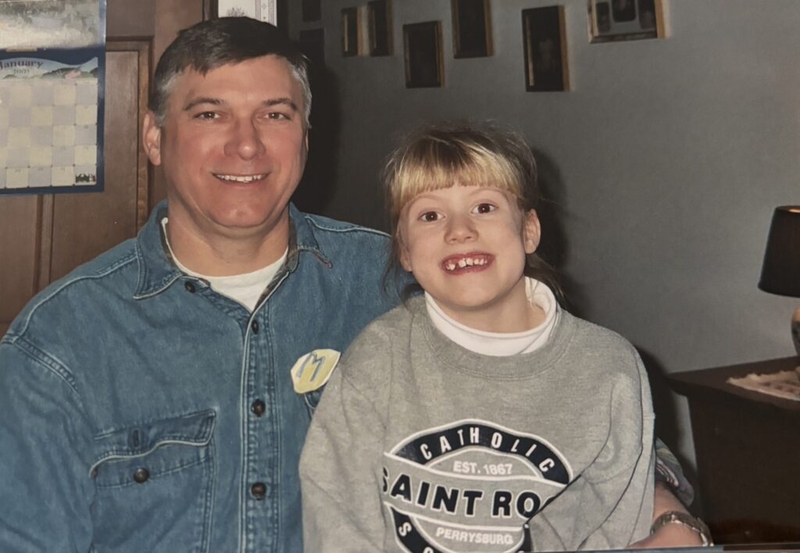
Bob Henry on his 50th birthday. (Photo courtesy of Megan Henry).
My dad passed away peacefully in his sleep early in the morning on May 10, 2026, ending his nearly 10-year battle with Alzheimer’s. Often called the long goodbye, it is such a terrible disease that steals someone long before they are physically gone.
He shared his love of reading with me, and we read Harry Potter together. I saw the first movie in the theaters when I was five years old, and I wanted to read the books. I was in kindergarten at the time and only learning how to read, so my dad read the first book to me. As I slowly learned to read, my dad and I would take turns reading to each other. We read most of the series together and even went to the midnight book release of “Harry Potter and the Half-Blood Prince.” As the movies came out, we would go to the movie theater to see them. My dad was not a big movie or pop culture guy, so this was a big deal.
Even before Harry Potter, I remember my dad reading to me before I went to bed. He was such an avid reader. His favorite author was Tom Clancy, which made it easy to know what to get for him for his birthday or Christmas. I even read Patriot Games when I was growing up because of my dad.
We loved to spend time together outdoors. We spent hours playing catch — mostly softball, but occasionally football — in our backyard. He taught me the rules of baseball and football, and helped me start my baseball card collection. We were regulars at the batting cage and often went on bike rides together around town. We occasionally camped in the backyard in the summer and even set up the tent inside during the winter. I remember him always being at my sporting events, cheering me on.
My dad had a 30+ year career in the Toledo Police Department and retired as a lieutenant. He would even occasionally pick me up from school in his police car.
He taught me how to drive, how to use tools, and how to shoot a gun — aim small, miss small.
But our relationship was complicated. We stopped talking Thanksgiving 2013, and we were estranged for nearly a decade. I didn’t think we would ever reconnect.
In 2019, I started working through forgiveness and then the journey to reconnecting soon began. I tried sending emails and eventually called him. But my attempts to reach out went unanswered for years.
He turned 70 in 2022, and I decided to reach out one final time. I couldn’t keep reaching out and not hearing anything back. The silence was deafening.
I mailed him a card for his birthday and heard nothing. I decided my last attempt would be dropping off a letter at his house. He had moved since we last spoke, but I had his new address. I was going to be driving near his house on my way to a week at the lake with my friends.
A couple of days went by, and I didn’t hear anything from him, so I started to think that was going to be it. But then he called.
I was out on the dock, so I left my phone inside, and I had a couple of missed calls and a voicemail from my dad on May 16, 2022. I immediately called him back, and we talked for a few minutes on the phone. We both expressed that we wanted to be in each other’s lives and how much we loved each other. I couldn’t believe it.
We talked again on the phone the next day, and that’s when I started wondering if something was wrong. He repeated a lot of the same questions over and over. At first, I thought it was maybe because we were nervous, but I couldn’t shake this feeling that something was wrong.
I tried calling him the next day, but the number had been disconnected. I left the lake that week feeling even more confused.
A couple of months later, I was back driving near his house again, this time to volunteer at a middle school summer camp through my church. One of my good friends asked if I was going to stop at his house to try to see him. I don’t know about that, I said at the time. But I ultimately decided to go to his house on my way back from camp — maybe it was all the lack of sleep.
I knocked on the door, not knowing what to expect. He opened the door and let me in — this was the first time seeing each other since I was 17 years old. We started talking, and his wife soon came into the room. She told me how my dad was diagnosed with Alzheimer’s back in 2017, explaining the lack of response when I reached out.
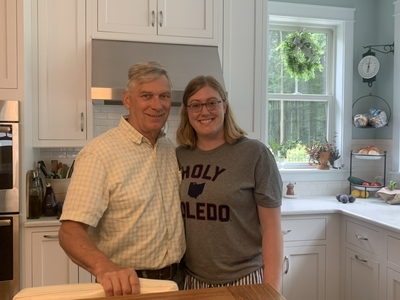
She told me I was always welcome to visit, so that’s what I did for the next four years. Reconnecting looked very different than what I ever imagined. My dad didn’t know who I was, but I always got the sense he knew I was someone important in his life.
I was grateful for every visit I had with him. One time, he showed his stamp collection. On another visit we took his dog for a walk in their backyard. I’ll never forget how excited he was when he held my hand shortly after I got engaged and felt my ring.
“Are you married?” he asked.
“I’m getting married,” I said, holding up my hand. He reciprocated by showing me his own wedding ring.
My dad even got to meet my husband during Thanksgiving weekend of 2024.
By March 2026, he was nearing the end. I had just seen him in February and was shocked at how quickly he declined in such a short amount of time. But that’s what this cruel disease can do to a person.
Knowing this would be the last time I would see my dad, I had some words prepared to tell him how much I loved him and that it was OK to let go.
He was asleep when I came to visit him on a Wednesday morning, which didn’t surprise me, but that didn’t stop me from saying what I wanted to say to him while he was resting.
His wife came into the room about 15 minutes later and woke my dad up, giving me a chance to say goodbye again. The first time was merely a rehearsal, something I can chuckle about now. As a good friend of mine likes to say, “If we’re not laughing, we’re crying.” And trust me, there have been a lot of tears, too.
When it was time for me to leave, I kissed my dad on the forehead. My hand was resting on top of his and he kissed the back of my hand. I like to believe that at that moment, he knew I was his daughter.
I like to think my dad would be so proud of me today — proud of my career reporting on state politics and proud of the woman I’ve become.
I’ll miss you, Dad.
If you need support, call the Alzheimer’s Association 24/7 Helpline at 800-272-3900.
More than 7 million Americans have Alzheimer’s disease and that number is expected to rise to nearly 13 million by 2050, according to the Alzheimer’s Association.
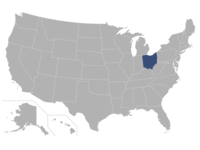
About 11% — or 236,200 — of Ohioans ages 65 and older have Alzheimer’s as of 2020.
Alzheimer’s was the six-leading cause of death in Ohio with 4,966 deaths in 2024. It was the fifth-leading cause of death nationwide among people ages 65 and older in 2024.
The lifetime risk for Alzheimer’s at age 45 is 1 in 5 for women and 1 in 10 for men, according to the Alzheimer’s Association.
Nearly 13 million Americans provide unpaid care for a loved one with dementia, which is valued at $446.3 billion, according to the Alzheimer’s Association. In Ohio, there were 490,000 caregivers and 705 million hours of unpaid care, valued at $15.5 billion.
A little more than half of primary care physicians across the country say there are not enough dementia care specialists in their communities and 71% of rural primary care physicians reported shortages of dementia specialists, according to the Alzheimer’s Association.
The lifetime cost of care for someone living with dementia is estimated at $405,262 in 2024, according to the Alzheimer’s Association.
Several FDA-approved treatments for Alzheimer’s are available. There are two drugs — lecanemab and donanemab — that change the underlying biology of Alzheimer’s and could slow cognitive decline while the rest treat the symptoms of Alzheimer’s, according to the Alzheimer’s Association.
Ohio currently has a couple Alzheimer’s-related bills.
Ohio House Bill 254 would require the Ohio Department of Health to incorporate Alzheimer’s awareness information into public health outreach.
Companion bills Ohio House Bill 474 and Ohio Senate Bill 314 would create mandatory dementia education for nurse aides.
Columbus, OH