Lawmakers consider state energy capacity with AI, data centers looming
Jul 28, 2025 | 8:27 pm ET
Description
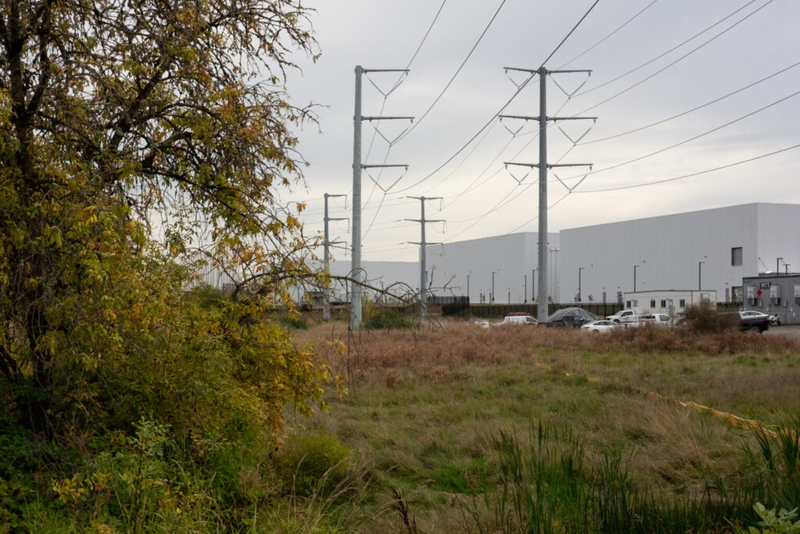
QTS Data Centers Hillsboro 3 Data Center in Hillsboro, Oregon in October 2024. Montana is courting data center companies, which could have huge impacts on the state's grid. (Photo Oregon Capital Chronicle)
As Montana courts data centers and leaders mull ways to encourage artificial intelligence developments, lawmakers are looking into the state’s power generation capacity as part of the Energy and Technology Interim Committee.
The committee met Monday to determine priorities and also heard concerns and comments about data centers and power load.
Power, especially energy used to help run new technology, was a major discussion point during the session, especially in relation to strain on the electrical grid and impacts to consumers. Sen. Daniel Zolnikov, a Billings Republican and committee chairman, called the issues “tied together.”
And some on Monday said the legislature is running out of time to put guardrails in place before it’s too late to make large, structural changes in how the state will approach the issue.
“I think this is our last chance as a legislative body, ahead of 2027, to kind of address this before it’s completely out of the barn,” Derek Goldman, representing the Northwest Energy Coalition, told the committee. “In other states that have seen large data center loads increase, customers have seen significant impacts in rates. And I really strongly encourage this committee to use its jurisdiction under statute or under one of the existing study bills it has for it to really dig in on the data center issue.”
NorthWestern Energy, the state’s largest energy provider, has been under the microscope in recent years over the rates it charges.
Since last fall, several new data centers have been planned statewide that are expected to require around 1,000 Megawatts of energy. This includes a 600 MW facility near Great Falls announced in June.
“Adding this amount of electric demand in Montana will require massive changes to our energy supply and transmission system,” a letter from the Northwest Energy Coalition to the interim committee states. “We must consider all the implications for regulated utilities, customer-owned utilities, large commercial, industrial and residential electric customers in Montana.”
Federal changes around artificial intelligence were also discussed by some in attendance for public comment, including Jesse Luther, who said she was representing some data center companies. The legislature did work on AI this session, but federal changes could mean state changes too, and the technology is evolving rapidly.
“Consistent with the federal government’s implementation of the Build AI America plan, we would encourage Montana to explore regulatory reforms that embrace energy production,” Luther told the committee.
The interim committee has three different studies assigned during the session — one on energy transmission (Senate Joint Resolution 12), another into interstate power grid development (Senate Joint Resolution 21), and a study of artificial intelligence (House Joint Resolution 4).
Work on those studies has to be completed by September 2026.
SJ 21 directs the committee to determine what it would take, and if there are opportunities to better connect Montana’s energy grid to neighboring states. It looks to clarify the legal and economic issues surrounding any interstate compacts.
The committee may combine efforts for that study, to some degree, with SJ 12, which touches on many of the same issues. SJ 12 is looking at Montana’s current electrical outlook and looks at more specific upgrades and “congestion,” as well as stress on transmission infrastructure.
The interim committee also heard updates from the Public Service Commission, a regulatory agency active in major changes regarding energy in the state.
PSC President Brad Molnar and NorthWestern Lobbyist Alan Olson traded barbs over several topics. Most of those comments dealt with HB 490, a bill passed this session dealing with wildfire mitigation plans for power utilities.
Members of the committee also started the process of determining topics for bills going into the next session. The committee is also looking to resurrect several vetoed bills, including one regarding genomics and another dealing with shared solar cooperation.
Cryptocurrency, electronic device privacy, transmission lines and railroad easements were also discussed as potential bill topics.
The committee mixes a number of legislators who have been active in energy and tech policy. It will be led by Sen. Zolnikov, R-Billings, who has spearheaded and crafted significant parts of the state’s tech laws for years. Rep. Becky Edwards, a Bozeman Democrat, will serve as vice chairperson.
Other members include Sen. Chris Pope, a Bozeman Democrat, who is active on energy policy, as well as Rep. Katie Zolnikov, a Republican from Billings who served as Speaker Pro Tem during the session and saw a variety of policy see passage. Sen. Gayle Lammers, a Hardin Republican who carried blockchain legislation, and Rep. Bob Carter, a Missoula Democrat who served on the House’s tech and energy committee last session, are both on the committee, which is eight legislators in total.
During a brief comment on Monday morning, Sen. Zolnikov said he feels the state has a lot of, “good, well written” tech policy, but some bills — especially some that did not originate in the energy and tech committee — are “not always well written.” Montana legislators did pass a wide range of tech and privacy legislation during the 2025 Legislature.
“It’d be nice, as we start to mature a tech committee, where we try to funnel some of these things in, especially since energy and technology are now the same exact thing. We’re hearing about the massive new technology of AI, well, that uses a lot of energy, and it’s becoming very tied together,” Zolnikov said. “So there were some bills last session, again, some good policies, some good ideas, not always well written, that if they would have gone to our committee, there could have been the work put into them.”
Helena, MT