Kiffin’s vision of diversity relies on the colorblind dollar
May 18, 2026 | 6:00 am ET
Description
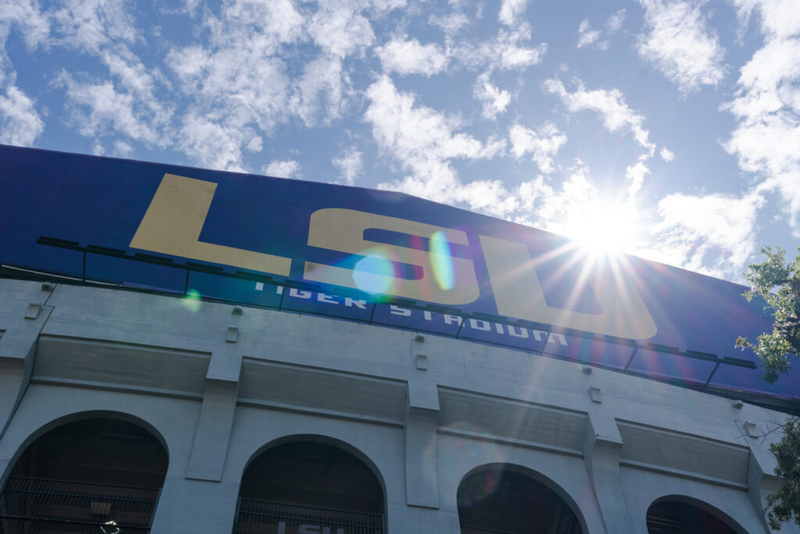
Clouds pass over Tiger Stadium on March 20, 2023, on Louisiana State University’s campus in Baton Rouge, La. (Matthew Perschall for Louisiana Illuminator)
Lane Kiffin was recently featured in a Vanity Fair cover story and gave the magazine a sentence that turned a sports story into a national one.
Asked why recruiting felt easier at LSU than it had been at Ole Miss, the new Tigers’ head coach said top Black recruits used to tell him, “Hey, coach, we really like you. But my grandparents aren’t letting me move to Oxford, Mississippi.”
Then came the line.
“That doesn’t come up when you say Baton Rouge, Louisiana,” Kiffin told reporter Chris Smith. “Parents were sitting here this weekend saying the campus’ diversity feels so great: ‘It feels like there’s no segregation. And we want that for our kid because that’s the real world.’”
A day after the article was published, Kiffin offered an apology to his previous employer and the state of Mississippi. He said coaches there have battled the same “narrative” when it’s come to recruiting.
Let’s set the football aside and sit with the words “feels like.”
How does one measure, in a single afternoon, what an entire city feels like?
You cannot.
Feeling is what commercials are made of, the language used to sell us a dream.
Malcolm X warned us more than 60 years ago what gets sold to Black folks in the marketplace of American dreams.
“I don’t see any American dream. I see an American nightmare,” he wrote in “The Ballot or the Bullet.”
He was talking about the gap between the image of America that gets marketed and the reality that gets lived. He was talking, though he could not have known it, about exactly the kind of moment those parents had in Tiger Stadium.
A spring afternoon on a manicured campus, in a curated room, with a coach who needs your son to sign, will produce a feeling. That is the job. The feeling is not a lie.
It is also not Baton Rouge.
Ask North Baton Rouge what it feels like.
Ask the student who isn’t an athlete, walking the same campus without the security detail, the access codes, the welcome reserved for the four- and five-star recruit.
Ask the family in Scotlandville, in Glen Oaks, in the census tracts the federal government marked “hazardous” with a red pencil generations ago — tracts whose grades still correlate, in present-day data, with high rates of asthma, cancer, gun violence and distance from a Level I trauma center.
Ask the mothers in Convent, Reserve and St. James, whose children are growing up under the smokestacks of Cancer Alley, where more than 150 industrial facilities concentrate in predominantly Black communities built on former plantation land.
You will get different feelings. You will get different cities. Because Baton Rouge — like the state it anchors, like the country it sits in — is a tale of two cities. The haves and the have-nots. The producers and the produced-upon.
The feeling you experience depends entirely on where you stand, who you are and what you can do for the people running the room.
Which brings us to what Lane Kiffin actually sold those parents.
He did not sell them safety, justice or representation in the halls of power. Because the same week his quote went to press, Louisiana was busy erasing that representation.
Twelve days before the Vanity Fair issue newsstands, the U.S. Supreme Court handed down a decision in Louisiana v. Callais that will lead to the dismantling of the majority-Black 6th Congressional District, boundaries the state legislature drew to remedy a vote-dilution violation found in federal court.
The day after the ruling, Gov. Jeff Landry signed an executive order suspending the May 16 U.S. House primary, while absentee ballots had already been mailed and early voting was set to begin two days later.
Twelve days. One state. One sentence about how it feels.
What Kiffin sold those parents was access. Specifically, he sold them access to the American dollar. And the American dollar, unlike American law, is colorblind.
Money does not care what color you are. Money cares whether you produce. The stadium will fill regardless of the player’s skin. The broadcast contracts will pay regardless of who scores the touchdown. The donor will write the check regardless of the running back’s last name.
My mother said it this way: As long as you are producing, you are tolerated, so-called loved, half-respected. The day you stop being able to produce, you’ll see a horse of a different color.
That is the contract — and not what was offered to those parents in Tiger Stadium last weekend. Not citizenship, safety or voice.
It was tolerance. Conditional, performance-based, market-rate tolerance.
The welcome lasts as long as the production does, and it is not new.
In 1996, then Ole Miss head coach Tommy Tuberville told the school’s chancellor, Robert Khayat, the Confederate flags in Vaught-Hemingway Stadium were a recruiting problem, telling him plainly, “We can’t recruit against that flag.”
Thirty years apart, Tuberville and Kiffin are covering the same ground. The moral feelings of Black families are a recruiting variable. Their grandparents’ memories are a line item on a balance sheet. The pain gets priced in. The math gets done. The visit gets curated.
What is new in 2026 is the speed and the geography.
The geographies of “feels like” and fact are not the same map.
A feeling can be measured only against the person feeling it. A fact can be measured against the state that produces or denies it.
Lane Kiffin sold those parents a feeling. The state, 12 days earlier, denied them a fact.
The parents on that recruiting visit deserve more. They deserve to be told, plainly, what they were sold: access to the colorblind dollar in a state where the law has gone color-conscious in the worst direction.
They deserve to be told what their son’s welcome is conditional, that the day he tears an ACL, the day his name slips off the depth chart, the day the donors lose interest, the horse of a different color will arrive on schedule.
And Louisiana deserves to be told that selling a feeling of integration in the same fortnight that the political instruments of integration are being engineered out of existence is not neutral.
It is not apolitical. It is not new.
It is the oldest play in the book.
Same script, different cast.
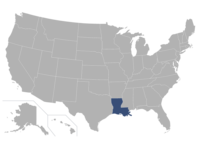
Baton Rouge, LA