Catching AI data center heat to cut energy costs and benefit communities
May 27, 2026 | 5:55 am ET
Description
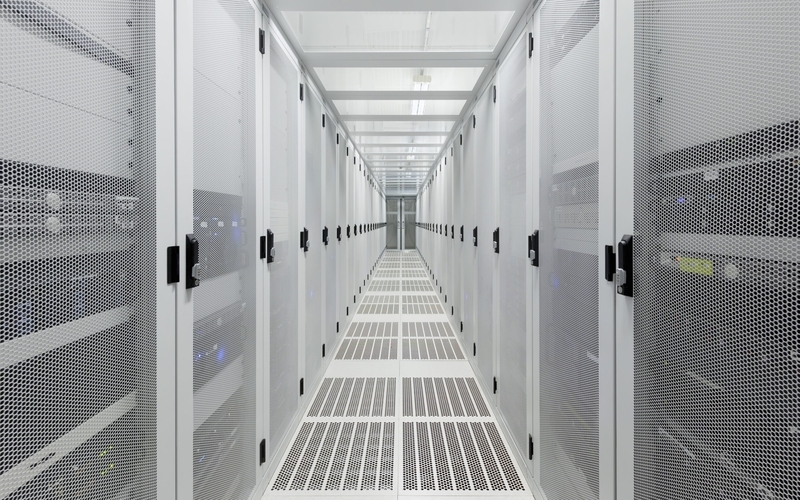
A server room in a data center. (Photo by Getty Images)
Artificial intelligence data centers are arriving faster in Appalachia than the policies to manage them. In March, West Virginia Gov. Patrick Morrisey announced that Google would build an AI data center in Putnam County. At the same time, public skepticism is rising, with four in 10 Americans saying that data centers are mostly bad for the environment and home energy costs.
This tension frames a real issue. As a March Brookings report on AI data centers in rural communities put it, “The central question is not whether data centers are ‘good’ or ‘bad,’ but how benefits and risks get allocated and what forms of governance, local authority and transparency can help leaders maximize local benefits while protecting community interests.”
Most policy discussions focus on where data centers get their energy. Too little focus on how efficiently they use it. That gap matters. The fastest way to reduce energy costs, emissions and strain on the electricity grid is not only to focus on energy sources, but on how energy is managed inside and outside the data center
Heat management is the key. Just as a smartphone can overheat and slow down when running too many apps, data centers must carefully control their temperatures to keep equipment running and data safe. Most centers still rely on air cooling: cold air is blown over the servers; warm air is collected and then cooled again. This is where water enters the picture. Data centers don’t use water to run computers, but many rely on it to carry away excess heat. That process can place real demands on local water supplies and ecosystems.
Rather than cooling that warm air and using large amounts of local water resources, an alternative is to manage and reuse that waste heat by transferring it to where it is needed, reducing energy costs for the data center, communities, and local industries where the data centers reside. Reusing waste heat could reduce a data center’s energy consumption and related costs by 10-30%. It can also reduce the energy consumption of neighboring facilities by receiving some of the excess heat.
As long as these neighboring facilities are within a few miles of the AI data center, the otherwise wasted heat can be used to heat community buildings like police and fire stations, greenhouses to grow food for food-insecure populations, water/wastewater infrastructure, and local manufacturing, food processing and biotech companies.
These systems have been used in communities for decades. Pittsburgh’s PNC Park and Allegheny General Hospital, for example, have been part of this type of district heating system, like this, for over 50 years.
In West Virginia, we’ve already seen proposals for this concept. The Monarch Cloud Campus, in Mason County, now owned by NScale Energy and Power, just announced that it would begin construction shortly with the goal of operating in 2027. The campus will co-locate up to 1,000 MW of hyperscale data centers with low-carbon hydrogen production and controlled-environment agriculture, using waste heat and captured CO₂ from both the hydrogen facility and the data centers to supply adjacent greenhouses and reduce the cost and emissions of regional food production.
What actions can the data center industry and policymakers take to address the energy challenges posed by data centers?
One action is for developers to design and construct new AI data centers to capture waste heat. In addition, they can work with communities and local industries and build the external infrastructure needed to transport and utilize waste heat. This action would satisfy the conditions in the Ratepayer Protection Pledge, which includes a provision to invest in the local communities where they build data centers, and was signed by Amazon, Google, Meta, Microsoft, OpenAI, Oracle and xAI.
Voluntary actions are unlikely to be sufficient, however, given the competition among states for data centers. States should pass laws that pair regulatory streamlining and fiscal incentives for data center developers with requirements to use waste heat for community benefits in Appalachia and other rural areas.
Similar incentive policies could support other societal goals related to AI data centers, such as local job creation, energy consumption requirements, and transparency provisions. States could also implement policies that provide project development support to communities interested in utilizing waste heat.
These policies will benefit developers by reducing the time, uncertainty, and costs for data center developers and operators. They will also benefit communities by turning waste heat into a local resource, lowering energy costs, and supporting economic and environmental outcomes.
We are already beginning to see some action at the state level. In March 2026, the Virginia Assembly passed the first U.S. law focused on data center heat reuse. That law requires Virginia’s energy department to identify heat reuse opportunities, facilitate communication between data centers and heat users, evaluate best practices and policies, and make recommendations for local and state policies. Illinois’ legislature is considering a law that would require data centers to develop heat-reuse plans, including supplying heat to communities. Groups like ReImagine Appalachia and their partners are advocating for more forward-thinking policies like this in the region.
The next phase of AI data centers should focus not only on where their energy comes from, but also on how they use it intelligently. Industry has a key role in designing facilities that can capture waste heat and deploying equipment that uses less energy. States can move from incentivizing data centers to rewarding projects that provide tangible local benefits.
If Appalachia is to host the new AI data center-based economy, then it should also capture more of its value. That starts with giving greater priority to energy efficiency, particularly the reuse of waste heat, as a central AI data center policy.
Charleston, WV