Izaak Walton League events promote nitrate pollution awareness, monitoring
Jul 27, 2026 | 3:52 pm ET
Description
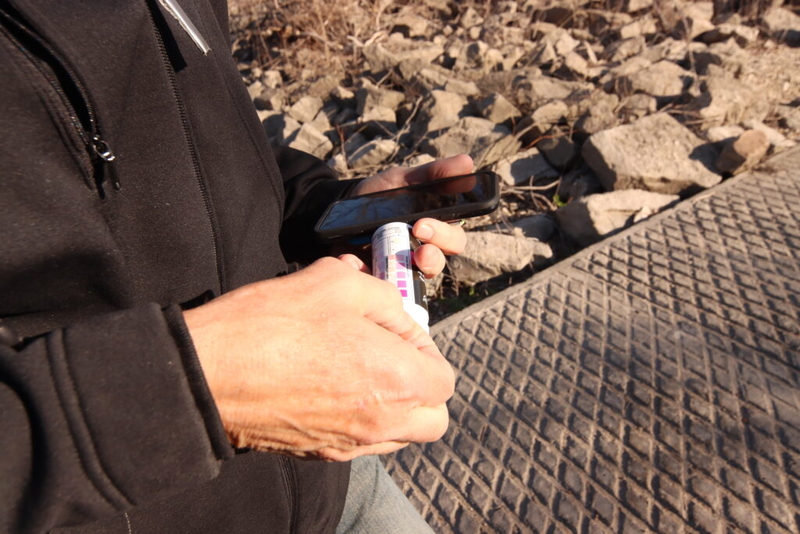
The Izaak Walton League of America is holding events to increase awareness of nitrate pollution. Pictured is an Iowa volunteer monitoring nitrate levels in the Des Moines River. (Photo by Cami Koons/Iowa Capital Dispatch)
The Izaak Walton League of America, the group that works with volunteers across the country to monitor nitrate concentrations in water with free test kits, is hosting its inaugural Nitrate Pollution Awareness Week.
The group will hold webinars and calls to action from July 26 through Aug. 1 to help participants learn, monitor and advocate about nitrate pollution.
Samantha Puckett, the clean water program director with Izaak Walton League, said the goal of the awareness week is to help participants, and their communities, understand the sources and impacts of nitrate pollution.
“Because although nitrate pollution is a really prominent problem across the country, it is also an invisible pollutant, and it’s not something that a lot of folks are aware of,” Puckett said in a webinar Monday. “That’s what we’re doing this week is raising awareness.”
Nitrate is a compound of nitrogen and oxygen that exists in the environment as part of the nitrogen cycle, but human activities have added more nitrogen, and therefore more nitrate, to the environment.
While agricultural activities like applying organic and synthetic fertilizers and tilling the soil contribute to the problem, Puckett said the excess nutrients that lead to nitrate contamination in water, is “not all due to ag.”
Other sources are lawn and golf course fertilizer application, wastewater treatment facilities, atmospheric deposition and animal manure.
Excess nutrients in the water can contribute to algal blooms, dead zones and fish kills. High nitrate concentrations are worrisome in drinking water sources as it is linked to illnesses like blue baby syndrome and is believed to contribute to certain types of cancer, according to Izaak Walton League.
Through the league’s Nitrate Watch program, volunteers receive test strips they use to monitor and record nitrate concentrations in surface water and drinking water sources across the country.
Puckett said more than half of the submitted results have come from Iowa, and nearly one-third of Iowa-submitted results show nitrate concentrations above 10 milligrams per liter, which is the U.S. Environmental Protection Agency’s drinking water maximum.
US Geological Survey study shows rising nutrient loads in rivers
“While there is a clear water quality problem, we’re also excited by how folks are engaged and what advocacy we can do with this network moving forward,” Puckett said of the Iowa data.
In addition to the health and environmental impacts of nitrate pollution, Puckett said it also has an economic cost.
According to EPA, the tourism industry loses close to $1 billion, each year, due to high nutrient concentrations in water bodies that spoil fishing or recreational activities. The agency doesn’t put an estimate for the total, national cost of nitrate removal facilities but said in Minnesota, the systems caused drinking water supplies to cost up to $4 more per 1,000 gallons.
The nitrate removal facility in Des Moines costs around $16,000, per day, to run and was operated for more than 120 days in 2025.
Izaak Walton League is hosting webinars over the lunch hour Wednesday, Thursday and Friday with additional information about the impacts of nitrate contamination and potential solutions, as part of its awareness week. Links to register can be found online.
“It’s not enough just to know that nitrate is an issue,” Puckett said. “We also want to solve the problems we are detecting through our Nitrate Watch program.”
Puckett encouraged participants to register for a nitrate monitoring kit and to explore the existing monitoring data available online. Puckett said the program has already received more than 5,500 monitoring results, making 2026 the program’s “biggest Nitrate Watch year so far by a long shot.”
Advocacy is the final prong of the awareness week. Jessica Gordon, the grassroots advocacy manager for Izaak Walton League, said the league has a slew of resources available to help interested folks advocate for clean water solutions in their communities.
Gordon said easy ways to get involved include participating in the league’s “Action Alerts,” following other organizations that have similar goals and engaging with elected officials to ask questions and to advocate for policy changes.
“Your voice matters,” Gordon said. “Make sure that you use it for the things that you care about.”
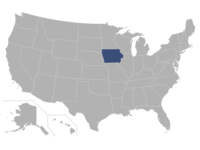
Des Moines, IA