Critics call for more details about Stratos data center in Utah’s west desert
Jul 27, 2026 | 7:04 am ET
Description
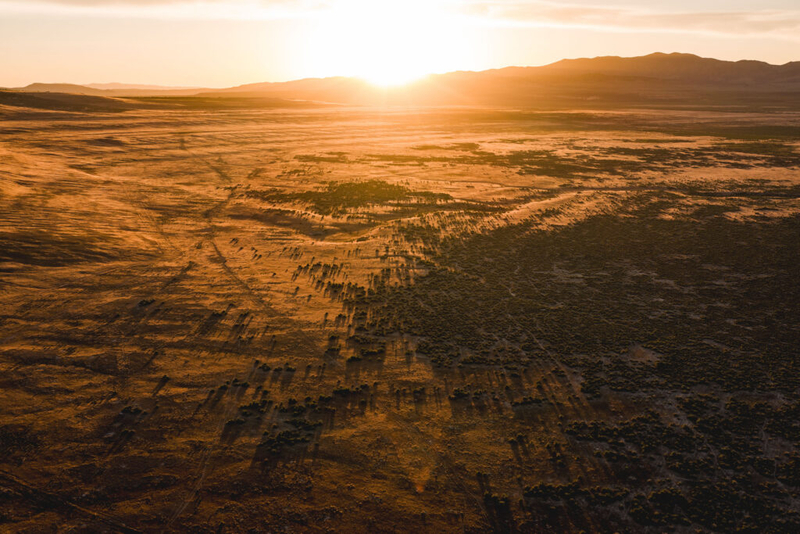
The sun rises over a part of Hansel Valley, in Box Elder County, near the proposed Stratos Project, a massive data center planned for 40,000 acres of land, on Thursday, May 28, 2026. (Photo by Spenser Heaps for Utah News Dispatch)
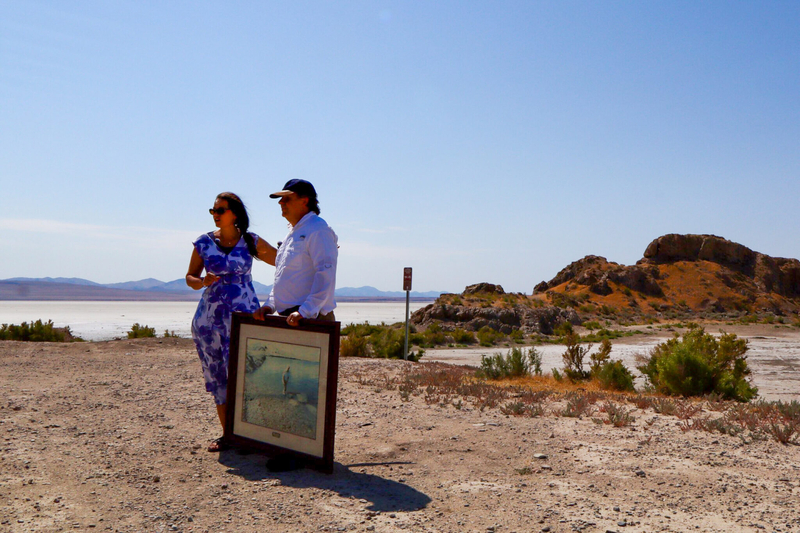
Rhonda Lauritzen returned earlier this month to the beach on the northern tip of the Great Salt Lake where she splashed around as a kid. But this time, she was surrounded by dry mud, with no water in sight.
Lauritzen brought reporters to Monument Point as she and other critics made their case against the proposed Stratos data center in the neighboring Hansel Valley. They wanted to see more than the lake, though, including information on potential environmental costs and which company would move in. The rapid rollout of the project backed by celebrity investor Kevin O’Leary of TV’s “Shark Tank” was also top of mind.
“The lack of transparency makes me insane,” Lauritzen told Utah News Dispatch. “I mean, that is not what we stand for as a society in America, in Utah, it’s not how we should be doing business, and it just feels like that pendulum has swung so far that maybe it finally swung far enough to wake people up.”
As more data centers have cropped up across the country, they’ve brought up concerns including rising power bills and water contamination, transforming the concept of artificial intelligence from something abstract to a topic of discussion at the kitchen table, said Christabel Randolph, associate director of the nonprofit Center for AI and Digital Policy, based in Washington, D.C.
“And at the same time, it’s a real transparency and democratic governance issue,” Randolph said. “People want to know why their leaders are approving these projects when folks are not sure what they’re getting in return.”
In Box Elder County, a citizens’ group has gone to court to pursue a referendum allowing voters to undo the county’s approval.
Stratos developers say the project would bring an initial $30 million to the county and a permanent 2,000 skilled jobs, higher than the 50 jobs data centers typically provide, according to a 2024 Virginia legislative audit of the industry in that state.
In terms of water, backers say the project wouldn’t draw directly from the Great Salt Lake and would use two kinds of cooling systems to keep servers from overheating: a closed-loop system circulating liquid and air-based cooling.
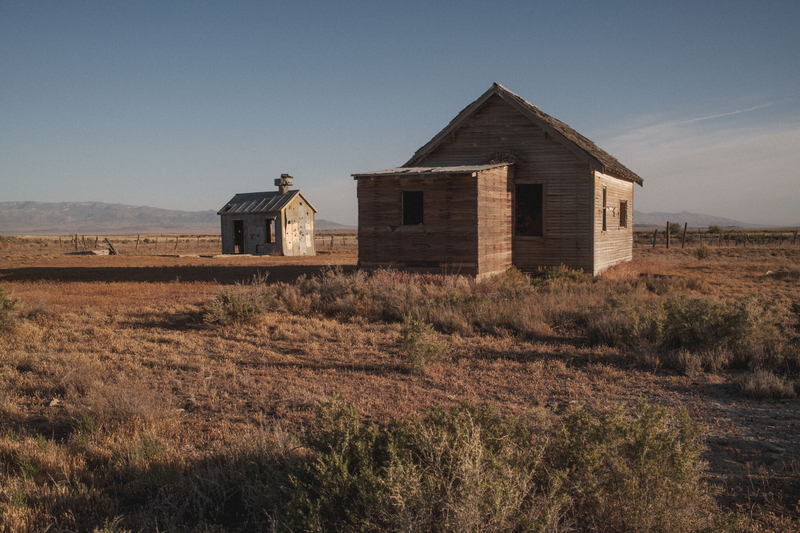
They’re also seeking water rights for more than 13,000 acre-feet — enough to supply 26,000 households per year — saying those rights are attached to the land they’re buying. But they contend the data center would use less water than the ranchers there do now.
Lauritzen, a resident of neighboring Weber County, who with her brothers runs a business extracting minerals from the lake for use in supplements, said she has concerns the data center’s water consumption will actually be higher.
“We’re adding to an ecosystem that’s already beyond crisis,” she said.
Utah lawmakers are doing their own research. At the state Capitol in May, a natural resources panel voted to study impacts from data center development on water, wildlife and air quality ahead of the 2027 legislative session, though they didn’t name Stratos and haven’t analyzed the issue publicly yet.
This is the first year Utah is requiring large data centers to report their water use to the state, but the numbers will be reported to the public in the aggregate under HB76. The law allows data centers to raise claims of business confidentiality to keep their information from being broken out individually.
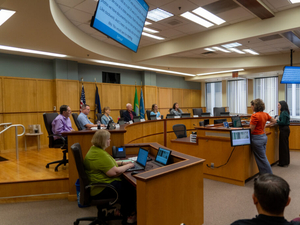
In April, the data center proposal cleared an initial round of approval from Utah’s Military Installation Development Authority, or MIDA. Hundreds protested 10 days later at a meeting of the three-member Box Elder County Commission, which did not take public comment before it gave unanimous support to the project, while others have converged on the Utah Capitol in opposition.
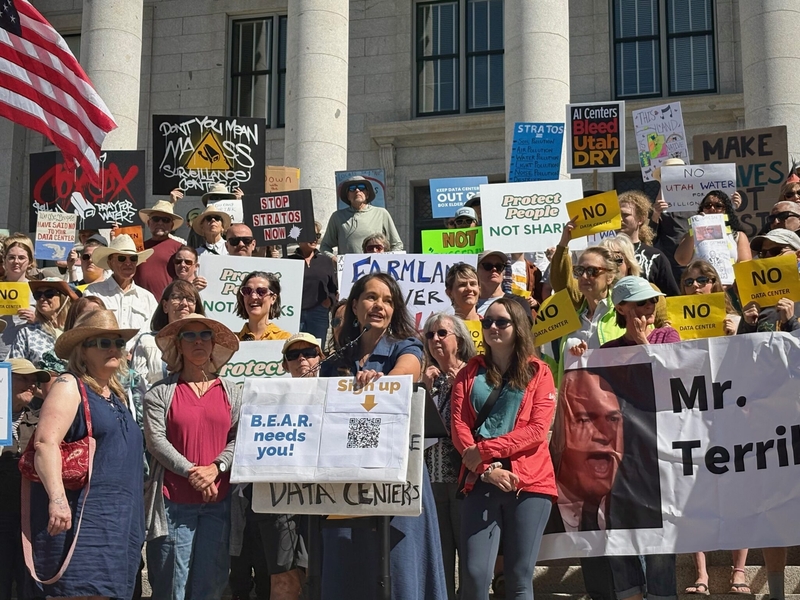
In response to outcry across the state, Gov. Spencer Cox signed an executive order he said would raise the bar for how Utah evaluates data center proposals, noting they need permits tied to air and water quality. And O’Leary made a concession, halving the project size in response to demands from Senate President Stuart Adams, who had earlier voted to advance it as chair of the MIDA board.
MIDA, for its part, is pledging a transparent process, to include the creation of a Box Elder County development review committee. The authority said through a spokesperson that the project’s developers would carry out every environmental test required by the state and federal government.
But an attempt to put a referendum on the ballot and a separate lawsuit filed against MIDA by the left-leaning Alliance for a Better Utah have complicated its path forward.
“Out of respect for the referendum process and litigation, MIDA is paused on Stratos,” the authority’s spokesperson, Kristin Kenney Williams, said in a statement.
Adams went on to lose his legislative seat in the Republican primary, a stunning political upset for one of Utah’s most powerful politicians. But as the political dust settles, it’s still not clear exactly how and when Utahns will learn more about the evolving plan.
Adams had announced early in June that a new source of information on the proposal was on its way, saying “to ensure transparency and public accountability, a centralized public-facing website will be created in coordination with state agencies, so Utahns have access to project information, review materials, environmental analyses and updates as policymakers do throughout the process.”
While the state hasn’t put up a new portal, Stratos developers have launched their own website aimed at sharing information with the public, but haven’t committed publicly to any schedule of updates. O’Leary Digital did not respond to a request for comment from Utah News Dispatch.
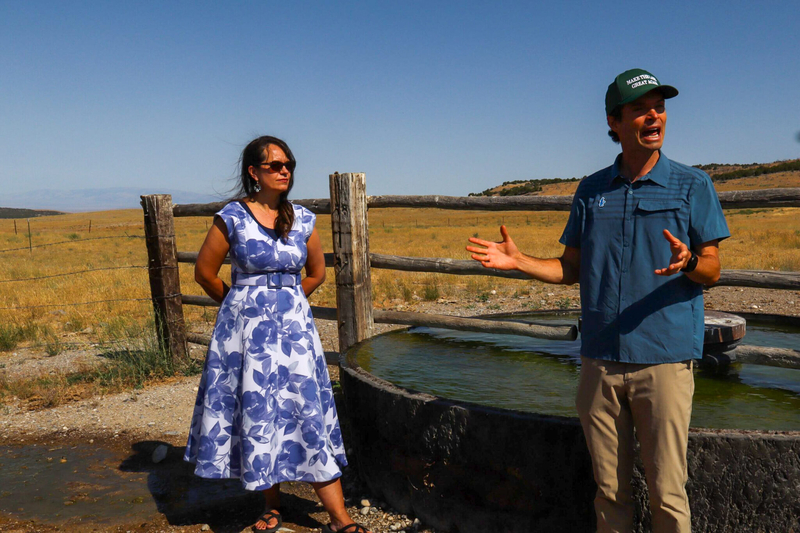
After a Utah State University professor warned in May of the “extreme” heat the project and its gas power plant could generate — raising temperatures by upward of 20 degrees at night — Stratos backers and Utah Gov. Spencer Cox rejected those estimates as inaccurate.
Ben Abbott, executive director of conservation group Grow the Flow, said he questions why the developers didn’t fill the information gap first by releasing their own numbers and a plan to manage the effects.
“This kind of rollout really harms public trust and makes it difficult to do things the right way,” Abbott said.
Salt Lake City, UT