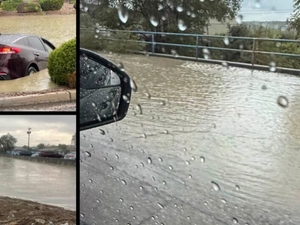
Floodwater delays Corpus Christi’s water emergency until fall 2028
Jul 27, 2026 | 11:49 am ET
Description
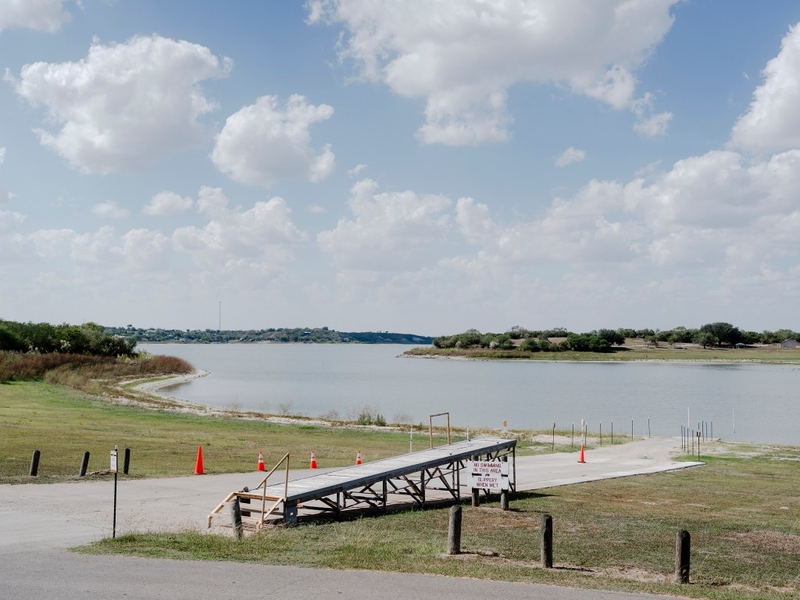
A portable boat ramp, the only one operational out of six at Lake Corpus Christi State Park, on Oct. 20, 2025. Water levels in the reservoirs serving Corpus Christi have been rising. (Brenda Bazán for The Texas Tribune)
Corpus Christi got “tremendous” news Monday when the city’s projected water emergency was delayed until fall 2028 — a year later than previously anticipated — as floodwater from recent intense storms continues flowing into some of the region’s reservoirs.
Water heading downstream from hard-hit areas of Texas is expected to continue arriving in area reservoirs, potentially easing water-use restrictions for city residents and giving Corpus Christi added time and breathing room to strengthen its water system.
“This is really, really good news for the community, and it gives us time to bring on our water supply projects without the stress of heading into a Level 1 water emergency,” City Manager Peter Zanoni said at a morning water briefing.
Corpus Christi, Texas’ eighth-largest city, has been racing to avoid a water emergency in which demand outpaces available water supplies. For months the city has been under pressure to find new sources of water for 500,000 people served across seven counties, along with one of the nation’s largest petrochemical corridors and the Port of Corpus Christi, the country’s top port for crude oil exports. Officials have asked residents and businesses to cut their water use.
Earlier this year, city projections showed that “day zero” — the point when water demand is projected to be six months from exceeding supply — could arrive as early as May, triggering a Level 1 emergency declaration.
Spring rains pushed that estimate back to September 2027, but not before drawing statewide and national attention as the city appeared to be the first major U.S. city on track to run short of water.
The new Level 1 water emergency date is forecasted to be September 2028.
For months, local leaders said the region needed either steady rain or a hurricane to replenish largely empty reservoirs. City officials said they continue to monitor inflows to see if the rains coming downstream will push the new date back even further.
More than 95% of the city’s water supply comes from surface water, primarily lakes and reservoirs, according to the state’s water plan.
Five years of drought had depleted the city’s two main reservoirs: Choke Canyon, fed by the Frio River, and Lake Corpus Christi, fed by the Nueces River. The capacity of Choke Canyon is three times that of Lake Corpus Christi.
As of Monday, the biggest gain from floodwater has been at Choke Canyon Reservoir, the city’s largest water resource. The lake climbed in the past week from 7.9% of capacity to 24%. The reservoir was last consistently full in the early 2000s and has been below 50% full since 2013.
The combined level of Choke Canyon and Lake Corpus Christi is 26.2%, Zanoni said. The city is currently in Stage 3 drought restrictions, which bars outdoor irrigation. City modelers show the lakes could get to 30% combined capacity by this weekend, which would allow the city to move to Stage 2 restrictions, allowing residents to water the lawns and irrigate once every other week.
Industrial demand accounts for more than half of the region’s water use. Companies threatened to leave the city if something was not done.
The latest projection “is tremendous,” Zanoni said, buying Corpus Christi an additional year to find new water sources — but city leaders warned that it’s not time to slow down. Zanoni said the city has about $1 billion in water supply projects moving forward.
Just a few months ago, the region’s outlook was far more dire as the major regional reservoirs reached historic lows in April. Choke Canyon dropped to 7.4% of capacity while Lake Corpus Christi fell to 8.5%. That same month, at least six small cities and towns in the Coastal Bend region issued disaster declarations amid the water crisis.
Last year the city began drilling groundwater wells in a field in Nueces County to meet demand, sparking backlash from rural residents who feared their wells would be impacted. Zanoni said the approximately 13 million gallons of brackish water from the wells, which is treated, helped delay the Level 1 water emergency and will continue to support the city’s water system long-term.
The city is debating a seawater desalination plant — a drought-proof way to turn millions of gallons of seawater into fresh water — and is expected to make a decision on the nearly billion-dollar project on Sept. 1. The City Council previously voted to halt the project amid criticism from environmental groups and local leaders over its ballooning price tag and concern that its discharge could harm Corpus Christi Bay’s ecosystem, but the water department resurrected the idea after trimming its cost.
Corpus Christi Water, the utility that supplies water for municipal and industrial use, said average water use is 95 million gallons per day, according to its website. The city is also working on a project to recycle and reuse wastewater.
Lake Corpus Christi sits at 32% capacity. The lake has yet to see increases from the floodwater, but Zanoni said the water could begin arriving this weekend.
The third reservoir the city uses, Lake Texana, rebounded from nearly 50% capacity in April to 100% in June, although it is known for filling up and depleting quickly.
If a Level 1 emergency is declared, all customers of the city’s regional water system would be required to cut use by 25%. It also would trigger landscape watering bans and vehicle washing restrictions, like washing cars and boats out of a 5-gallon bucket, and filling pools only to maintain structural integrity.
Residents’ monthly baseline use was calculated at 8,000 gallons per household, limiting them to 6,000 gallons if an emergency is triggered. Every 1,000 gallons used after that would cost an additional $4. Beyond 8,000 gallons, every 1,000 gallons would cost another $8.
Austin, TX