Warren County eyes slaughterhouse as solution for NJ’s road-weary livestock farmers
Jul 27, 2026 | 7:05 am ET
Description
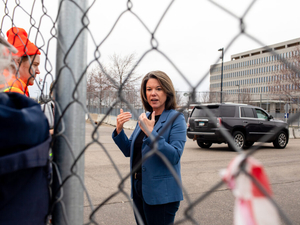
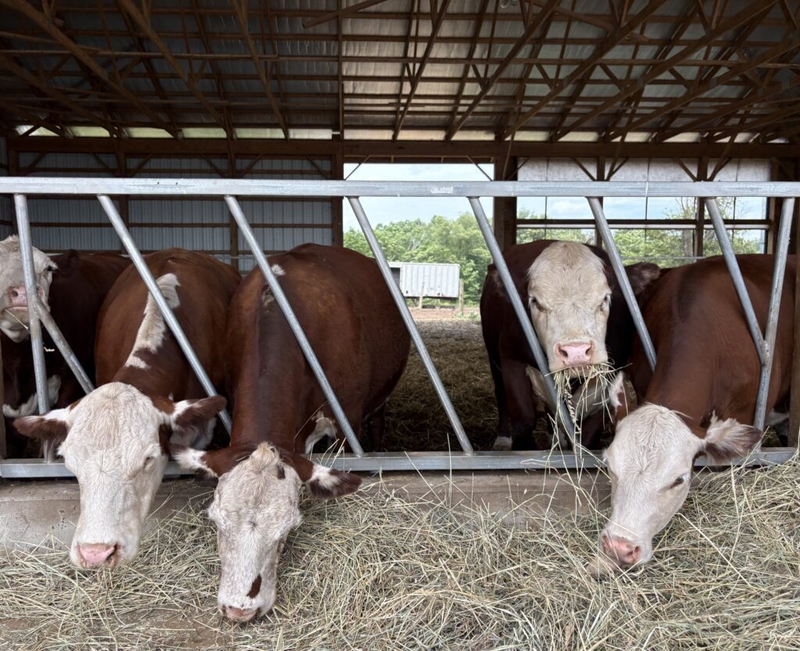
New Jersey's livestock farmers typically travel hours out of state to take cattle, poultry and other animals for meat-processing, because of a statewide lack of facilities approved by the USDA to butcher and package meat for individual sale. (Photo by Dana DiFilippo/New Jersey Monitor)
Third-generation farmer Chad Muckenfuss raises cattle, pigs, and chickens on his sprawling farm in Medford, continually rotating livestock around 120 acres in a regenerative approach that keeps both the animals and the pastures healthier than factory farming.
It’s a model that has kept the Muckenfuss family farm successful, with a steady stream of customers devoted to organic meats. There’s only one problem.
“All of my meats are processed two-plus hours one-way over in Pennsylvania,” he said.
New Jersey has no slaughterhouse certified by the U.S. Department of Agriculture where the state’s livestock farmers can get animals butchered for individual cuts, a shortcoming that forces farmers to haul them long distances to out-of-state facilities that are so backlogged many have monthslong waits.
Industry advocates are trying to change that, with plans to open a meat-processing center in rural Warren County by late 2028.
But it has been slow going.
More than a decade ago, Rutgers University researchers warned of a “sharp decline” in slaughter plants since the mid-20th century and its economic toll especially on smaller livestock farmers. In 2019, New Jersey agriculture officials landed federal funding to study the feasibility of creating a centrally located regional processing facility or on-farm processing and inspections. And Warren County commissioners, calling in a 2021 resolution for a slaughterhouse to be sited there, noted the county’s status as the state’s top livestock producer and warned the absence of a processing plant was “unsustainable.”
Joe Labarbera, director of the agriculture and economic development program at Warren County Community College, blames the poky progress on “a cultural misunderstanding” about agricultural development. Public officials at every level of government have prioritized preservation and lost focus on supply-chain economics, he charged.
“They’re saving the farmland, but they’re not saving the farmer,” Labarbera said.
But some state officials who support the Warren County proposal are working to change that.
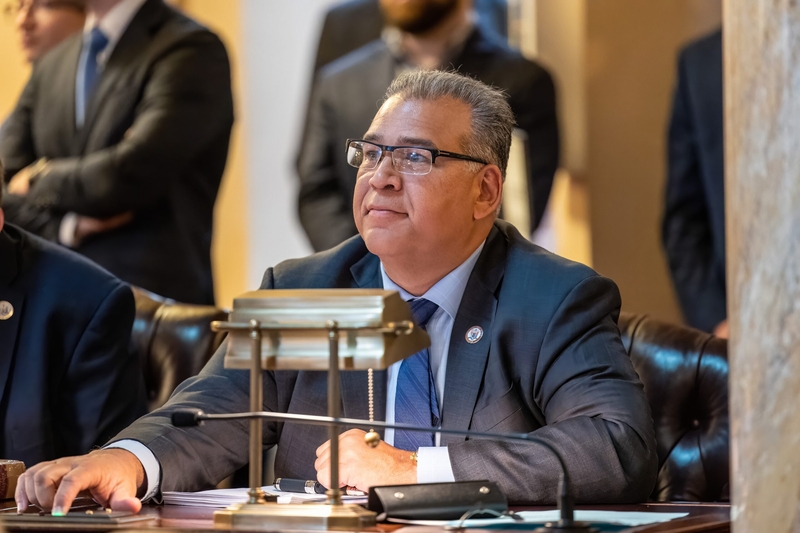
Sen. Douglas Steinhardt (R-Warren) introduced three bills last month that would speed up permitting, expand the workforce, and create tax incentives for slaughter plants and other projects that support agriculture.
New Jersey Agriculture Secretary Ed Wengryn anticipates construction will be underway within the next 18 months.
“This is really critical for our livestock industry,” Wengryn said.
A decades-long decline
Suburban sprawl gobbled up so many agricultural acres in the Garden State since the 1970s that the U.S. Department of Agriculture in 2011 named New Jersey the nation’s leader in farmland loss.
As farms disappeared, so did their support industries like slaughterhouses.
Policymakers scrambled to preserve farmland, permanently protecting about 250,000 acres in the past 45 years, even as the state auditor found the state should be doing more.
Ben Spinelli, executive director of the New Jersey Highlands Water Protection and Planning Council, agrees the state’s work is far from done. The state-created council, which protects natural resources and oversees development in a hilly and forested 1,300-mile stretch of North Jersey, supported the Warren County slaughterhouse proposal with a $150,000 planning grant in 2023.
“I believe that we have come to the end of the decline of agriculture in New Jersey, and we’re in a place where agriculture is going to rebound,” Spinelli said. “Now we have to take a look and see where the opportunities are to bring back not just the farmers and the farming, but the support industries that make what they do possible.”
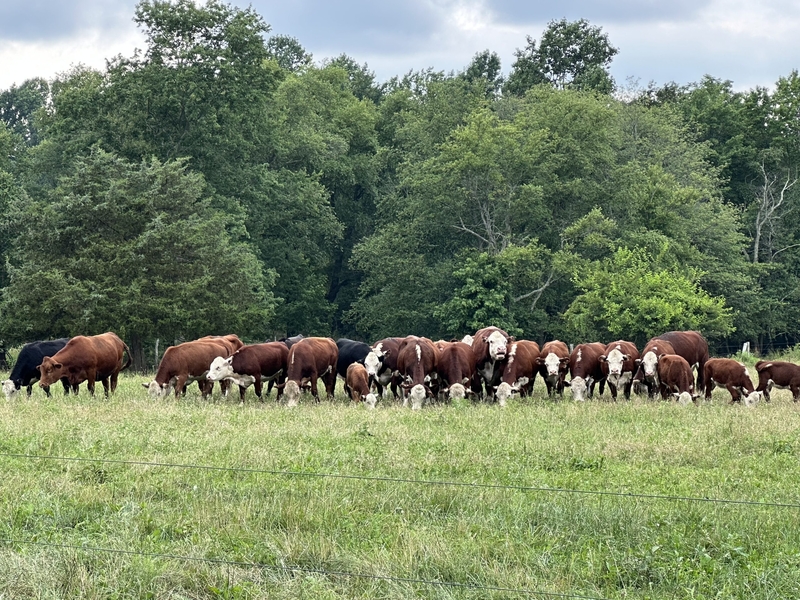
Vegetables, soybeans, and fruits may be New Jersey’s biggest agricultural commodities, but more than 24,000 cattle graze on Garden State farms, according to USDA data. Farmers here also raise hogs, chickens, turkeys, and other animals for their meat.
The USDA listed about 45 slaughter plants and markets in New Jersey in 2021, the most recent data available, but most were rendering plants (that handle animal bones and other byproduct after meat is cut), bulk butchers (that don’t cut and package for individual sale), and specialty services (like halal butchers).
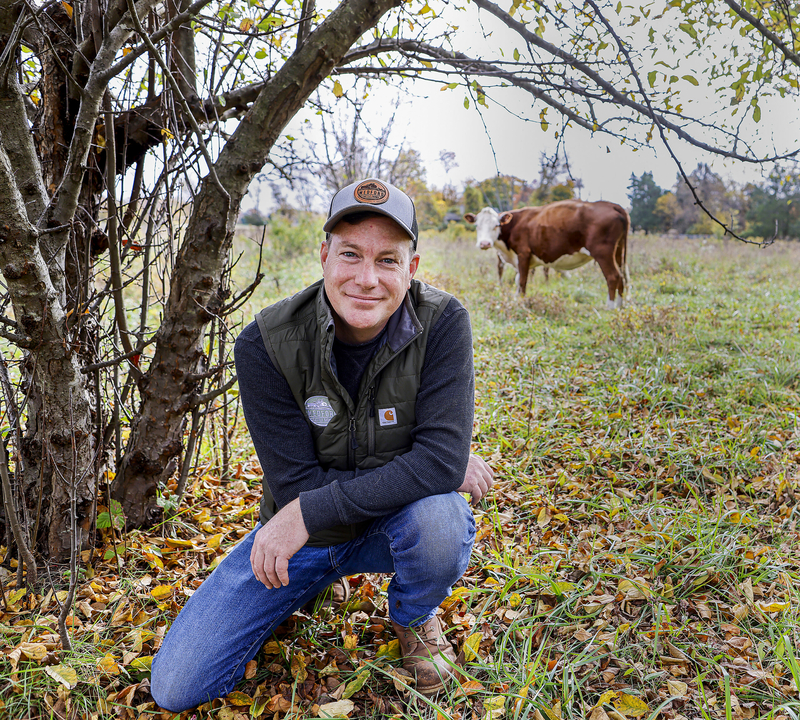
With no in-state slaughter plant to take his animals for individual cuts, Muckenfuss treks his cattle to a butcher in Nazareth, Pennsylvania, and his poultry to a plant in Gettysburg. The trips stress the animals, add time and costs that ultimately inflate meat prices for customers, and require scheduling that can impact his whole year and beyond, he said.
“I have to commit to all of the animals that I’m going to process a year in advance with these processors, because they’re so backed up,” he said. “But the flip side of that is, we had a very harsh winter this past winter, so most of the cattle lost a little bit of weight. In order to meet my deadlines, I can’t just magically have them gain weight, so I have to cancel reservations that I had. And you only get a certain number. Once you give up slots, it’s very difficult to gain them back again for the following year.”
The butchers’ backlog means that Muckenfuss and other livestock farmers often have limited cuts for sale. Customers who try to order Muckenfuss’ meat online sometimes “just see ‘out of stock,’ and it could be out of stock for four months,” he said.
In Hillsborough, such challenges drove Lima Family Farms to take the unusual step of opening its own private USDA-inspected slaughterhouse on site in 2023.
“During Covid was when we decided that we needed to open our own facility, because if they were closed down, we couldn’t get our animals in. And our customers still wanted the meat,” said Abigail Blanchard, who manages the farm’s store. “Now the animals don’t have to leave the property, which is great for them.”
But that’s a solution out of reach for many farmers, because it’s expensive. The USDA requires inspectors to have their own office and bathroom on site and to observe processing from start to finish.
Muckenfuss hopes the public’s growing concerns about the path meat takes before it appears in store refrigerator cases will spur change.
“‘Buy local,’ and the pushback on lab-grown meats is a real driver for people wanting to know where their meats come from. It is becoming more and more of a political agenda item, as opposed to before, where everyone was like, ‘Well, if they got to drive to Pennsylvania, then let them drive to Pennsylvania,’” he said.
He supports the Warren County plan but also thinks the industry needs multiple slaughterhouses around the state.
From litter to livestock
In Warren County, the proposal known as the Northwest Jersey Processing and Innovation Center may be closest to completion, with a site identified, partnerships cemented, and seed funding secured.
Still, even those who welcome the center have voiced environmental, cost, and other concerns.
The 21-acre site, where the old Covanta trash incinerator and recycling plant operated for 30 years in Oxford, has contaminated soil that requires remediation. That’s underway, said Jason Hahn, a spokesman for Reworld, formerly known as Covanta.
Funding uncertainties also have held up development.
Construction will cost $12 million, Labarbera estimated. That is not yet funded.
The center last spring landed $980,000 in federal funding, earmarked for Warren County Community College to expand programs to train butchers and food sanitation workers and buy instructional equipment. That’s an annual grant for four years, totaling close to $4 million, Labarbera said.
And one of the bills Steinhardt introduced would provide $3 million in state funding to further expand vocational training. Industry insiders say a longstanding labor shortage in the meatpacking industry, which historically has relied on immigrant workers, is likely to worsen as the Trump administration carries out its mass deportation mission.
Who ultimately will own the site and center also has proven controversial. The county owns the site and plans to donate it to the community college, with the commissioners passing a resolution in April to do so despite objections from residents about smell, traffic, foreign laborers, and cost.
Commissioner Jason J. Sarnoski shared some residents’ concern about removing the property from the tax rolls and voted against the resolution, saying he supported the plan in concept but opposed giving away publicly owned property.
“It is an asset and giving away an asset is not in the best fiscal interest of the taxpayers and not the best fiscal interest of the county,” Sarnoski said.
Labarbera told the New Jersey Monitor that such an “obsession with rateables” does not serve the broader economy well.
“Anytime you try to do anything in New Jersey, you come up to this combination of a fight over rateables and a fight over ‘Well, we don’t want this in our town.’ Almost like a town is an HOA instead of a town,” Labarbera said.
He expects the critics will quiet down as they learn how the slaughterhouse will help New Jersey’s livestock farmers.
The center is expected to handle 6,000 animals in its first year and as many as 17,000 by its fourth year, employ 55 people, and train the next generation of meat-processing professionals, he said. He envisions the college eventually opening satellite slaughter plants elsewhere in the state, with an overarching goal of growing the industry.
“This is bigger than just a meat processing plant,” Labarbera said. “This is truly a benefit for the entire state of New Jersey. This is going to give New Jersey a sustainable local supply chain that is going to be able to withstand economic disruptions, power surges, and pandemics.”
Trenton, NJ