Iowa lawyer sanctioned for dishonesty, wide-ranging ‘trail of deception’
May 29, 2026 | 2:17 pm ET

Description
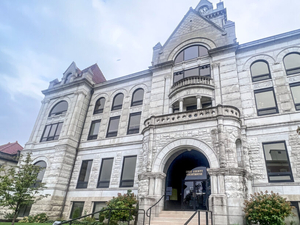
The Iowa Supreme Court chamber in the Iowa Judicial Building on Feb. 22, 2023. (Photo by Kathie Obradovich/Iowa Capital Dispatch)
The Iowa Supreme Court has suspended the license of a Des Moines attorney accused of incompetence and “fleecing” her clients.
In July 2025, the Grievance Commission of the Iowa Supreme Court recommended the court revoke the law license of attorney Valerie Cramer. The commission alleged Cramer had falsely accused “judges and court reporters and the rest of the judiciary of the worst kind of corruption,” and had intentionally misled the courts and other counsel while “taking advantage of vulnerable and unsophisticated clients.”
The panel alleged Cramer was “a danger to the public,” lacked a basic understanding of the law and was “basically fleecing” her clients through inflated legal bills while peddling an “outlandish conspiracy theory” about the judiciary.
While the commission recommended Cramer’s Iowa law license be revoked, the Iowa Supreme Court recently ruled a less serious sanction – a two-year suspension – was more appropriate, while acknowledging that Cramer’s “dishonest conduct was wide-ranging, forming a trail of deception cutting across several layers of our court system.”
Noting that a license revocation “is a sanction ordinarily reserved for attorneys who convert client funds for personal use, of which Cramer has not been accused,” the court found that Cramer’s attempts to overbill clients “were easily detected and unsuccessful. The evidence does not demonstrate a sophisticated or concealed billing scheme capable of evading detection by the bench or bar.”
Cramer, who had been licensed to practice law in Iowa since 2003, has told the Iowa Capital Dispatch the commission’s findings are untrue, but declined to elaborate.
Judge ‘horrified’ by attorney’s billing
The disciplinary case against Cramer stemmed from a complaint filed by the Iowa Supreme Court Attorney Disciplinary Board in November 2024. That complaint, which became public last year after the Grievance Commission issued its findings in the matter, alleged numerous ethics violations related to Cramer’s competence, client trust accounts, billing for legal work, and false representations made to the court.
The disciplinary board also questioned legal fees Cramer charged to clients, noting that she claimed to have spent several hours preparing and filing a series of single-page Iowa State Bar Association forms; to have spent almost half an hour reading a form that consisted of a single sentence; and to have spent 1.25 hours reading a single-paragraph motion.
At a hearing on Cramer’s requests for payment of the fees, a probate judge allegedly remarked, “Honestly, I am horrified by this billing situation, and I don’t say that lightly.”
After a probate judge called Cramer’s fee-related filings in a case “extremely troubling” and lacking credibility, Cramer filed an appeal and asserted that she had PTSD, and that the judge’s alleged yelling, scowling, raging and screaming had scared her. She also accused the judge of having his court reporter change the transcript of the proceedings.
The commission also cited Cramer’s actions in a probate case in which her client was an 18-year-old woman administering the estate of her grandmother who had raised her. The commission said it was “particularly bizarre” that Cramer refused to withdraw as the teen’s legal counsel, even after the young woman had hired a new attorney who appeared in court on her behalf.
The commission called Cramer’s actions in that case “abhorrent” and “reprehensible,” adding that it was concerned that in her probate cases, Cramer “was basically fleecing these limited estates of all their assets and leaving the beneficiaries with next to nothing.”
The commission said it had no choice but to conclude that Cramer’s “preposterous” conspiracy theories about the judiciary and her “disparagement of the judiciary and its staff, her lying to attorney colleagues, and her attacks against her clients were all done on purpose.”
Court: Cramer tried to ‘shift blame’ to others
Cramer appealed the commission’s findings and recommendation of a license revocation, reasserting allegations of judicial bias and hostility that, she argued, had disrupted her law practice, denied her clients representation, and triggered disciplinary action.
The commission challenged that appeal, alleging Cramer had billed clients for time spent on a hearing she didn’t attend, had falsified exhibits, and had falsely claimed to be a certified public accountant, and the Iowa Supreme Court heard oral arguments in the matter on Jan. 20, 2026.
In its March 20, 2026, decision in the matter to impose a two-year suspension of Cramer’s license, the court indicated it agreed with the commission’s finding that fees charged by Cramer were “inflated, duplicative, and represented work that was never conducted.”
The court also cited aggravating factors in the case, such as the fact that Cramer had “not accepted responsibility for any of her ethical infractions” and had “attempted to shift blame for her ethical violations to the judiciary, court reporters, her trust account auditor, and even (a) former client.”
The court said Cramer’s falsification of an exhibit before the Grievance Commission “troubles us deeply,” and that “this degree of bad faith in a disciplinary proceeding has not been seen by this court in more than three decades.”
As part of its ruling, the court stipulated that once the two-year suspension is served, Cramer must pass the Multistate Professional Responsibility Examination prior to her reinstatement as an attorney.
Court records indicate that prior to her admission to the bar, Cramer received her law degree from Northern Illinois University College of Law. Prior to her suspension, she ran a solo law practice, Cramer Law Firm, in Dallas County.
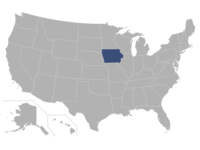
Des Moines, IA