Indiana Historical Society terminates history contest sponsorship
Jul 29, 2026 | 4:00 pm ET
Description
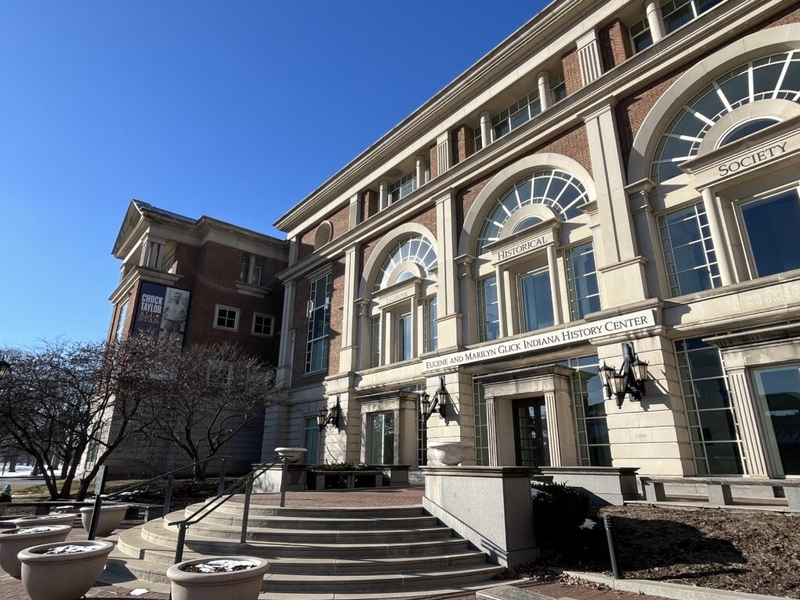
Layoffs and cuts are happening at the Indiana Historical Society. (Photo by Niki Kelly/Indiana Capital Chronicle)
The Indiana Historical Society terminated its sponsorship for a popular student contest last week — the latest in a series of budget cuts.
The Historical Society informed National History Day last Friday that it would no longer sponsor its Indiana competition, National History Day Executive Director Cathy Gorn told the Capital Chronicle.
The notification came hours after the Historical Society laid off 11 workers from departments overseeing exhibits, education and library services, first reported by the IBJ.
Why is the Historical Society cutting jobs?
Indiana terminated its lease with the Indiana Historical Society in the state’s biennial budget last year.
Previously, the state leased land where the 165,000 square-foot Indianapolis building sits to the non-profit for $1 a year and covered $1 million in maintenance and operational costs for the Historical Society.
The state transferred ownership of the land to the Historical Society, in exchange for striking its maintenance obligations to the non-profit.
It is unclear exactly how much of the Historical Society’s financial troubles are attributable to the organization’s newfound maintenance expenses.
A statement from the Historical Society refutes claims that the layoffs and contract termination are due to state funding cuts, attributing the decisions to an organizational restructuring.
“These decisions followed a careful review of how the organization is structured and where resources are focused as part of a broader effort to position the Indiana Historical Society for long-term stability and success,” said Amy Lamb, vice president of marketing and sales at the Indiana Historical Society.
“Over the past year, we have taken important steps to strengthen the institution’s future, including securing ownership of the land beneath the Eugene and Marilyn Glick Indiana History Center. As we looked ahead, it became clear that organizational changes were necessary to better align our resources with our long-term priorities.”
Lamb said the society is providing support to laid off employees and anticipates “minimal disruptions to our exhibits, events, museum store, research services, and other core operations as responsibilities are realigned.”
“We remain committed to our mission of collecting, preserving, and sharing Indiana’s stories while continuing to serve Hoosiers through education, research, collections, and public programming.”
What is National History Day?
Indiana became one of the first states to sponsor an affiliate program with the Washington, D.C.-based National History Day nearly 50 years ago.
The Indiana affiliate hosts regional and statewide history contests for students in grades 4-12.
This year alone, National History Day estimates 5,000 Hoosier students competed in regional or statewide contests, costing the Indiana Historical Society an estimated $125,000.
National winners were chosen in June.
The organization works with social studies teachers to use primary materials like original documents in the classroom, so teachers “get away from boring textbooks and involve their students in real historical research,” executive director Gorn said.
Students research the topic of their choice and present their findings through research papers, table top displays, documentaries or websites.
Top students advance from school contests to regional, state and national competitions.
The theme for the new year: Innovation in history.
They’re “learning how to think critically about evidence,” Gorn said. “(It’s) helping kids understand that evidence matters. You don’t just accept something that you find on the internet.”
The sudden contract termination occurred weeks before National History Day will host its annual conference in Indianapolis.
The organization found a new venue for the conference, originally to be held at the Historical Society, and is actively looking for a new sponsor to keep the growing Indiana affiliate in operation.
Normally, National History Day would begin outreach to teachers in August, so students have a semester to prepare for their school contests in December or January.
Regional contests typically begin in February.
“It’s heartbreaking to me that suddenly there is no program,” Gorn said, “and that’s a great loss for teachers and students in the state. We’re working hard. We’re calling everybody we know. We’re hoping that we can get the community there together to help us figure out what’s next.”

Indianapolis, IN