These Louisiana K-12 school jobs won’t come with a state stipend this year
Jul 29, 2026 | 5:00 am ET

Description
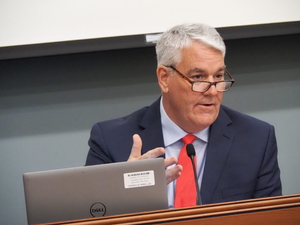
Gov. Jeff Landry's plan for another round of public school staff stipends from the state has excluded thousands of workers who received them last year. (Photo by Nuria Martinez-Keel/Oklahoma Voice)
Gov. Jeff Landry’s plan to provide another round of temporary pay stipends to public school employees will exclude thousands of positions that previously received the pay bump.
School nurses, therapists and counselors are among the 12,200 positions that qualified for a state pay stipend last year but don’t meet the criteria this school year, according to information the Louisiana Department of Education provided. These exclusions include jobs at charter and traditional public schools.
For the past three school years, the governor and state lawmakers devoted around $200 million annually to pay $2,000 stipends for teachers and $1,000 for school support staff. In 2025, the stipends raised the compensation for more than 101,000 school jobs, according to the state education department.
But for the 2026-27 school year, Landry and legislators set aside $168 million for stipends — $32 million less than previous years. The reduction has required the state to shed thousands of positions from the stipend-eligible list.
The education department does not yet know the exact number of stipend recipients from last year who are ineligible this year. School districts haven’t submitted their staffing plans to the state yet, education department spokesman Ted Beasley said in an email last week.
But the number of positions from last year that would not have qualified for stipend funding this year provides insight into how many actual employees could face a state pay cut.
In early June, Landry said the people losing stipends would generally be school administrators who already have much higher salaries than teachers.
“If you make $50,000 a year, you need a raise a lot more than somebody who makes $160,000,” Landry said last month at the public announcement of his stipend proposal.
On Tuesday, the governor’s office said the public’s focus should mostly be on Landry’s advocacy for teachers receiving raises, though the stipends he has pushed for are not permanent pay increases. They maintain the state’s contribution to teacher pay at previous levels.
“The story that should be written is that Governor Landry has fought tirelessly to deliver pay raises to teachers,” Landry’s spokeswoman Kate Kelly said in a text message Tuesday. “Even when the deck was stacked against him, he continued fighting and is now delivering on that promise.”
Many of last year’s positions that would lose stipend eligibility are administrative jobs. They include almost 3,600 principals, assistant principals and other school-based administrators. They also encompass almost 2,100 central office workers for school districts, according to the state education department.
But other positions that won’t come with stipends this school year include professionals who typically spend time with students.
Around 5,550 school therapists, counselors and other specialist positions could see their stipend eligibility eliminated. More than 900 school nurse jobs could also see the state pay taken away, according to information provided by the state education department.
The Louisiana Association of Educators, one of the state’s largest teachers unions, represents some of the school workers at risk of losing the state stipend. President D’Shay Oaks said her organization is hearing mostly from school counselors worried about a pay cut.
“They are not very happy. Some of the parishes are going to find local money and tax-based money to work with them,” Oaks said.
David Claxton, executive director of the Louisiana Association of School Superintendents and Administrators, agreed with Oaks. He said local districts would try to find a way to backfill the stipends for staff members no longer eligible for them.
“They will pretty much take care of the others if they can afford it,” Claxton said.
Landry’s stipend plan is designed to incentivize local governments to take more responsibility for funding teachers and other school employee salaries.
K-12 districts that provide a raise or temporary stipend paid with local tax money will be able to avoid a cut to their state funding under Landry’s plan. Those that don’t raise pay locally will have to provide stipends using their state funding that would normally go to cover costs such as insurance and building maintenance.
The governor and lawmakers had hoped voters would approve a state constitutional amendment in May to free up money to replace the existing stipends with a permanent raise. When voters rejected that plan, state officials pivoted to mandating that school districts provide stipends with existing state funds to avoid pay cuts.
Baton Rouge, LA