Confusion over Trump changes to graduate student loan limits hurting Oregon programs
Jul 29, 2026 | 1:47 pm ET
Description
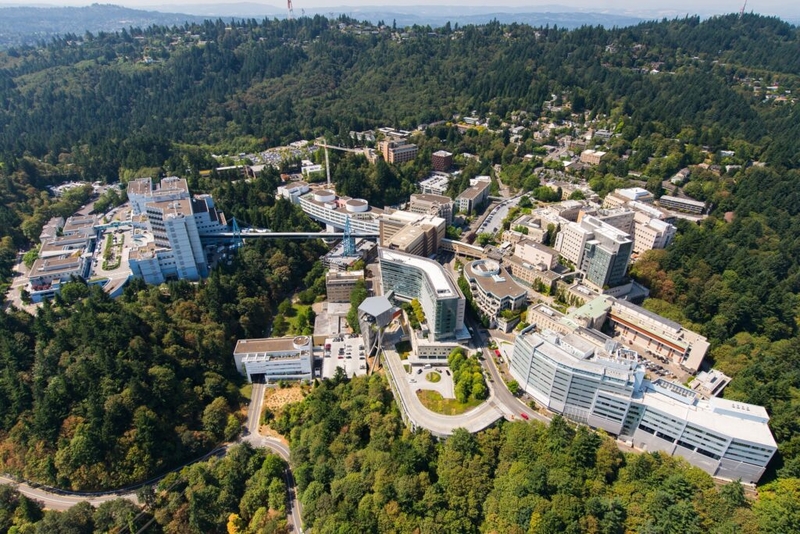
Oregon Health & Science University's hospital, located in the southwest Portland hills. The university is grappling with a potential loss of enrollment from new limits on federal loans for graduate student borrowers that don't cover the full costs of degree programs for many students who hope to attend. (Photo courtesy of Aaron Bieleck/OHSU)
PORTLAND — Enrollment in some graduate education and healthcare programs at Oregon’s public universities is expected to be down this fall, in part because students who might have enrolled face confusion and uncertainty over whether they can get the federal loans they need to attend, according to school leaders.
The issue stems from new rules congressional Republicans passed last summer in their massive tax and spending cut bill, which caps the amount of federal student loans graduate students can borrow from the U.S. Department of Education. They allowed for higher caps on some degree programs, such as those for doctors and dentists, but did not include many high-demand, high-cost medical and education degree programs, such as nursing, physical therapy, social work and counseling.
Republicans hope loan caps can, over the next few years, spur universities to lower graduate tuition costs, which have risen considerably over the past four decades as unrestricted borrowing from the federal education department rose, and states pulled back public university funding in the nearly two decades since the 2008 recession. A 2020 Brookings Institute study found that graduate students held about half of all outstanding student loan debt despite making up about one-quarter of borrowers.
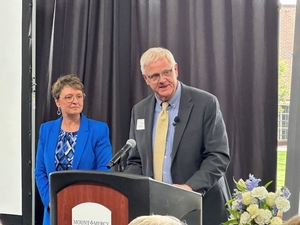
But none of the university leaders in Portland at a Tuesday panel convened by Portland-area U.S. Rep. Suzanne Bonamici, a Democrat representing Oregon’s 1st Congressional District, said the move would cause graduate tuition to decline at their institutions. Instead, they said, would-be students will likely take on private loans with higher interest rates than federal loans, or forgo programs altogether.
Eli Herr, financial aid and scholarships director at Oregon Health & Science University, described the risks to Oregon’s universities as “astronomical.” He and leaders from the University of Oregon, Portland State University and Oregon’s largest nursing and teachers unions said the changes are made more challenging by lawsuits temporarily blocking the caps, meant to hit on July 1, from taking effect until a final judgement can be issued by the end of the year.
Dr. Susan Bakewell-Sachs, dean of OHSU’s School of Nursing, said incoming students have already told financial aid officers that they don’t have cosigners for private loans they think they need to take out to supplement what is expected to be inadequate federal loan amounts. Others have said they’re struggling to figure out how they would be able to afford the interest rates on private loans, often up to three times more than interest rates on federal loans.
Fall enrollment in Oregon State University’s graduate school of education is down, according to Dean Susan Gardner, because students thought they would not have access to adequate loan amounts. Many are part-time students, and the new loan limits would be pro–rated to a borrower’s credit hours in school, rather than allowing them to borrow the same amount as a full-time student.
“In some ways, I worry the damage has already been done,” she told Bonamici.
Loan changes
Graduate student loan borrowers were previously allowed to borrow the full cost of tuition for their degree programs. Under the changes, annual borrowing would be capped at $20,500 per year with a total $100,000 limit, unless the program is a “professional” program, which includes 11 specific categories such as medical doctor and dentist but doesn’t include nursing. For those professional programs, borrowers can take out $50,000 a year in loans, with an overall $200,000 cap.
Republicans defending the caps have argued that many academic programs come with unjustifiably high price tags given the jobs and salaries that exist for their graduates.
Bakewell-Sachs said that logic doesn’t make sense for nursing, where demand is high and earnings post-graduation are high enough to justify the average $40,000 to $45,000 of debt that most nurses leave school with.
Bonamici said a lot of bipartisan outcry over the changes in Congress came in response to the caps on loans for nurses.
She recently submitted a proposal to undo the loan cap rules under the Congressional Review Act, which members can use to pass legislation that overturns a federal agency rule. She so far has 60 cosponsors in the House, she said, and Oregon’s U.S. Sen. Jeff Merkley, also a Democrat, is leading the campaign to overturn the loan caps in the Senate.
If the limits survive federal lawsuits, they would not impact current borrowers but students who enroll in programs in the next three years.
Many university leaders said they’re most concerned that limiting loans will result in fewer first-generation and low-income college students enrolling in graduate education programs, leading to a lack of diversity in fields that need more of it. Research shows Black students who have during their academic career at least two Black teachers are 32% more likely to enroll in college, and Black men are more likely to get preventative healthcare if they are assigned a Black doctor.
Bonamici encouraged university leaders to talk to their representatives in the Oregon Legislature, who control the purse strings for the bulk of public funding that goes to universities from Oregon’s general fund.
About 25 years ago, state funding accounted for up to 75% of the cost of each full-time employee at an Oregon university, according to a 2022 report commissioned by lawmakers from the National Center for Higher Education Management Systems, a nonprofit think tank in Colorado.
Now, the state pays about 50% or less of those costs, the researchers found. Oregon’s per-pupil funding for full-time college students is significantly less than what California and Washington provide per student.
Today, student tuition and fees make up more than half of revenue at every Oregon university. That’s one of the highest proportions in the nation, according to the report.
Salem, OR