HUD targets households with undocumented residents; local housing authority says there aren’t many
Mar 06, 2026 | 8:05 am ET
Description
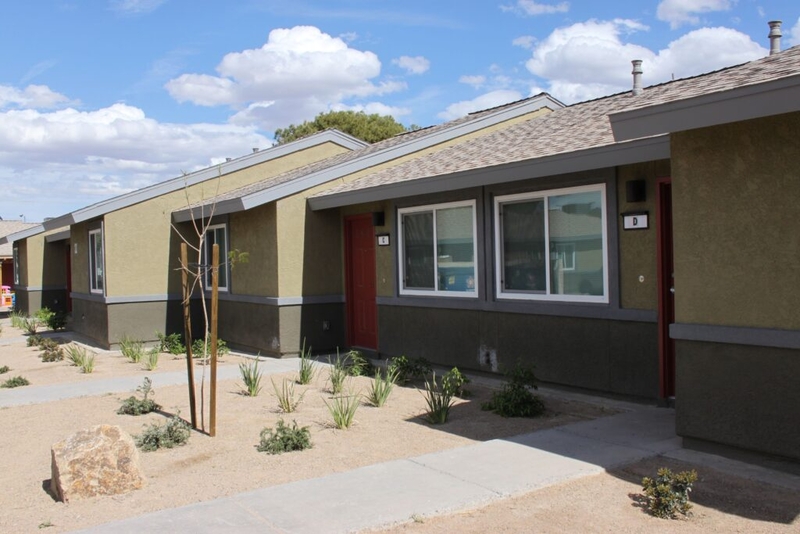
An estimated 15,300 households in Nevada rely on housing choice vouchers, which provide rental assistance subsidies provided for low-income people, seniors and people with disabilities. (Southern Nevada Regional Housing Authority photo)
At the request of federal officials, the Southern Nevada Regional Housing Authority is in the process of identifying the number of households that rely on federal housing assistance that include undocumented family members.
In an email to Nevada Current, the housing authority said it found “fewer than 25 such households across the nearly 20,000 households we serve” that are made up of mixed-status families, or those with varied immigration statuses that include legal residents and U.S. citizens.
Undocumented individuals are prohibited from receiving federal housing assistance.
The U.S. Department of Housing and Urban Development recently proposed rescinding a rule that allows undocumented members to live with family members who have legal status and are eligible for assistance.
HUD also announced in late February it would seek to rescind a rule that public housing authorities must give a 30-day notice before filing for eviction based on unpaid rent.
Neither proposal has been finalized and both are currently undergoing a 60-day public comment period.
In a statement to the Current, Lewis Jordan, executive director of the Southern Nevada Regional Housing Authority, said the organization has not had any “direct conversations with HUD” in regard to the proposed rule changes.
“SNRHA will remain compliant with HUD policies as they are codified in the Code of Federal Regulations …. that are released by HUD when policy changes are implemented nationwide,” Jordan said in an email, adding that the agency has not “received changed program guidelines.”
Lewis gave Clark Clark County Commissioners an overview of the authority and its various services on Tuesday.
Despite HUD attempting to modify regulations affecting public housing authorities and federally subsidized landlords, none of the proposals or the potential impact to Southern Nevada were discussed during the meeting.
Commissioners didn’t ask any questions following the presentation.
Jordan focused his 8-minute presentation mostly on the number of new housing units being developed and the need for additional housing choice vouchers, formerly known as Section 8.
Project based vouchers, which are attached to specific rental units, are currently paused, Jordan told commissioners.
“HUD won’t let us release any vouchers for 2026,” he said. “We are anticipating for 2027 we will have an opportunity to release more project based vouchers.”
An estimated 15,300 people in Nevada rely on housing choice vouchers, which provide rental assistance subsidies provided for low-income people, seniors and people with disabilities. Thousands of people apply, unsuccessfully, for assistance whenever applications are open. Nevadans wait, on average, 38 months, more than three years, to receive housing vouchers.
The Southern Nevada authority currently oversees the majority of housing financial assistance in the state, around 12,000 vouchers for low income residents.
An estimated 2,500 people live in public housing throughout the state, according to the data from the Center on Budget and Policy Priorities.
Although SNRHA has thus far identified barely two dozen households with undocumented inhabitants, immigrant groups and housing advocates worry the rule changes targeting immigrant families would have a disproportionate impact on Nevada due to what is believed to be the state’s large share of mixed status households.
An estimated 9% of households in Nevada have mixed-status families, the highest proportion of any state according to the Pew Research Center.
The proposed rule changes will just create needless red tape for Nevada households, said Jonathan Norman with the Nevada Coalition of Legal Service Providers, in an email to the Current.
If implemented it would “lead to vulnerable folks losing housing because of government bureaucracy and not because of eligibility,” he said. “For those families with mixed status, we are giving them the choice of homelessness or destroying their family. The prorated system was already protecting the government coffers – attacking families and the poor is not good policy. It is just about being mean.”
Las Vegas, NV