What’s going on: The Florida fiscal year 2026-27 budget and the special session
May 22, 2026 | 1:49 pm ET
Description
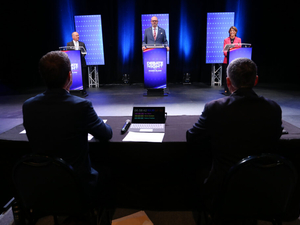
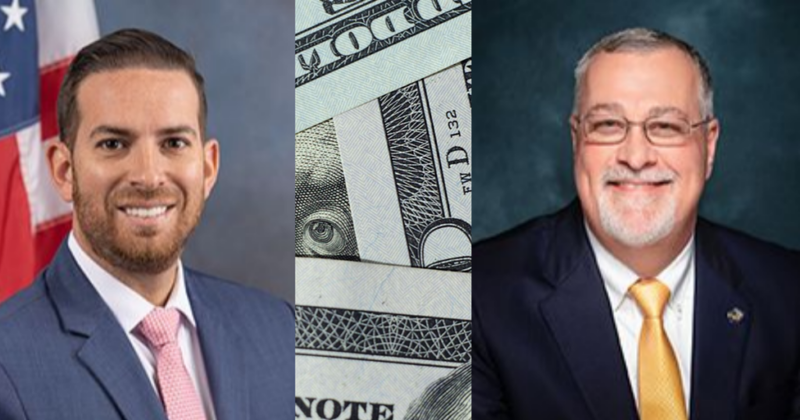
House Speaker Danny Perez (L) and Senate President Ben Albritton (R) still have not agreed on fiscal year 2025-26 spending and tax structures. (Photos via the Florida House and Florida Senate)
Billions of dollars for schools, healthcare for the state’s poor, and restoring the Everglades remain up in the air with just days left before the Florida Legislature is supposed to deliver a new state budget.
Legislators returned to Tallahassee on May 12 to draft a new Appropriations Act. Ten days later, it’s not clear what’s going on in the process.
Budget conference committees, which consist of members from the House and Senate, finished their negotiations a week ago. Under the process, all unresolved decisions — and there’s a long list of them — now are supposed to be negotiated by the chairs of House and Senate budget committees.
But Sen. Ed Hooper and Rep. Lawrence McClure have not held a public meeting this week.
And there’ve been no updates from Senate President Ben Albritton or House Speaker Daniel Perez on the status of negotiations.
Florida legislators ended their regular session in March without passing a budget to cover state spending from July 1 to June 30 of next year. This marked the second year in a row that the Legislature was unable to pass a budget on time.
The special session opened with anticipation the budget would be finished Friday, so it could be available for final passage the day after Memorial Day.
Since there have been no signs of progress, it would appear that legislators will not meet that goal.
The clock is ticking. The special session is scheduled to run through May 29. Florida’s Constitution requires the budget to be available to the public for at least 72 hours before the Legislature can vote and send it to the governor.
That means House and Senate budget negotiators have until Tuesday to finalize the amounts and wording for all appropriation items.
Being a budget conferee was an appointment that once held prestige. Conferees are empowered to help negotiate the differences between the spending plans.
But the conferees who were in Tallahassee at the start of the session left last week.
So have many of the out-of-town lobbyists who traditionally wouldn’t dare miss a budget conference meeting.
They aren’t in Tallahassee, but they remain on call ready to answer any questions legislative staff may have about their projects.
“As long as we are still getting calls from members and staff, we know the budget negotiations are still underway,” said lobbyist Jan Gorrie, a partner at Ballard Partners.
Before the behind-the-scenes work began, there were spending differences across the various budget areas, from education to healthcare to the environment.
Differences
Below are some of the more notable differences between the plans before negotiations went dark.
Several top-priority items for Gov. Ron DeSantis are up in the air, including the amount of money for his job growth grant fund, the Florida State Guard, and cancer “innovation” grants.
And although the Legislature already has rejected his push to divert cancer funds from National Cancer Institute-designated facilities to additional treatment providers, the Senate has agreed to appropriate an additional $30 million for a cancer innovation fund. The House has not.
On the surface, the House and Senate don’t appear that far apart on Department of Environmental Protection spending, with the House offering $2.5 billion and the Senate just behind at $2.49 billion.
But a deeper dive shows significant differences between the plans.
Florida Politics reports that both chambers have agreed on funding for the North and South Central Everglades Planning Project (CEPP), the Western Everglades Restoration Project, and Deepwater Horizon restoration.
Progress also has been made on EAA Reservoir funding within the CEPP, with the House moving off its zero-funding position and directing about $249 million to the project, compared to the Senate’s push for $424.7 million. The reservoir is designed to hold and filter excess water from Lake Okeechobee to limit dispersal of toxic blue-green algae.
Meanwhile, the Florida Wildlife Federation has launched an email campaign urging funding of Florida Forever, the state’s premier conservation land-buying program. The House and Senate budgets have earmarked $25 million and $75 million for the program, respectively. The Senate budget directs the money toward agricultural easements only, and not for state purchases of land for the public to access.
The House is sticking to its choice to roll money for school choice scholarship in with other education spending in the main school funding formula, while the Senate plan breaks out the amount going to the universal school voucher program.
An audit of the voucher program for school year 2024-25 revealed “a myriad of accountability problems” that caused a funding shortfall in public schools.
‘Funding did not follow the child’: State audit displays school choice woes
Education, health
The Senate has reduced its offer of $100 million for preeminence funding for Florida’s top universities, dropping down to $50 million, as the House refuses to budge and wants to eliminate the funding completely.
Created in 2013, the program recognizes preeminent schools earning top scores across a variety of metrics, including students’ average GPA and SAT scores, graduation rates, and freshmen retention. The chambers also are at odds regarding the transfer of the USF Sarasota Manatee campus to New College of Florida.
The State Administration and Agriculture, Environment, and General Government conference committee agreed to send HB 5207E to higher ups to negotiate. Among other things, the bill requires the state Department of Management Services to implement a prescription drug formulary beginning Jan. 1, 2027, with the start of a new health insurance plan year.
The chambers haven’t publicly discussed funding for the AIDS Drug Assistance Program, which drew attention during the regular session when the DeSantis administration tried to sharply cut benefits to cope with what it called a $120 million shortfall. At that time, the Legislature appropriated nearly $31 million to keep the program going for three months pending the new budget.
That stopgap bill required the state to return income eligibility for the program to 400% of the federal poverty level. It also directed the state to directly distribute AIDS medications to clients and banned the state from helping people with HIV purchase costly drugs through insurance-premium assistance. The legislation kept intact a formula that prevented patients from accessing Biktarvy, a popular once-a-day pill.
“At this time, we are hearing we might get a slightly better program than the stop-gap but nothing concrete,” community activist Michael Rajner told the Phoenix. “No premium assistance and possibly restoration of the formulary.”
Healthcare is one of the largest budget silos and there are significant differences between the chambers when it comes to Medicaid funding. The Senate proposes to cut hospital inpatient and outpatient reimbursement rates and the House is pushing to tie Medicaid payments for managed care plans to improvements in infant mortality rates.
Tallahassee, FL