House panel approves prison health care reform, questions mysterious bank accounts
Jan 29, 2026 | 10:17 am ET
Description
Photo courtesy of Mississippi Today
The audio version of this story is AI generated and is not human reviewed. It may contain errors or inaccuracies.
Alleged denial of medical treatment, tens of millions of taxpayer funds in mysterious bank accounts and ballooning fees from a prison farm program were the subject of a slate of bills approved by the House Corrections Committee on Wednesday.
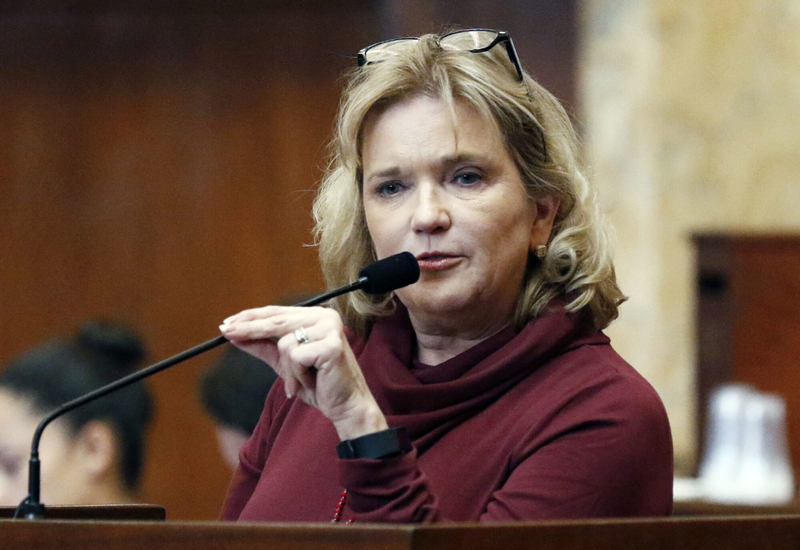
The committee meeting began with a presentation by committee Chairwoman Becky Currie, a Republican from Brookhaven, who has been pushing to reform prison health care in Mississippi. She has also begun scrutinizing at least tens of millions of dollars in taxpayer funds tied up in the state prison system’s inmate welfare fund, which she says has “no accountability.”
“When I was given this job, I was told to lower the costs and fix the health care,” Currie said. “I’ve had a hard time doing either one of those, but it’s not from a lack of trying.”
Her efforts to ensure more Mississippi prisoners receive the medical care they need follow tours of prisons she took around the state and findings reported in Mississippi Today’s Behind Bars, Beyond Care series. The ongoing investigative series has documented potentially thousands of people living with hepatitis C going without treatment, an untreated broken arm that resulted in amputation and delayed cancer screenings one woman said led to a terminal diagnosis. One ex-corrections official said people are experiencing widespread medical neglect in Mississippi’s prisons and turned over internal messages bemoaning the contractor’s care to Mississippi Today.
Currie was flanked at the hearing by Will Harper, a financial analyst for PEER, Mississippi’s legislative watchdog committee. Currie dispatched Harper to scrutinize the financial records of MAGCOR, a nonprofit that helps operate the farm program at the Mississippi State Penitentiary at Parchman. Harper’s deep dive raised questions about why the entity is “aggressively increasing” management fees while the state is “not seeing a whole lot of benefit,” he said.
Spanning 27 square miles of fertile Mississippi Delta land, the farm at Parchman is one of the largest “agricultural rehabilitation efforts in the country,” according to its website. Parchman prisoners harvest row crops and vegetables and tend livestock in an effort to give prisoners employable skills. The produce cultivated on the farm are used to feed prisoners and is sold to the public.
According to Harper, MAGCOR, which helps operate the farm with MDOC, has increased its management fees that it bills the state from $1.3 million in 2023 to $3.4 million in 2025. But an analysis of the sale of soybeans and other produce shows the management fees MAGCOR is charging outpace the revenue the farm is bringing in, Harper added. A handout distributed during the hearing shows a net loss of $2.5 million dating back to 2022.
“Just looking at produce and what the produce costs us, we’re starting to take some huge hits, especially in 2025. That is mainly the result of the huge increase in management fees paid to MAGCOR,” Harper said. “We’re paying more and more money, but we’re getting a diminishing return on this as far as I can see.”
Harper said it appears MDOC is subsidizing MAGCOR through these management fees, and asked aloud whether that was the Legislature’s original intent.
In a statement to Mississippi Today, MAGCOR CEO Garret McInnis said the fees are not subsidies, but “represent the cost of transforming an under-resourced operation into a disciplined, workforce-driven enterprise.” He added that the management fees have grown in the past two years because the Legislature has appropriated more money for Parchman Farms, a move he said has resulted in more work opportunities for prisoners and stronger agricultural production.
“For taxpayers, the benefit is a correctional farm that is no longer limited to farming strategies from the 20th century, but one that supports modern agriculture and ag adjacent work, including row crop farming, food processing and cold storage, equipment and facilities maintenance, logistics, and livestock husbandry,” he said. “These are real, transferable skills that prepare people for free world employment while improving productivity and long-term sustainability.”
Before moving to passing bills on Wednesday, Currie also said she spent months leading up to the 2026 session, looking into the Inmate Welfare Fund, a pot of money to be “used for the benefit and welfare of inmates,” state law says.
Currie said she found seven bank accounts linked to the fund, but only obtained access to one. In that one account, she found about $32 million, but had trouble tracing much of it. Currie said the disparate spending in the bank statement raises questions about whether the money has been spent on prisoners.
“What I do know is not much of it was spent on inmate welfare,” Currie said.
Wednesday’s meeting could set the stage for the Legislature’s efforts this year to reform Mississippi prisons, which have attracted federal scrutiny for poor conditions, at times leading to death and suffering. Mississippi has one of the highest incarceration rates in the world — 661 people per 100,000. About 19,500 people are currently incarcerated in state prisons.
The committee approved several bills aimed at improving prison health care after Currie’s and Harper’s presentation.
In October, Mississippi Today reported the story of Christopher Boose, a Newton County man whose one-year sentence for a Drug Court infraction led to a lifetime as an amputee.
In 2023, the then 38-year-old Boose fell off his bunk at the Central Mississippi Correctional Facility onto his arm. He alleges he was denied treatment for a week. A sepsis infection spread through his arm and doctors had to amputate it after he almost died. He sued Mississippi’s private medical contractor, VitalCore Health Services, arguing that systemic neglect gave way to “cruel and unusual punishment.”
At Wednesday’s meeting, Currie highlighted Mississippi Today’s report on Boose when advocating for House Bill 1740, which would require prisons to give prisoners access to communal kiosks where they could request medical attention.
“We don’t want people in a jail cell for one year to fall off a bunk accidentally, get no help and lose his arm,” Currie said. “It’s time for this to stop.”
The bill would allow officials to track whether prisoners have been seen by medical professionals or not. Often, there are conflicting claims between prisoners and VitalCore about the care provided by the company. VitalCore owns prisoners’ medical records, and is not required to divulge them if a prisoner claims to have been denied care.
The legislation would also prevent VitalCore from charging prisoners for medical services.
Another bill the commitee approved Wednesday, House Bill 1745, could redirect funds awarded to Butler Snow, a politically connected law firm in Mississippi that MDOC retained over the summer to monitor VitalCore.
The Corrections Department entered into the agreement with Butler Snow after the Legislature in 2025 appropriated $690,000 of funds to monitor and review the health contract with VitalCore and provide a report to lawmakers by Dec. 15.
That was news to Currie, who, despite her position as House Corrections Chairwoman, was first informed of the agreement in December. MDOC has not issued a public statement about the agreement, which was first reported by Mississippi Today after the outlet obtained a letter Corrections Commissioner Burl Cain sent to a top Senate lawmaker months after the agreement had been approved.
Currie had been expecting a completed audit and planned to use the results to inform her prison health reform legislation for the 2026 session.
“When we left last session, we appropriated $700,000 to do an audit on health care in prisons,” Currie said. “When we didn’t get it, I kept calling and came to find out they had not done it.”
Butler Snow has been paid about $249,000 so far for its monitoring work, according to state records. Currie said she wants to take back the rest of the money awarded to the firm and give it to PEER, the legislative watchdog, to conduct an audit of VitalCore, MAGCOR and the Inmate Welfare Fund.
Currie said she plans to hold another hearing next week to advance more bills out of the House Corrections Committee. The Senate corrections committee is also scheduled to meet this week.

Jackson, MS