Supreme Court ruling robs Native Americans of ‘silent partner’ in legislative redistricting
May 22, 2026 | 1:45 pm ET
Description
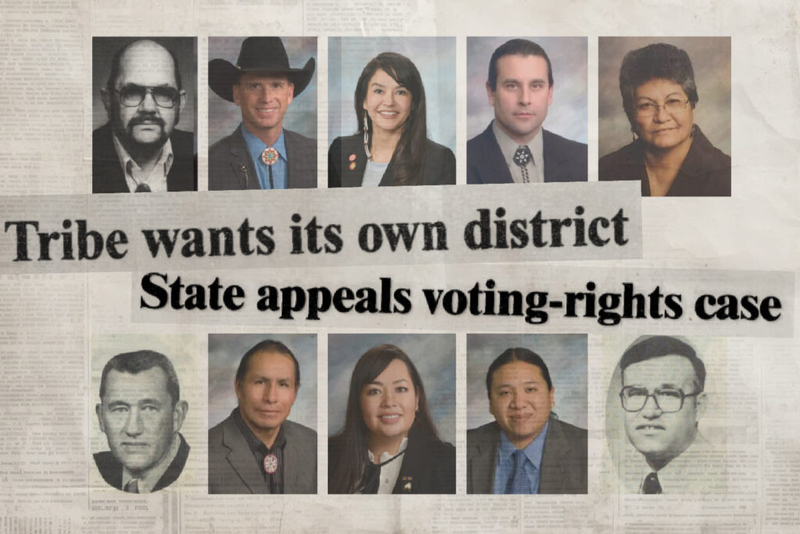
Historical South Dakota newspaper headlines reflect the importance of the Voting Rights Act, which influenced the boundaries of legislative districts in the state. South Dakota Native American lawmakers have included (top, from left) Richard "Dick" Hagen, Troy Heinert, Red Dawn Foster, Tom Van Norman, Theresa Two Bulls, (bottom, from left) John "Pat" Flynn, Edward Iron Cloud III, Peri Pourier, Kevin Killer and Tom Shortbull. (Photos courtesy of Legislative Research Council; Illustration by Joshua Haiar/South Dakota Searchlight)
A recent U.S. Supreme Court ruling that gutted a key provision of a voting rights law won’t affect South Dakota’s legislative districts until 2031 — but Native American voting rights advocates aren’t waiting to worry.
The decision in Louisiana v. Callais dismantled guardrails protecting the electoral power of Black, Hispanic and other racial minority voters enshrined in the Voting Rights Act, a 1965 law barring racial discrimination in voting.
The 6-3 decision effectively nullified a provision called Section 2, which had required states to draw electoral maps giving racial minorities a fair chance to elect their preferred candidates.
Greg Lembrich, legal director for Four Directions, a South Dakota-based Native American voting rights advocacy organization, is concerned about the ruling.
“It’s a layer of protection that’s now been taken down by the U.S. Supreme Court and makes it that much easier to deprive minority voters of the full weight of their voting rights,” Lembrich said, “and a lot harder for voters with diluted voting rights to challenge those decisions in court.”
South Dakota has a strained relationship with the federal law. Some of the state’s redistricting changes in the last 50 years stem from requirements enforced at the federal level — and a majority of Native Americans who’ve earned seats in the Legislature have been elected from districts influenced by the law.
What the ruling means for South Dakota
The Supreme Court ruling has already set off redistricting battles in some states that have multiple members of the U.S. House of Representatives. That won’t happen in South Dakota, where the state’s small population entitles it to only one member of the House.
But the Legislature is required by the state constitution to redraw its districts every 10 years after the census. When that happens next in 2031, advocates will lose the legal tools they used to create and defend Native-majority districts. Under the old Section 2 standard, a map could be challenged by showing it had a discriminatory effect — even without proving intent. Now, challengers must prove lawmakers deliberately discriminated.
“It’s very hard to prove intentional discrimination,” Lembrich said. “People who are doing something to intentionally discriminate usually don’t admit that’s what they’re doing.”
In South Dakota, Section 2 caused the creation of split districts — single districts divided into subdistricts, each electing one state House member, with both sharing one at-large state senator. Districts 26 and 28, which include the Rosebud, Lower Brule, Crow Creek, Cheyenne River and Standing Rock reservations, are split districts.
The structure gives Native American voters the power to elect a candidate of their choice without stripping non-Native voters of the same opportunity, Lembrich said. District 27, which includes the Pine Ridge Reservation, has a majority Native American voting population.
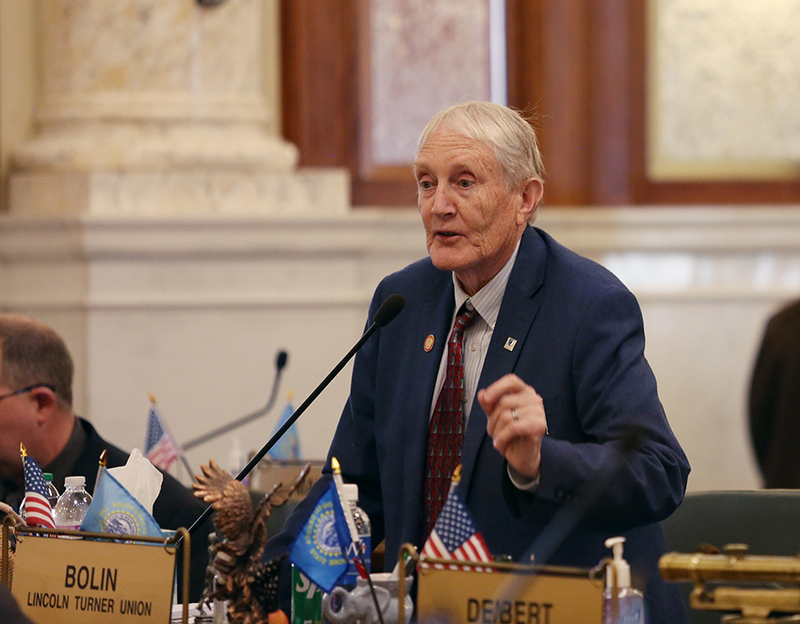
Former Republican lawmaker Jim Bolin, who represented the Canton area, served on the 2011 and 2021 redistricting committees — both of which produced district maps that avoided litigation. He said lawmakers on the committees in both years went “out of their way” to include Native American voters and “ensure the Native American population would be able to win an election.”
In 2011, the Legislature expanded District 26 to include the Crow Creek and Lower Brule reservations.
In 2021, the Legislature consolidated a large urban Native population in northern Rapid City into one district rather than splitting it, and a Democrat was elected from District 32 for the first time in 18 years. The Legislature also expanded District 26 to follow Crow Creek reservation lines rather than county lines, and the voting population for Native-heavy districts was kept lower to avoid diluting Native voters.
Lembrich isn’t sure legislative leaders will feel compelled to redraw those districts dramatically in 2031. Although many of the Native Americans who have been elected to the Legislature have been Democrats, Republicans currently hold 97 of the Legislature’s 105 positions.
“Republicans consistently have a super majority in both chambers,” Lembrich said. “They don’t need the extra seats. It may not be worth the PR and the lawsuits of trying to change it.”
Bolin expects lawmakers will consider eliminating split districts from a “consistency standpoint.” But the decision will depend on lawmakers elected in 2030.
“You could have a totally different group of people in the Legislature with a completely different viewpoint on how this should be handled,” Bolin said.
OJ Semans, co-executive director of Four Directions and a member of the Rosebud Sioux Tribe, plans to keep an eye on 2031 redistricting.
“We know that if there is equal access, the turnout in Indian Country is going to improve,” Semans said. “Every time we turn around, there’s a new barrier to figure out how we’ll get by this.”
A fraught history
The Voting Rights Act didn’t directly affect South Dakota until 1975, when Shannon (now Oglala Lakota) and Todd counties, home to the Pine Ridge and Rosebud reservations, became subject to Section 5 of the law.
Section 5 required the approval of the federal Department of Justice before any election or voting-related changes were made to jurisdictions that fell under its purview because of a history of voter discrimination. While that section still stands, the Supreme Court effectively nullified it in its 2013 decision in Shelby County v. Holder.
Bill Janklow, who was serving as the state’s attorney general, called the law a “facial absurdity” that was “plaguing” the state. Under federal pressure, South Dakota created its first majority-Native American legislative district in 1981. Native Americans made up about 86% of the district’s voting population.
US Supreme Court limits use of race in congressional district remaps, diluting Voting Rights Act
The new district, which included Shannon and Todd counties, sent two Native American lawmakers to the House: Tom Shortbull and Dick Hagen, believed to be the first Native American lawmakers living on a reservation at the time of their election, according to The Associated Press. Paula Valandra was elected to the Senate from that district in 1990.
The Legislature created its first split district in 1991, District 28, “to protect minority voting rights,” the legislation said, for Native American and tribal members of the Cheyenne River and Standing Rock Sioux tribes.
The Legislature then tried to dismantle its own reform by eliminating the split district, but a federal court struck down that action. Native American lawyer and lawmaker Tom Van Norman was elected from District 28A in 2000.
The Legislature then packed Native American voters into District 27 in 2001 — making it one of the most populated districts in the state, with 90% of its voting-age population being Native American — while neighboring District 26’s voting-age population dropped to about 30% Native American.
By 2005, a federal court found the 2001 map violated Section 2 and Section 5 of the Voting Rights Act. The federal district court drew its own map, affirmed by the 8th Circuit Court of Appeals in 2006. Those court-ordered districts — 26A and B, 27 and 28A and B — remain the structural foundation of Native American representation in the Legislature today.
Bolin said the Voting Rights Act was a “silent partner in the room” in 2011 and 2021 redistricting.
“There was a strong feeling on the part of the Legislature that they didn’t want to get sued again,” Bolin said.
Native American representation in the statehouse
One of South Dakota’s first Native American lawmakers was not a result of the Voting Rights Act.
John P. “Pat” Flynn, a Rosebud tribal member, was the first Native American elected to the state Senate, according to his son Sean Flynn, who is a history professor at Dakota Wesleyan University and wrote his father’s biography. The Republican was elected in 1970 to represent District 25, which included Gregory, Tripp and Todd counties.
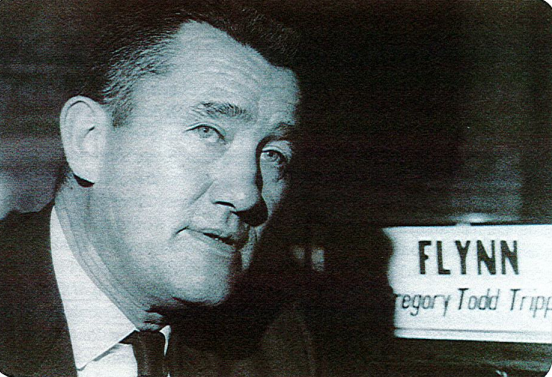
Pat survived 82 combat missions and was a prisoner in the Korean War before returning to Gregory County, where he became “a bit of a legend,” Sean said, respected by Native and non-Native residents alike.
“For him to run for office and really represent an unrepresented population at that time, that hadn’t had a voice in District 25, was important to him,” Sean said.
Sean said districts with majority-Native voting populations allow Native candidates a platform beyond being seen as a “one trick pony” concerned only with tribal issues.
“Someday, there is going to be an American Indian governor of South Dakota, and that person just might get their opportunity because of legislative districts formed under the Voting Rights Act,” Sean said. “They’ll not just represent American Indians, but they’re here to represent the broader public.”
Former lawmaker Ron Volesky is a member of the Standing Rock Sioux Tribe who ran for governor in the 2002 Democratic primary. First elected as a Republican in 1981 to represent the Huron-area District 21, he served alongside lawmakers elected in districts influenced by the Voting Rights Act and said those relationships helped him “be a better legislator.”
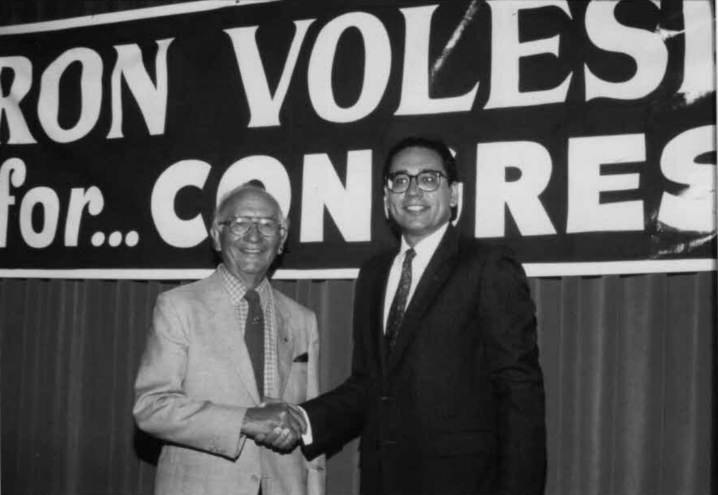
Volesky was born on the Standing Rock Reservation, but was adopted as a child and grew up in Huron.
“It was very important for me to understand people who come from those types of environments, how they view certain issues, what their values and cultural norms are,” Volesky said. “I think that was not only important for me, but very important for the non-Native legislators.”
The Voting Rights Act’s impact extends beyond Native lawmakers, Lembrich said. It also helped elect non-Native lawmakers who drew wide support from Native voters, such as Democrats Larry Lucas of Mission, within the Rosebud Reservation, and Oren Lesmeister of Parade, within the Cheyenne River Reservation.
The Voting Rights Act has helped “foster a culture of political leadership” in tribal and rural areas, Volesky added, citing examples of Native American lawmakers elected from reservations.
“It had a profound effect on the Native political movement and growth in South Dakota,” Volesky said. “Without that, you may have had a Pat Flynn, you may have had a Ron Volesky, but you would not have had a Shortbull or Hagen or Van Norman or Valandra. You just wouldn’t.”
Native American lawmakers
South Dakota state lawmakers of Native American descent have included the following, with the district they last served, tribal affiliation and years of service:
- John P. “Pat” Flynn, D25, Rosebud, 1971-1972
- Ron Volesky, D21, Standing Rock, 1981-2002
- Richard “Dick” Hagen, D27, Oglala, 1983-2002
- Tom Shortbull, D27, Oglala, 1983-1988
- Jim Emery, D30, Cheyenne River, 1985-1996
- Paul Valandra, D28, Rosebud, 1991-2006
- Tom Van Norman, D28A, Cheyenne River, 2001-2008
- Michael LaPointe, D27, Rosebud, 2003-2004
- Theresa Two Bulls, D27, Oglala, 2005-2008
- Edward Iron Cloud III, D27, Oglala, 2009-2012
- Kevin Killer, D27, Oglala, 2009-2018
- Chuck Jones, D8, Flandreau, 2013-2014
- Troy Heinert, D26, Rosebud, 2013-2022
- Shawn Bordeaux, D26, Rosebud, 2015-2024
- Steve Livermont, D27, Oglala, 2017-2020
- Tamara St. John, D1, Sisseton Wahpeton, 2017-2020
- Red Dawn Foster, D27, Oglala, 2019-present
- Peri Pourier, D27, Oglala, 2019-present
- Will Mortenson, D24, Cheyenne River, 2021-present
- Joe Donnell, D1, Sisseton Wahpeton, 2023-2024
- Tyler Tordsen, D14, Sisseton Wahpeton, 2023-2024
- Eric Emery, D26A, Rosebud, 2023-present
- Tamara Grove, D26, Unenrolled Native of Cherokee Tribe, 2025-present

Pierre, SD