Gov. Sherrill seeks limits on data center construction
May 27, 2026 | 5:42 pm ET
Description
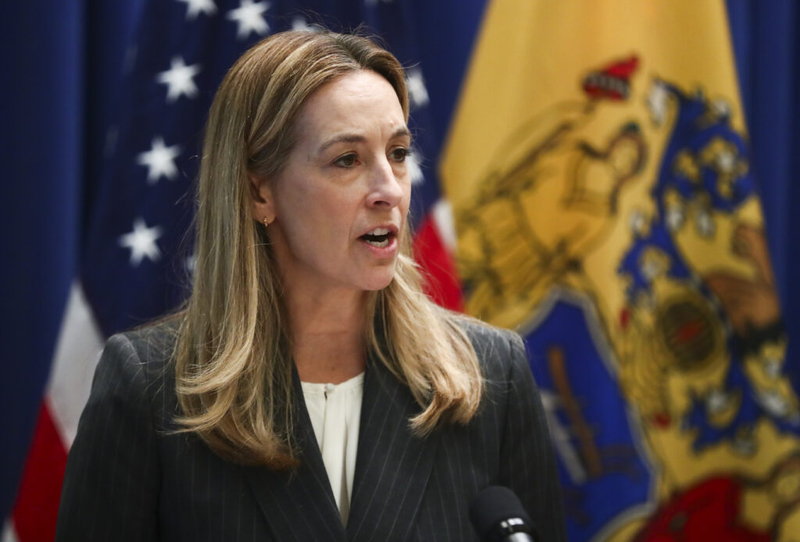
Gov. Mikie Sherrill said the boom in data center construction has led to “real concerns” about their impact on electric rates, water quality, and more. (Photo by Dana DiFilippo/New Jersey Monitor)
Gov. Mikie Sherrill said Wednesday that she backs legislation that would regulate data centers and seeks to implement new policies aimed at limiting the industry, which has faced opposition here in New Jersey and nationwide.
Sherrill, a Democrat, said during a press conference at the Trenton Statehouse that her administration’s plan would hold the booming industry accountable while still positioning the Garden State to lead in artificial intelligence innovation.
“AI is driving an explosion in the construction of even bigger centers nationwide. There are real concerns about their impact on our energy bills, our water supply, our quality of life. And there are worries that growth is happening without transparency or concern for our communities,” Sherrill said.
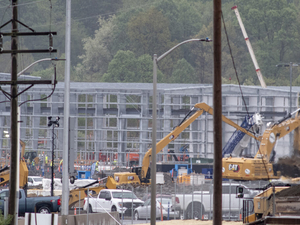
New Jersey is home to more than 80 data centers currently operating or under construction. Critics have fought, sometimes successfully, to halt local approval of the centers, driven by concerns over noise, water usage, and potential impacts on property values.
The governor said the Sherrill administration’s data center plan has four parts: requiring data centers to contract with power generators and pay for grid upgrades that are needed to handle their energy consumption rather than passing those costs to residential ratepayers; passing a measure that would require data centers to report energy and water usage to the state every six months; implementing a statewide standard for agreements between municipalities and data centers; and requiring that data centers hire local trade workers and pay prevailing wages.
“Instead of asking New Jerseyans to subsidize big tech, we’re asking big tech to improve our grid, making it more efficient and reliable and improving costs for everyone,” she said.
She added that she wants to get “strong bills on my desk as soon as possible.”
Sherrill said the state would help towns negotiate community investments with developers, saying new recreational facilities, community centers, and computing resources in schools to incorporate AI into curriculum are among the possibilities. Agreements may also require data centers to address issues like noise and pollution.
“For a long time in America, it was understood that if a business wants to thrive in a community, it has to give back to that community. So, we’re developing strong, statewide guidelines for community benefit agreements for this industry,” she said.
Lawmakers across the country are grappling with how to address data center power demands and prevent them from hiking utility bills for residential homes. Fourteen state legislatures have introduced moratoriums or bans on data centers, according to the National Conference of State Legislatures.
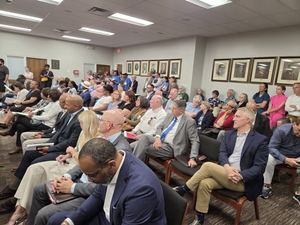
Tensions have spilled over in New Jersey, where residents in towns like Andover, Monroe, Cherry Hill, and Kenilworth have urged their municipal leaders to reject data center plans. Earlier this month, a coalition of 60 groups asked Sherrill to temporarily halt the approval of large-scale data centers over concerns they could cause “irreversible harm” to communities.
Business associations and some environmental groups applauded Sherrill’s move.
“Like all development, opportunities and challenges are presented, and getting the right balance to move projects forward is significant,” Michele Siekerka, president of the New Jersey Business and Industry Association, said in a statement. “The Governor’s parameters and expectancy of transparency are some first steps in establishing a process to get the ball rolling.”
Food and Water Watch state director Matt Smith, however, called the administration’s plan a “half-hearted attempt to rein in the increasingly out-of-control data center industry.” He repeated calls for a full moratorium on any new AI data centers.
“It is ultimately a question of if — not how — the data center industry can ever operate in a sustainable, responsible manner in New Jersey,” he said.
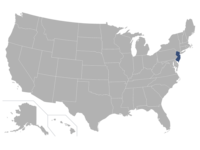
Trenton, NJ