Arkansas’ most populous county approves data center moratorium, but with exemption
May 27, 2026 | 5:49 pm ET
Description
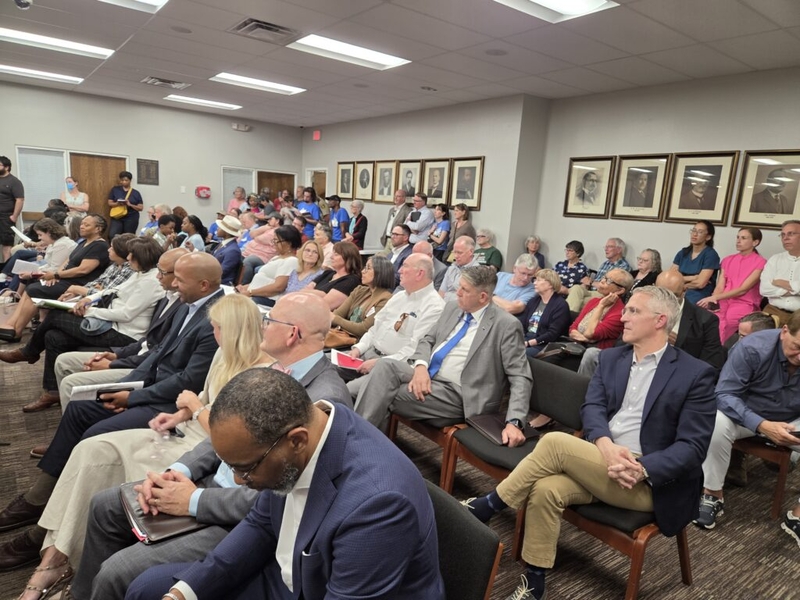
Pulaski County residents, including many opponents of data centers, attend the county quorum court's meeting in Little Rock on May 26, 2026. (Photo by Tess Vrbin/Arkansas Advocate)
Arkansas’ most populous county approved a yearlong pause on new data centers, but critics expressed frustration that the moratorium carves out one of the projects that’s prompted public backlash.
The Pulaski County Quorum Court narrowly voted Tuesday to exempt Connecticut-based AVAIO Digital’s planned data center near Wrightsville from the temporary moratorium. The center is one of two in the county that’s prompted a backlash in the Little Rock area, with the city taking up new regulations next week.
Local elected officials and business leaders support the two data center projects as job creators and tax revenue generators.
County residents said data centers are not worth the loss of farmland, excessive use of drinking water and increase in electricity costs. Teri Drennan said she supported the moratorium but found the AVAIO exemption disappointing.
“Arkansas is the Natural State, and tonight I heard, ‘Natural State be damned. Money, money, money,’” Drennan said late in the four-hour meeting.
Supporters say moratorium leaves questions unanswered
Construction on data centers has grown exponentially nationwide due to the rise in artificial intelligence in the past few years. Members of the public have increasingly called for more limits on where data centers can be built and how they use local resources.
Arkansas Explained: Understanding the data center boom and debate
Earlier this month, the quorum court voted to send proposed regulations to the county planning department for further study instead of placing the item on Tuesday’s agenda.
Another data center is in the works at the Port of Little Rock, where the city sold land to Google last year for a planned $1 billion, 300,000-square foot data center. State and federal approval is still pending related to wetlands on the property.
The AVAIO data center is likely to be one of the most power-intensive nationwide. Its initial 150 megawatts of power, already planned via a contract with Entergy Arkansas, could expand into 1 gigawatt.
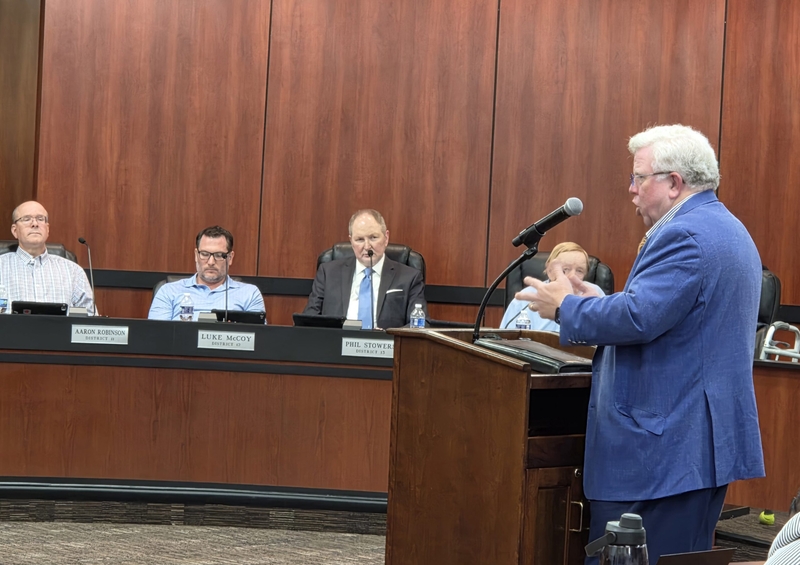
Republican Justice of the Peace Phil Stowers said he supported exempting AVAIO from the permit moratorium because it has “spent a heck of a lot of money to invest in this community.”
“All I’m asking is that we don’t cut their knees out from underneath them,” Stowers said.
At the court’s meeting earlier this month, Stowers drew the ire of the public for interrupting Wendell Griffen, the Democratic nominee for county judge, while he expressed opposition to data centers.
Griffen posted on Facebook Wednesday morning that the county’s moratorium left several questions unanswered, including the legality of giving AVAIO an exemption.
“Pulaski County should be open for new business development projects that are regulated in fair, transparent, and effective ways,” Griffen wrote.
Democratic Justice of the Peace Natalie Capps questioned if AVAIO had a plan to decommission the project “if the world changes and we no longer need these data centers.”
AVAIO project manager Thomas Nessel replied that decommissioning “has not been a focus, but it’s something we’re certainly willing to entertain.”
Nesel said the center’s average daily demand for water would be about 200,000 gallons during warmer months, while in the colder months “it basically doesn’t run.”
Central Arkansas Water CEO Tad Bohannon said the companies behind the data center projects have promised to recirculate the water they use to cool their servers, which he said is the most effective use of water for data centers.
“Our water is an economic driver,” Bohannon said. “Our water is so good that people want to use it.”
Democratic Justice of the Peace Julie Blackwood said she was concerned about water pollution, citing a Georgia center run by Meta that turned drinking water brown.
“When you’re dealing with big business, when you’re dealing with corporate power, when you’re dealing with huge billion-dollar companies, things happen, and they happen all the time, and they seem to happen not in the benefit of the public,” Blackwood said, receiving a positive response from the audience in the packed meeting room.
The AVAIO exemption to the moratorium narrowly passed with eight votes, the minimum for a majority on the 15-member court. The moratorium itself passed with 10 votes.
County Attorney Hamilton Kemp told the court he questioned the moratorium’s legality, saying a 2023 Arkansas law prohibits local governments from banning data center permits. Supporters of the moratorium said it wasn’t a ban since it’ll end after a year.
Legislative efforts to curb the 2023 law that opened the door for data center growth in Arkansas have not advanced in the past few years, including during April’s fiscal session.
Little Rock limits coming up next week
The Little Rock Board of Directors plans to take up data center regulations at its June 2 meeting. The regulations proposed by Mayor Frank Scott would require applicants to submit water use reports to the city and set noise limits for data centers, among other things.
During an agenda-setting meeting Tuesday, Director Lance Hines said he believes the planned Google center already meets the proposed requirements. Hines accused data center opponents of having an explicit left-wing agenda.
A recent Gallup poll showed that a majority of Democrats and Republicans have said they would be opposed to having a data center built where they live, though Democrats were more likely to be strongly opposed.
“It’s socialism and communism trying to stop this country from advancing, and [AI] is probably going to be the biggest frontier we’ll see in our lifetimes,” Hines said.
Little Rock