NJ defends record on uncovering Medicaid fraud in response to White House criticism
May 27, 2026 | 6:43 pm ET
Description
New Jersey is on track to recover $200 million in potentially fraudulent Medicaid payments this year, state officials said in response to White House criticism around oversight. (iStock / Getty Images Plus)
Investigators in New Jersey recovered more than $160 million in excess or potentially fraudulent Medicaid payments to healthcare providers last year and are on track to claw back even more taxpayer dollars this year, according to state officials.
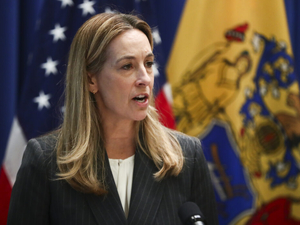
New Jersey Attorney General Jen Davenport joined attorneys general from a handful of other Democratic-led states Tuesday to highlight the work their offices are doing to combat fraudulent activity in Medicaid in the wake of what they said are partisan attacks on their oversight of the healthcare program from the Trump administration.
In New Jersey, fraud investigations are also done by the state comptroller, an independent government watchdog that has recovered close to $200 million so far this year, a spokesperson said.
“Millions of hard-working New Jerseyans depend on the critical services provided through programs like Medicaid and we’re committed to protecting those programs, even while Congress and the federal administration have taken a sledgehammer to key parts of the safety net,” Davenport said.
The Trump administration has slashed federal funding for Medicaid, which covers 1.8 million New Jerseyans and pays for nearly two-thirds of all nursing home residents here. It has also moved to blocked Medicaid payments to some Democratic states, claiming regulators were not doing enough to root out fraud.
Comments from the attorneys general were sparked by a meeting Vice President J.D. Vance held Tuesday to discuss anti-fraud efforts with a select group of state fraud investigators, most of them from states run by Republicans. Davenport and several other Democratic attorneys general said representatives from their teams were not allowed to participate.
At the start of the meeting, Vance said addressing fraud should be a non-partisan goal.
“Everyone should care about saving the American taxpayers money. And everyone should care about protecting the programs that only work and are only properly funded if the money funding those programs isn’t being stollen by fraudsters,” he said.
President Trump signed an executive order in March to create a task force to address various government forms of government fraud, problems Trump said were exacerbated by states embracing “loopholes” and expanding eligibility in taxpayer-funded programs like Medicaid.
In New Jersey, insurance fraud investigators in Davenport’s office recovered some $30.8 million in Medicaid payments during fiscal year 2025, according to the most recent federal data available. The team clawed back $9.8 million through this work in fiscal year 2024 and $7.8 million the year before.
The Attorney General’s Office also indicted and convicted more than two dozen individuals as part of these cases over those three years, according to the data from the U.S. Department of Health and Human Services, which runs Medicaid and monitors state-level fraud prosecutions.
The state comptroller can’t pursue legal action on their own, but the office employs a team of several dozen fraud investigators that have helped New Jersey recover more than $1.2 billion over the past decade, past reports show, and it refers likely bad actors to the attorney general. The comptroller’s office has frequently found itself investigating low-performing for-profit nursing homes.
The comptroller’s Medicaid division got back some $132.5 million in overpayments or potential fraud in fiscal year 2025, according to its annual report. Recoveries reached $119.2 million in fiscal year 2024 and $114.5 million in fiscal year 2023, other reports show.
Recoveries for fiscal year 2026, which began last July, approached $193.2 million through April, comptroller spokesperson Laura Fredrick told the New Jersey Monitor.
“The New Jersey Office of the State Comptroller’s Medicaid Fraud Division’s priority is safeguarding taxpayer dollars through strong oversight, accountability, and recovery efforts. Recovery figures may reflect a range of enforcement and review activities, and we remain committed to identifying improper payments and ensuring public funds are protected,” Fredrick said.
Trenton, NJ